
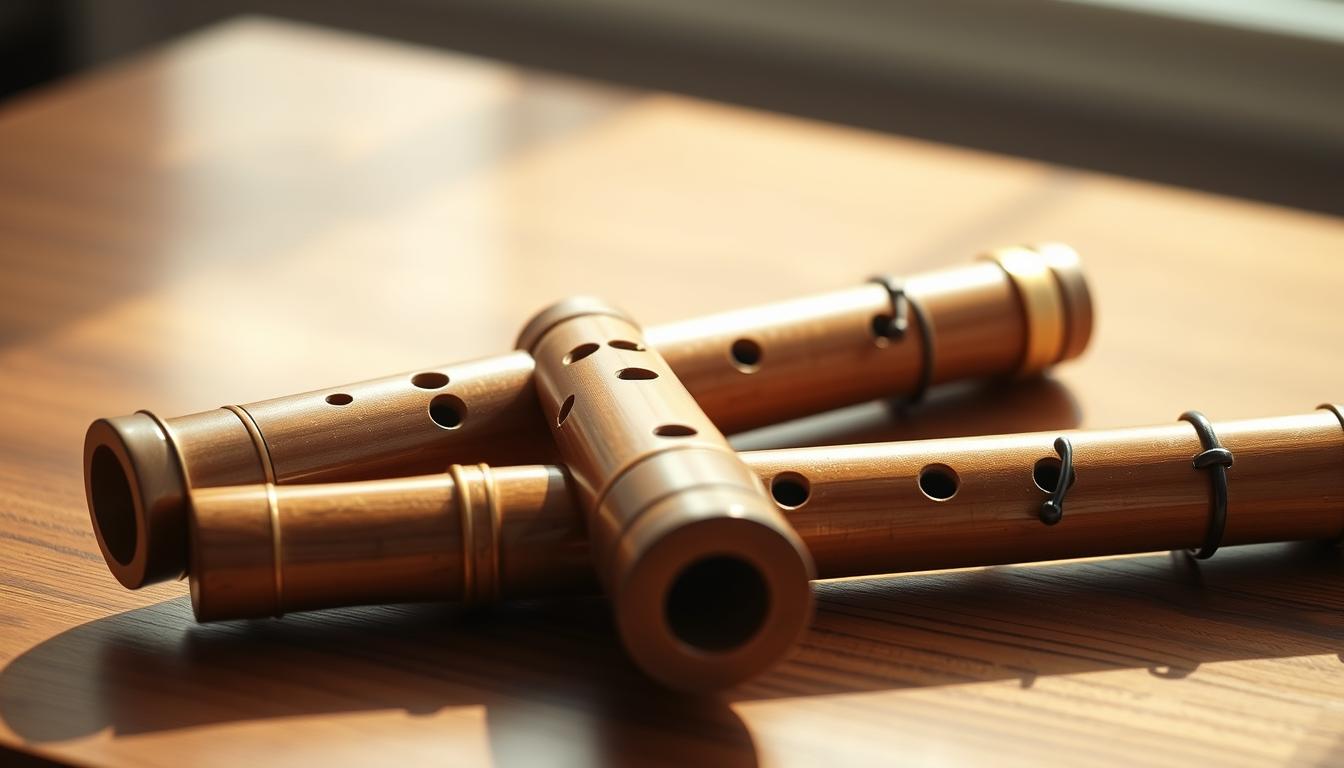

The recorder is a fascinating musical instrument that has been played for centuries. Soprano and alto models are especially popular, but they differ in significant ways. Understanding these differences is essential when choosing the instrument that best suits your level and needs.
Since the 16th century, the recorder has evolved into instruments with different ranges. The soprano model is ideal for beginners because of its compact size and ease of use. By contrast, the alto model, with its lower range, is often preferred by intermediate players seeking precision and depth of sound.
In this article, we will explore the technical features and history of both instruments. You will learn how their design, sound, and uses differ. We will also offer practical advice on choosing a recorder according to your budget and sound preferences.
Get ready to explore the world of recorders and better understand these two iconic models. Whether you are a beginner or an experienced musician, this guide will help you make the right choice for your music making.
An overview of the recorder
Since the Middle Ages, the recorder has captivated musicians and music lovers with its distinctive sound and versatility. Its rich history and continuing development make it an iconic instrument in classical music.
Origins and historical development
The earliest evidence of the recorder dates from the Middle Ages. This instrument, made of wood, became widespread during the Renaissance. At that time, it was played in both sacred and secular settings. It underwent major changes over the centuries, particularly during the Baroque period, when its range and design were refined.
With its carefully positioned holes, the Baroque recorder offered a richer sound and greater precision. It became an essential instrument in the musical ensembles of its day.
Instrument families and their names
Today, recorders come in several sizes, forming a complete family of instruments. From the high sopranino to the low contrabass, each model has its own characteristics. This variety covers a wide range of pitches suited to different musical styles.
- The sopranino, the highest, is ideal for bright, penetrating melodies.
- The soprano, the most popular, is often used in music education.
- The alto, with its lower range, is valued for its rich sound.
- The tenor and bass complete the family with deeper tones.
This naming system classifies instruments by size and use, making it easier for musicians to choose one.
Whether made of wood or plastic, the recorder remains a symbol of musical development. Its history, changing design, and variety make it an essential instrument for beginners and professionals alike.
Technical features of the recorder
The recorder is a fascinating instrument whose operation depends on specific technical features. The windway, the labium, and the window all play crucial roles in producing sound. Carefully designed, these components create a clear, precise tone. For example, the windway affects the instrument’s response, while the labium influences how easily high and low notes speak.
The choice between wood and plastic directly affects the recorder’s sound and durability. Wooden models, such as those in the Renaissance series, offer an especially rich sound in the lower register. Plastic recorders, such as Kynseker models, withstand knocks and moisture better, making them suitable for beginners or musicians who travel.
The recorder’s construction, with its strategically placed finger holes, directly affects how it plays. Baroque recorders, for example, use double holes and keys to enable precise chromatic playing. Technical details, such as differences in bore between Renaissance and Baroque models, affect tone and ease of playing. These features make each model a distinctive instrument suited to a variety of musical styles.
Fingering systems and their characteristics
The choice of fingering system directly affects a recorder’s sound and ease of playing. Two systems predominate today: traditional Baroque fingering and the German system. Each has advantages and disadvantages depending on musical style and the player’s experience.
Traditional Baroque fingering
Baroque fingering, used since the Renaissance, calls for precise finger placement. Still very popular today, this system allows considerable expression and a rich sound. Holes arranged for this fingering support accurate chromatic playing and greater control over dynamics. For example, the fingers of the left hand cover the upper holes, while those of the right hand cover the lower holes. This division supports coordination and makes complex melodies easier to play.
Comparison with the German system
The German system differs slightly in its fingerings. Some notes may sound out of tune if the finger positions are not mastered. Low notes, for example, can lack clarity if the fingers do not fully cover the holes. The Baroque system, by contrast, offers a sound particularly valued in early and Baroque music.
Choosing between these systems depends on the repertoire and the player’s technical level. With its rich sound and versatility, Baroque fingering is ideal for those seeking a historically appropriate sound. The German system can make certain notes easier to finger, although it is less suited to historical repertoire.
Understanding each fingering system is therefore essential for improving your playing and sound. Whether you prefer Baroque or German fingering, each has advantages that may meet your musical needs.
To learn more about choosing a recorder suited to your level, see our practical guide: How to choose a recorder.
Comparing soprano and alto recorders
Soprano and alto recorders differ in several important ways. Range and pitch are central to this distinction. The soprano recorder plays in a higher range, while the alto recorder produces a deeper sound.
Sound is another important difference. The soprano recorder, ideal for bright melodies, is often used in ensembles. The alto recorder is valued for its richness, depth, and precision, making it suitable for both solo and ensemble playing.
Choosing between these models directly affects a musician’s playing experience. Lighter and easier to handle, the soprano recorder is ideal for beginners. Although larger and heavier, the alto recorder offers opportunities for nuanced playing that appeal to experienced musicians.
Depending on the musical setting, the soprano recorder is often chosen for ensembles, while the alto can stand out as a solo instrument. Each model has its own challenges and advantages, making it suited to particular uses.
Soprano vs alto recorder: What’s the difference?
Soprano and alto recorders differ mainly in their design and use. The type of instrument directly affects its range, sound, and musical role.
The higher pitched soprano recorder is ideal for bright melodies and ensembles. The alto recorder has a lower range and deeper sound and is often played solo or in ensembles that need a lower voice.
The instrument’s design plays a key role in its sound. The soprano recorder’s design encourages a clear, precise tone, while the alto recorder, with its larger bore, produces fuller, richer notes.
The musical setting also matters. Ensembles often benefit from the soprano recorder, whose sound carries through complex melodies. The alto recorder fits arrangements that call for a lower range.
To choose between the two, consider your skill level, repertoire, and intended use. You can also consult our comparison chart for more details.
Advantages and characteristics of the soprano recorder
The soprano recorder is practical and accessible, making it an ideal choice for beginners. Lightweight and easy to handle, it can be picked up quickly, even by children. Its high range and clear sound make it particularly well suited to bright melodies.
Compared with other models such as the alto or tenor, the soprano recorder is easier for many players to hold. Its compact size makes it easy to carry, while its low weight helps limit fatigue during long playing sessions. These qualities make it suitable for music lessons and rehearsals.
In terms of sound, the soprano recorder stands out for its clarity and precision. Designed to support fluid playing, it is particularly well suited to ensembles. Its design also helps players control musical nuances and give more expressive performances.
This recorder is also recommended for teaching. Beginners appreciate its ease of use, while teachers can use its clear sound to demonstrate musical ideas. Whether played solo or in a group, the soprano recorder fits many musical settings.
Strengths and distinctive features of the alto recorder
With its lower range, the alto recorder offers a rich, deep sound, making it ideal for solos and ensembles that need a lower voice. Its distinctive design and careful construction make it valued for its sound quality and expressiveness.
A deeper sound and lower range
The alto recorder has a warm, low sound thanks to its larger size and wider bore. These features allow greater resonance and give it a distinctive tone. Its lower notes, for example, can be especially expressive in pieces that call for depth.
Handling and weight
Although the alto recorder is heavier and larger than the soprano, it remains comfortable to play. Its balanced weight helps players maintain control, even if they are less experienced. Regular care is important for preserving its sound. Wooden instruments, for example, need a gradual break-in period to adjust to the warmth and moisture of the player’s breath.
| Feature | Alto recorder | Soprano recorder |
|---|---|---|
| Sound | Warm and low | Clear and high |
| Range | Lower | Higher |
| Weight | Heavier | Lighter |
| Care | More frequent | Less intensive |
By comparison, the soprano recorder is lighter and easier to handle, while the alto, though heavier, allows greater control over subtle variations in sound. This makes it popular with experienced musicians.
The price of an alto recorder varies according to its materials. Plastic models are generally cheaper and sturdier, while wooden ones cost more but offer a richer sound. Regular care is essential to protect the instrument’s body and maintain its tone.
The alto recorder enriches ensemble harmonies with its lower range. For more details on choosing a recorder suited to your level, see our practical guide: How to choose a recorder.
Choosing an instrument: Advice for beginners and children
What should beginners consider when choosing a recorder? Size, budget, and ease of use are all essential factors. Compact, lightweight instruments are generally recommended for children and new players.
The soprano recorder is often recommended because of its familiar size and comfortable handling. Even young children can get started with it quickly. Plastic models are sturdier and less expensive, while wood offers a richer sound but requires regular care.
The fingering system also matters. Beginners generally prefer a straightforward system that makes the basics easier to learn. For answers to common questions, consult a practical guide or ask a teacher for advice.
In short, the best choice for a beginner depends on their preferred range, budget, and level of commitment. You can also explore our selection of the best bass recorders to find an instrument that suits you.
Recorder care and storage
Regular care is essential to preserve your instrument’s sound and extend its life. It helps maintain a clear tone and prevents damage caused by wear or moisture.
Practical care tips
Start by cleaning the inside of the recorder regularly. For wooden models, use a soft, dry cloth. Avoid chemicals, which can damage the material. For plastic recorders, cleaning with diluted bleach every six months is sufficient.
Storage is equally important. Always keep your recorder in a hard case to protect it from impacts. If you have a wooden recorder, store it in a place where the humidity is ideally between 50% and 70%. This helps prevent cracks and warping.
| Material | Cleaning advice | Frequency |
|---|---|---|
| Wood | Use a soft, dry cloth | After each use |
| Plastic | Diluted bleach | Every six months |
Finally, remember to check the joints and keys regularly. A small amount of paraffin grease or petroleum jelly can reduce friction and help maintain a good seal.
The recorder’s place in an ensemble
The recorder has a valued place in ensembles thanks to its distinctive sound and versatility. Whether played solo or as accompaniment, its timbre enriches an ensemble’s range of sounds.
Ensemble and solo use
In an ensemble, the recorder blends well with other instruments. Its range, lower or higher depending on the model, can create rich contrasts. In Baroque pieces by Bach or Telemann, for example, the alto recorder adds depth, while the soprano stands out for its clarity in complex melodies.
As a solo instrument, the recorder reveals its full expressive range. Whether clear or deep depending on the model, its sound offers nuances that captivate audiences. Classical composers have often highlighted the instrument’s expressive qualities.
The recorder also complements other instruments. Paired with a harpsichord or violin, for example, it creates balanced harmonies. The alto recorder’s lower timbre adds a dimension particularly valued in musical works.
With its wide range of sounds, the recorder is an essential instrument in many repertoires. Learn more about the family of wind instruments and explore its central role in classical music.
Conclusion
The recorder is a versatile instrument suited to different playing levels. Soprano and alto models have distinct features that meet different needs. For beginners and children, the soprano recorder is ideal because it is easy to use and has a high range.
Beginners will appreciate the soprano recorder’s light weight and convenience, while children benefit from its compact size. Experienced musicians can explore the alto recorder’s rich sound.
| Model | Features | Recommended use |
|---|---|---|
| Soprano recorder | High range, lightweight, easy to handle | Beginners, ensembles, bright melodies |
| Alto recorder | Lower range, rich sound | Solos, ensembles needing a lower voice |
Regular care is essential for preserving your instrument’s sound. Choose a model that suits your needs and level so you can get the most from playing music.
Further exploration and resources
Both the soprano and alto recorder are part of the continuing development of wind instruments. To deepen your knowledge, explore other types of flute, such as the transverse flute, whose design marked a turning point in musical history.
Music schools and conservatories in France offer specialized recorder courses. These institutions provide technical training and a broad musical education, both valuable for aspiring musicians. Consult our guide to choosing a recorder that meets your needs.
Although the transverse flute belongs to another family, it has played a key role in the development of wind instruments. Its influence on instrument making and playing technique has inspired innovations in recorder design, particularly in range and sound. To learn more, read our article on the history of the transverse flute.
For further reading, explore our selection of articles on recorders and their place in music. You will find practical advice, detailed comparisons, and educational resources to enrich your playing.
FAQ
What are the main differences between a soprano and an alto recorder?
Which material should I choose for a recorder: wood or plastic?
What are the basic notes in a recorder’s range?
Is learning to play the recorder difficult?
What is the difference between Baroque and modern fingering?
How do I choose between a sopranino and a soprano recorder?
What role does the recorder play in an ensemble?
How should I care for a wooden recorder?
How much should I budget for a good recorder?
Which recorder should I choose for a child?
Are there recorders for advanced musicians?
What is the range of an alto recorder?
How can I improve my recorder’s sound?
Source links
- https://en.wikipedia.org/wiki/Recorder_(musical_instrument)
- https://en.wikipedia.org/wiki/Recorder_(musical_instrument)
- https://en.wikipedia.org/wiki/Recorder_(musical_instrument)
- https://en.wikipedia.org/wiki/Recorder_(musical_instrument)
- https://en.wikipedia.org/wiki/Flute
- https://en.wikipedia.org/wiki/Recorder_(musical_instrument)
- https://en.wikipedia.org/wiki/Recorder_(musical_instrument)
- https://en.wikipedia.org/wiki/Saxophone
- https://en.wikipedia.org/wiki/Alto_recorder
- https://en.wikipedia.org/wiki/Recorder_(musical_instrument)
- https://en.wikipedia.org/wiki/Soprano_recorder
- https://en.wikipedia.org/wiki/Recorder_(musical_instrument)
- https://en.wikipedia.org/wiki/Woodwind_instrument
- https://en.wikipedia.org/wiki/Recorder_(musical_instrument)
- https://en.wikipedia.org/wiki/Saxophone
- https://en.wikipedia.org/wiki/Musical_instrument
- https://en.wikipedia.org/wiki/Bass_recorder
- https://en.wikipedia.org/wiki/Recorder_(musical_instrument)
- https://en.wikipedia.org/wiki/Recorder_(musical_instrument)
- https://en.wikipedia.org/wiki/Pan_flute
- https://en.wikipedia.org/wiki/Soprano
- https://en.wikipedia.org/wiki/Recorder_(musical_instrument)
- https://en.wikipedia.org/wiki/Recorder_(musical_instrument)
- https://en.wikipedia.org/wiki/Recorder_(musical_instrument)
- https://en.wikipedia.org/wiki/Recorder_(musical_instrument)
- https://en.wikipedia.org/wiki/Recorder_(musical_instrument)
- https://en.wikipedia.org/wiki/Recorder_(musical_instrument)