
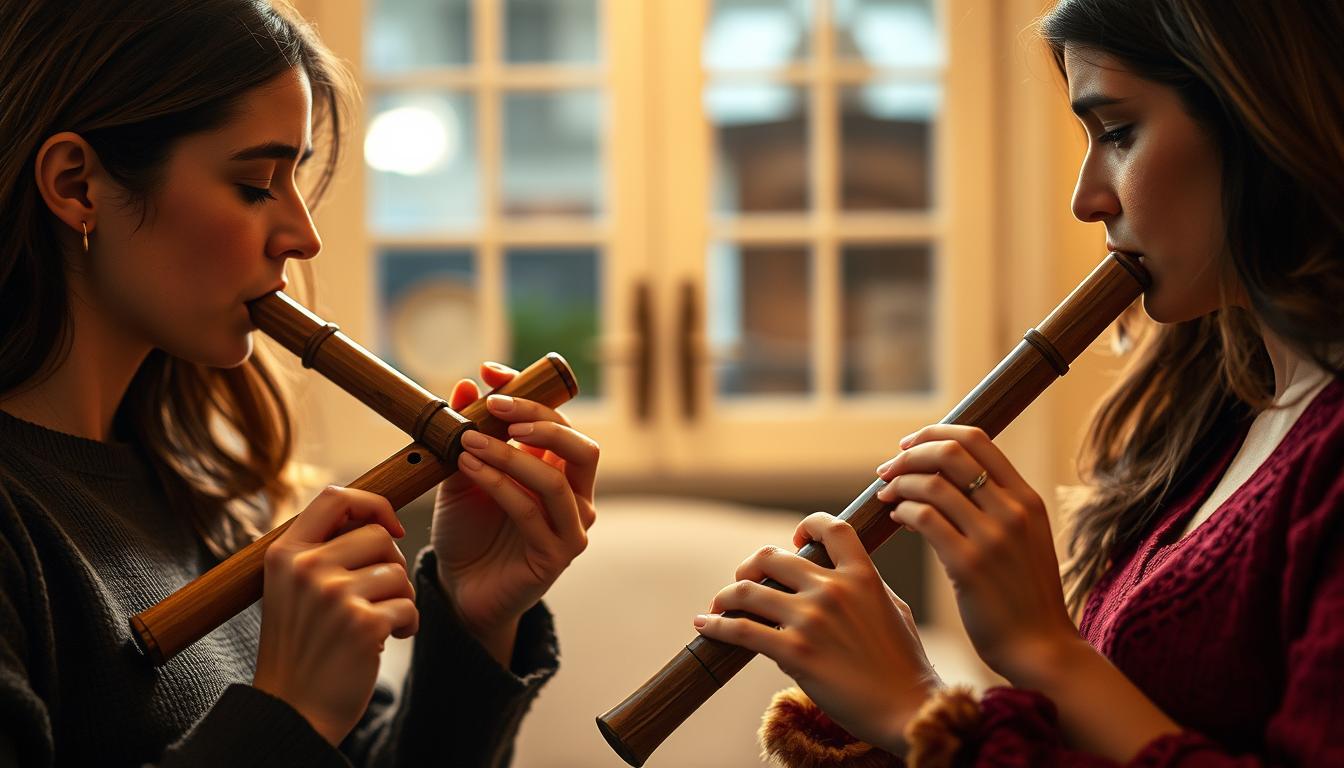

Playing recorder duets is a rewarding musical activity, ideal for anyone looking to improve or explore new sounds. This kind of musical collaboration develops technical skills while strengthening coordination and communication between musicians.
The appeal of a duet lies in its straightforward accompaniment and rich harmony. The scores are often written so that both parts are similarly challenging, making learning more accessible and enjoyable.
You can easily find downloadable sheet music online, including works by Mozart and other famous composers. These scores are often in DIN A4 format, usually run to around sixty pages, and are available at an affordable price of about €17.90.
Working as a duo is especially instructive. It helps musicians understand rhythm, harmony, and musical dynamics. It also makes recorder practice more enjoyable, keeping rehearsals engaging and stimulating.
This article offers practical tips for mastering recorder duets. Whether you are a beginner or an intermediate player, you will learn how to improve your playing and make the most of this rewarding musical experience.
Introduction to recorder duets
A recorder duet is an ideal way to explore new sounds. This collaboration highlights the harmonic richness of the instrument while encouraging coordination between musicians. Scores are often written so that both parts are similarly challenging, making learning more accessible and enjoyable.
The instrument is central to this activity. The soprano recorder is particularly suitable for beginners because of its range and relative ease of playing. Scores are often drawn from well-known collections, such as those of Mozart, and are available online at affordable prices.
Reading sheet music plays a key role in learning. It helps musicians understand rhythm, harmony, and musical dynamics. It also makes recorder practice more enjoyable, keeping rehearsals engaging and stimulating.
Background and benefits of playing duets
Playing duets offers musicians many educational benefits. It strengthens coordination and communication between performers while enriching their musical interpretation. This kind of collaboration encourages a better understanding of rhythm, harmony, and dynamics.
The score is central to this activity. It helps organize the repertoire, particularly around famous sonatas, and gives the musicians a shared foundation. Other instruments, such as the violin, can complement the sound of the recorders and add musical richness.
Famous duets, such as those by Mozart, show how rewarding this combination can be. Discover how these scores can inspire your playing and help you improve.
In short, playing duets has many educational and musical benefits. It develops technical skills while opening up new sounds.
Playing Two Recorders: Tips for Duos
Recorder duets combine technique and artistic expression in a rewarding musical experience. Playing together helps you develop your skills while exploring new sounds.
To synchronize your playing, begin with simple scores, such as duets by Mozart or Handel. These classical composers offer balanced melodies that make it easier to learn and play in harmony.
Choosing a suitable score is crucial. Pick works that match your level, whether Baroque pieces or modern arrangements. A well-chosen score sustains motivation and supports progress.
| Duet tips | Benefits |
|---|---|
| Position your recorders correctly | Improves intonation and sound |
| Practice synchronization exercises | Strengthens coordination between players |
| Choose varied scores | Expands your repertoire and maintains interest |
Try these tips during your next practice sessions. You may find just how enjoyable and rewarding playing duets can be.
Choosing and tuning your instruments
Choosing and tuning your instruments are essential to a harmonious recorder duet. The soprano recorder is ideal for beginners, while the alto recorder has a lower range suited to certain repertoires. Choose your instrument according to your level and the scores you want to play.
Before you begin, make sure your recorders are properly tuned. This step is crucial to playing in tune together. A piano or tuner can help. Once the recorders are tuned, your duet will sound more cohesive and pleasant.
| Instrument | Benefits |
|---|---|
| Soprano recorder | Ideal for beginners, with a clear range |
| Alto recorder | Lower range, suited to varied repertoires |
Finally, choose scores suited to your level. Classical collections, such as those of Mozart, can help you progress while maintaining high musical quality.
Exploring sheet music and online resources
Sheet music for recorder duets is now easy to find online. Specialist sites such as Stretta Music offer a wide repertoire, from Mozart classics and folk music to modern arrangements.
The variety of scores serves everyone from beginners to experienced musicians. Many can also be downloaded instantly, giving you flexibility when planning rehearsals.
| Score | Composer | Features |
|---|---|---|
| Sonata in G major | Mozart | Ideal for beginners, with balanced melodies |
| Allegro | Handel | Simple rhythmic structure suited to duets |
| Folk dances | Traditional arrangement | Varied and enjoyable repertoire |
Before downloading a score, check the file quality to make sure it will be easy to read. Online resources can help you progress and enrich your repertoire.
Basic techniques for starting a duet
Starting to work as a duo calls for a methodical approach, especially for beginners. Before you even blow into the instrument, make sure you understand the rhythm and musical structure.
Practicing without an instrument
Practicing aloud without an instrument is an important step. It lets you focus on the rhythm and pulse needed to play together. Use a metronome to maintain the tempo and avoid drifting apart.
Reading and interpretation exercises
Reading scores is crucial. Start with simple pieces, such as duets by Mozart or Handel, which have balanced melodies. Exercises such as “Clap and Play” strengthen rhythmic coordination, while “Sing and Play” improves intonation.
| Exercise | Benefit |
|---|---|
| Clap and Play | Improves rhythmic coordination |
| Sing and Play | Strengthens intonation and synchronization |
| Slow Tempo Practice | Helps you master difficult passages |
By adding these techniques to your practice, you will build a solid foundation for your duets. To explore more suitable scores, visit Stretta Music.
Teaching tips and learning methods
Learning to play recorder duets calls for an approach that is both methodical and enjoyable. Experienced teachers recommend starting with simple exercises to synchronize rhythms and breathing.
Enjoyable approaches for beginners
Use methods such as “Monsieur flûte,” which offers scores suited to beginners. These scores are designed to make learning easier while retaining musical quality.
Practice saying or singing your parts before playing. This helps you master the rhythm and melody. For example, sing through the score together before blowing into your instruments.
Tips from experienced teachers
Add piano accompaniment to support the rhythm and melody. It can help maintain a clear structure during rehearsals.
Choose sonatas and collections suited to your level. Mozart sonatas, for example, are ideal for beginner duos.
Following these tips can help you progress quickly and enjoy playing together more.
Managing breath and embouchure
Mastering breath and embouchure is essential to producing a clear, harmonious sound. These techniques help you control tone quality and play more smoothly and expressively.
Exercises for steady breath
Breath control is crucial. The “sss” exercise is an effective technique: exhale gently while sustaining the sound. This strengthens breath control and steadies the airflow.
Deep breathing, inspired by singing techniques, can also help. Sit upright and breathe in deeply to fill your lungs and sustain a steady breath.
Techniques for a relaxed embouchure
A relaxed embouchure helps prevent fatigue. Keep your lips and jaw in a natural position without tension.
Relaxation exercises, such as opening your mouth wide and then gently closing it, help release tension in the facial and jaw muscles.
| Technique | Benefits |
|---|---|
| “Sss” exercise | Improves breath consistency |
| Deep breathing | Increases lung capacity |
| Relaxed embouchure | Prevents fatigue and improves sound |
Practicing these exercises daily will improve your recorder control and make your playing more expressive and enjoyable to hear.
Organizing music rehearsals
Regular rehearsals help you make the most of your practice time and strengthen the duo’s musical cohesion. A structured plan supports steady progress and keeps both musicians engaged.
Begin by setting a weekly schedule that divides your time between technical exercises and work on scores. This supports regular progress without becoming monotonous. For example, devote one session to synchronization exercises and another to interpreting a sonata.
Alternate solo and duet passages to bring variety to rehearsals. This strengthens individual skills and improves coordination between the two players. Explore different collections to expand your repertoire and maintain interest.
| Rehearsal element | Benefits |
|---|---|
| Structured planning | Makes the best use of time and supports progress |
| Focused exercises | Improves technique and synchronization |
| Alternating solo and duet playing | Balances individual and shared work |
Finally, use online resources, such as those offered by Stretta Music, to discover new scores and ways to organize your work. A well-planned rehearsal supports effective and rewarding music-making.
Adding accompaniment and improvisation
Adding accompaniment, such as piano or guitar, considerably enriches the sound of a recorder duet. It adds harmony and rhythm, making the performance more complex and engaging.
Coordination between the played parts and the accompaniment is crucial. Practice synchronization exercises to keep a consistent tempo. Good coordination creates a smooth, natural harmony.
To improvise, choose scores with simple structures. Start with short melodic phrases, then explore variations. This will give your performance a personal touch.
| Score | Composer | Features |
|---|---|---|
| Sonata in G | Mozart | Piano accompaniment |
| Allegro | Handel | Guitar accompaniment |
| Folk dance | Arrangement | Melody with accompaniment |
Consult specialist sites such as Orchestre de Caen to discover scores and improvisation methods. These resources will help you enrich your repertoire and explore new sounds.
Musical interpretation techniques
Musical interpretation is at the heart of every performance. In a recorder duet, mastering articulation, phrasing, and dynamics is essential to conveying the music’s emotion and subtlety.
Articulation and expressive phrasing
Articulation determines the clarity and precision of the sound. Good articulation makes notes distinct and adds expression to the music. Phrasing gives the melody a natural structure, like musical breathing.
Practice articulation exercises, especially legato and staccato. These techniques let you vary your expression and add nuance to your playing. To work on phrasing, follow the markings in classical scores, such as those of Mozart.
Dynamics and nuance in playing
Changes in dynamics, from pianissimo to fortissimo, add depth to a performance. Nuances such as crescendos and decrescendos guide listeners through the music’s development.
Bring these elements into your rehearsals. For example, start a sonata gently, then gradually increase the intensity to create a dramatic effect. This will make your performance more compelling.
| Technique | Benefits |
|---|---|
| Clear articulation | Makes notes easier to distinguish |
| Natural phrasing | Creates a coherent melodic structure |
| Varied dynamics | Enriches emotional expression |
By incorporating these techniques into your playing, you will refine your interpretation and offer a rich, moving musical experience.
Choosing scores for every level
Choosing suitable scores is essential to effective recorder duet practice. Whether you are a beginner or an experienced player, music that matches your level lets you improve while enjoying the experience.
When choosing a collection, consider its technical difficulty, musical quality, and fit with the repertoire you want to play. A good score balances technique and expression while remaining accessible.
For beginners, Mozart sonatas and Handel duets are particularly recommended. These classical works have balanced melodies that are ideal for mastering the basics of duet playing. Collections by Telemann also offer structured pieces that can help you progress.
Online scores are an abundant resource. Sites such as Stretta Music offer a wide selection, from Bach classics to modern arrangements. These resources let players download quality scores for different levels instantly.
Working on varied scores is essential for progress. Alternate classical pieces with modern arrangements to broaden your repertoire and maintain your interest. This enriches your playing and stimulates musical creativity.
In conclusion, thoughtful score selection is essential to rewarding duet practice. Explore online resources and choose music that inspires you and lets you progress at your own pace.
Famous duets and sources of inspiration
Recorder duets have left their mark on the history of classical music. One of the best-known examples is a duet drawn from Mozart’s The Magic Flute, in which the Queen of the Night’s score stands out for its virtuosity.
Baroque composers such as Bach also left collections of duets that remain models of complexity and elegance. These pieces highlight the soprano recorder and its ability to express deep emotion.
The violin has often been paired with the recorder to create rich harmonies. For example, Beethoven’s sonatas for recorder and violin show a perfect blend of the instruments.
| Duet | Composer | Features |
|---|---|---|
| Sonata in G major | Mozart | Virtuosic score for soprano recorder |
| Duets BWV 1027–1030 | Bach | Complex collection for recorder and basso continuo |
| Sonata for recorder and violin | Beethoven | Harmony between soprano recorder and violin |
These historical examples show how the repertoire has developed. Exploring these scores can help musicians draw inspiration from the masters and enrich their own playing.
Discover how these scores can inspire your playing and help you progress by visiting this site.
Overcoming common duet difficulties
Playing duets can present challenges, but good strategies can help you overcome them. Problems with synchronization and cohesion are among the most common.
One solution is to practice rhythm exercises together. A metronome, for example, can help you maintain a steady tempo. Classical scores, such as Mozart sonatas, are useful for practice.
For complex passages, it helps to break down the difficulties. Divide challenging sections into smaller parts and repeat them separately. Once you have mastered those parts, put them back together gradually.
Scores play a crucial role. Make sure they suit both your level and your partner’s. A score that is too difficult can be discouraging, while one that is too easy may offer too little challenge.
Finally, when playing the soprano recorder, keep your embouchure relaxed and your breath steady. Deep-breathing exercises, such as inhaling through the nose and exhaling through the mouth, can improve your control.
Advanced tips for refining your duet
Once you have mastered the basics, explore advanced techniques to improve your duet playing. These expert tips will help you refine your interpretation and explore new musical possibilities.
Start with advanced synchronization exercises. Work on complex rhythms with a metronome to maintain a precise tempo. These exercises strengthen the connection between the two players, which is essential to a harmonious performance.
To play sonatas with greater finesse, focus on articulation and phrasing. Use techniques such as legato and staccato to add depth to your playing. Collections by Telemann, for example, offer structured pieces well suited to further progress.
| Advanced exercise | Benefit |
|---|---|
| Synchronization studies | Improves coordination between players |
| Articulation practice | Allows more nuanced expression |
| Adding accompaniment | Enriches the musical texture |
Adding instrumental accompaniment, such as piano or guitar, brings another dimension to your duet. These instruments can support the rhythm and melody, creating more complex harmony. Try scores such as Mozart’s Sonata in G, which lends itself to piano accompaniment.
Finally, explore advanced recorder techniques, such as melodic variations and ornaments. These elements make your interpretation more personal and give your playing a distinctive touch. For richer accompaniment, you can also add violin or guitar chords, creating a fuller, more engaging sound.
Conclusion
Playing recorder duets is a rewarding musical experience that combines technique and expression. The tips throughout this article, such as choosing suitable scores and practicing regularly, will help you master this art. Try different techniques to enrich your duet playing.
To learn more, consult online resources such as the guide on Orchestre de Caen, which offers valuable advice for beginners. Regular practice and experimentation will help you improve and enjoy playing more.
FAQ
How do you choose the right recorder for a duet?
Where can you find sheet music for recorder duets?
What are the basics of playing a duet with another instrument?
How do you tune your recorders properly?
Which exercises improve reading music together?
How do you manage different skill levels between players?
Which scores are best suited to beginners?
How do you organize rehearsals effectively?
What are the benefits of playing duets instead of solo pieces?
Source links
- https://en.wikipedia.org/wiki/Recorder_(musical_instrument)
- https://en.wikipedia.org/wiki/Recorder_(musical_instrument)
- https://en.wikipedia.org/wiki/Recorder_(musical_instrument)
- https://en.wikipedia.org/wiki/Recorder_(musical_instrument)
- https://en.wikipedia.org/wiki/Recorder_(musical_instrument)
- https://en.wikipedia.org/wiki/Recorder_(musical_instrument)
- https://en.wikipedia.org/wiki/Recorder_(musical_instrument)
- https://en.wikipedia.org/wiki/Recorder_(musical_instrument)
- https://en.wikipedia.org/wiki/Recorder_(musical_instrument)
- https://en.wikipedia.org/wiki/Recorder_(musical_instrument)
- https://en.wikipedia.org/wiki/Recorder_(musical_instrument)
- https://en.wikipedia.org/wiki/Recorder_(musical_instrument)
- https://en.wikipedia.org/wiki/Recorder_(musical_instrument)
- https://en.wikipedia.org/wiki/Recorder_(musical_instrument)
- https://en.wikipedia.org/wiki/Recorder_(musical_instrument)
- https://en.wikipedia.org/wiki/Recorder_(musical_instrument)
- https://en.wikipedia.org/wiki/Recorder_(musical_instrument)
- https://en.wikipedia.org/wiki/Recorder_(musical_instrument)
- https://en.wikipedia.org/wiki/Recorder_(musical_instrument)
- https://en.wikipedia.org/wiki/Recorder_(musical_instrument)
- https://en.wikipedia.org/wiki/Recorder_(musical_instrument)
- https://en.wikipedia.org/wiki/Recorder_(musical_instrument)
- https://en.wikipedia.org/wiki/Recorder_(musical_instrument)
- https://en.wikipedia.org/wiki/Recorder_(musical_instrument)
- https://en.wikipedia.org/wiki/Recorder_(musical_instrument)
- https://en.wikipedia.org/wiki/Recorder_(musical_instrument)
- https://en.wikipedia.org/wiki/Recorder_(musical_instrument)
- https://en.wikipedia.org/wiki/Recorder_(musical_instrument)
- https://en.wikipedia.org/wiki/Recorder_(musical_instrument)
- https://en.wikipedia.org/wiki/Recorder_(musical_instrument)
- https://en.wikipedia.org/wiki/Recorder_(musical_instrument)
- https://en.wikipedia.org/wiki/Recorder_(musical_instrument)
- https://en.wikipedia.org/wiki/Recorder_(musical_instrument)
- https://en.wikipedia.org/wiki/Recorder_(musical_instrument)
- https://en.wikipedia.org/wiki/Recorder_(musical_instrument)