
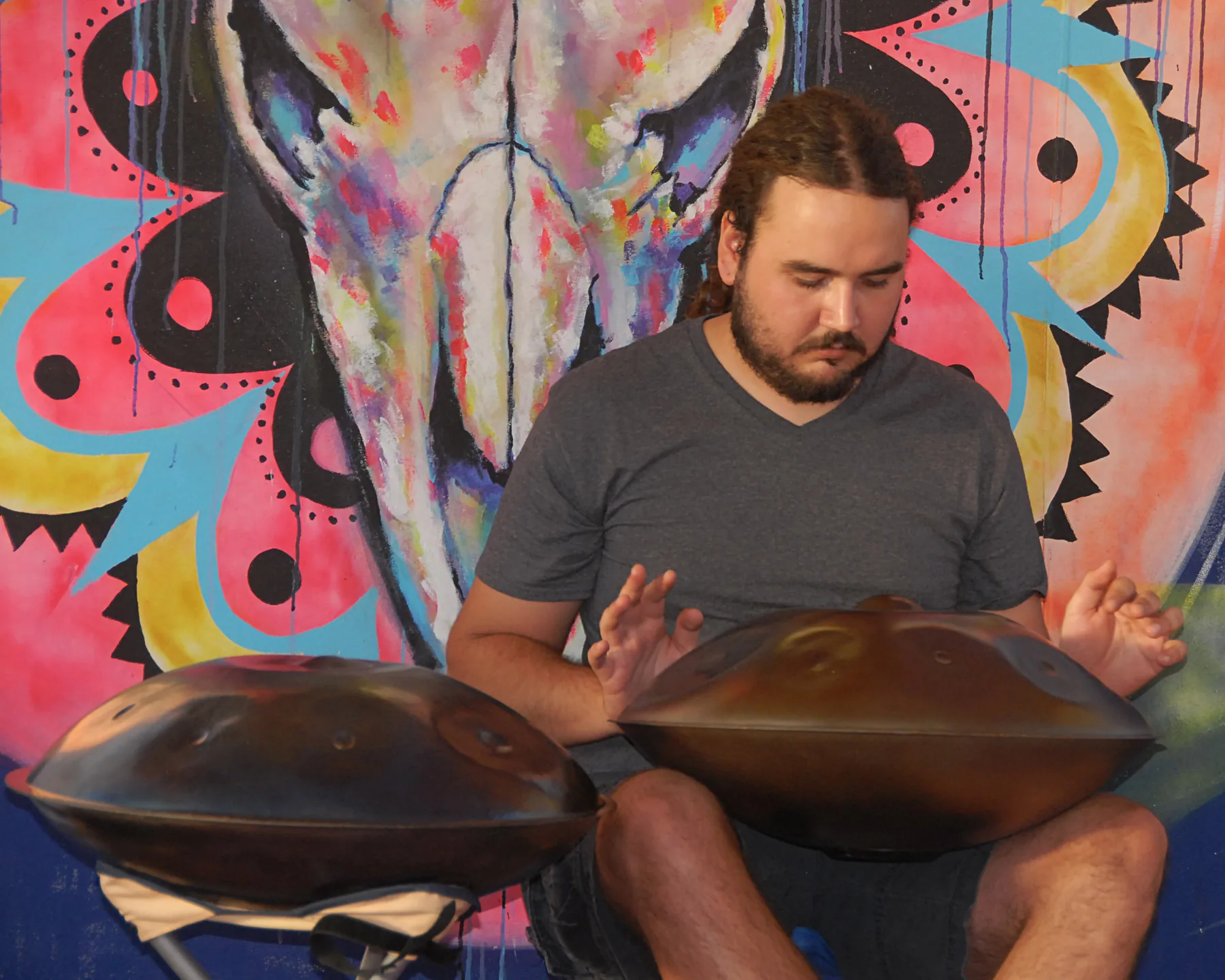

Goal of this guide: clearly explain price ranges in France, avoid unpleasant surprises, and match your budget to how you intend to use the instrument and your skill level.
Prices vary widely: some entry-level models cost around €400–500, a genuine new handmade instrument with 9 notes starts at about €1,000, and high-end pieces often cost between €3,000 and €5,000. Some collectors’ pieces exceed €10,000.
A simple rule of thumb: below €500, you really need to know what you are buying. Around €1,000, you begin to find instruments that are consistently and durably made.
The differences come down to manufacturing, tuning, the number of notes, the scale, the material, availability, and logistics costs. This guide first looks at the market, then at realistic price ranges and the technical criteria that justify the price.
What this guide offers: a way to choose without making an impulse purchase, including practical questions to ask sellers or makers.
Be careful: a high price does not always guarantee quality. An unusually low price should also raise concerns. Finally, we will look at typical buyers: beginners, intermediate players, performing musicians, meditation enthusiasts, and collectors.
Understanding today’s handpan market in France
The French market now offers more choices, although quality pieces remain scarce.
For years, the wait for instruments from some makers approached a year, showing that demand often exceeds supply. The instrument’s recent popularity in music and wellness has increased that pressure.
Few makers can produce instruments regularly while maintaining rigorous quality control. Production volumes remain low, making takes time, and tuning checks are difficult to industrialize.
The balance of supply and demand creates substantial differences: decorative pieces cost a few hundred euros, while established makers’ instruments cost several thousand. The maker’s reputation, the series, and availability (in stock or made to order) strongly influence the price.
Ask for evidence of the work done: request the instrument’s origin, the name of its maker or tuner, recordings, and a chance to try it. This helps you understand market price ranges.
The next section turns these factors into realistic ranges for your budget, so you can avoid misleading comparisons between listings for very different instruments.
To learn more about established makers, consult a recognized workshop.
Handpan prices: realistic ranges for your budget
To choose without surprises, let us first examine common price ranges. The figures below distinguish the listed price from the actual cost (delivery, waiting time, and any retuning).
Under €500: beware of “cheap” offers
Below €500, you often encounter industrial production, unstable tuning, or instruments confused with other percussion instruments. The sound may be unpredictable and durability limited.
Getting started: 7 to 9 notes (new)
Typical budget: €1,100–2,000. The 9-note model remains the standard for learning quickly. Prioritize tuning stability over the number of notes.
More notes: expanding your playing options
For models with more notes, expect to pay €1,500–3,500. Their main advantage is a richer musical range, but they are not essential for beginners.
High-end and collectors’ instruments
Custom pieces and limited series start at around €3,500. Collectors’ models (for example, early PANArt series) can exceed €10,000.
Practical rule: for a first purchase, prioritize tuning quality and ask for concrete evidence.
- Request long, unedited videos showing every note.
- Ask about production times and shipping costs.
- Allow a little money for adjustment after transport.
| Category | Range (€) | Key points | Advice |
|---|---|---|---|
| Entry level | About 400–500 | Industrial production, variable sound | Avoid for a serious first purchase |
| Beginner, new | 1,100–2,000 | 7 to 9 notes; look for stability | Ideal for a first choice |
| More notes | 1,500–3,500 | Wider range, richer playing options | Useful if you want more possibilities |
| High-end and collectors’ instruments | 3,500–10,000 and above | Custom work, limited series, rare pieces | For experienced players or collectors |
To compare reliable offers and see examples, consult this market reference.
Handpan prices: how much does a good instrument cost, and why?
Every piece is the result of a long process: choosing the alloy, shaping, pressing, heat treatment, and then fine tuning.
Production time and tuning
Most of the cost comes from skilled labor time. A maker often spends dozens of hours hammering and adjusting every note.
Stabilizing the harmonics can take thousands of hammer strikes, by hand or with pneumatic tools, followed by several adjustments after treatment.
Supply and demand: their effect on the final price
Handmade production cannot match the pace of industrial production. When demand exceeds supply, waiting lists grow and prices hold steady.
Less obvious costs to anticipate
Beyond production, there are costs that are less visible: reinforced packaging, insurance, international shipping, and possible taxes.
- Packaging and insurance
- Transport and risk management
- Retuning after shipping
“You are mainly paying for hours of precise work, not just the material.”
| Item | Visible | Less visible |
|---|---|---|
| Production | Alloy, shaping, hammering | Hours of tuning and testing |
| Logistics | Shipping charges | Insurance, special packaging |
| Availability | In stock or made to order | Waiting lists, premium for immediate availability |

Handmade or industrial production: what you are really paying for
The differences between handwork and machine pressing are clearest when you listen.
Handmade: hammering creates subtle variations in the note fields. These variations reflect careful craftsmanship and allow precise adjustment of the harmonics. The result is stable notes, even volume, and controlled resonance.
Handmade: hammering, precision, and stability
Handwork aims for harmonic quality. The maker or tuner adjusts each ding and gu to prevent crosstalk.
Machine pressed: acoustic limitations
Pressed models often have note fields that are too uniform. The attack may be uneven, resonance poorly controlled, and some notes may become unpredictable after transport.
A high price does not guarantee quality
A luxurious finish and appealing sales pitch can conceal acoustic flaws. Always ask who made the instrument, how it was tuned, and whether it can be retuned.
Tip: listen to each note on its own, then in a slow sequence. Notice any notes that dominate or sound dull.
| Aspect | Handmade | Machine pressed | Practical check |
|---|---|---|---|
| Surface variations | Slight variations from hammering | Uniform surface | Look at the note fields and feel for small irregularities |
| Note stability | High stability | Risk of notes going out of tune | Test after a few minutes, then again after a few days |
| Harmonics | Consistent and rich | Sometimes unbalanced | Listen for resonance and crosstalk |
| Practical assurance | Maker can retune it | Limited service | Ask for the tuner’s name and retuning terms |
To learn more about production and technical choices, consult this resource: dedicated guide.
Number of notes: how many should you choose, and what will they cost?
The number of notes directly affects both the musical range and the final price.
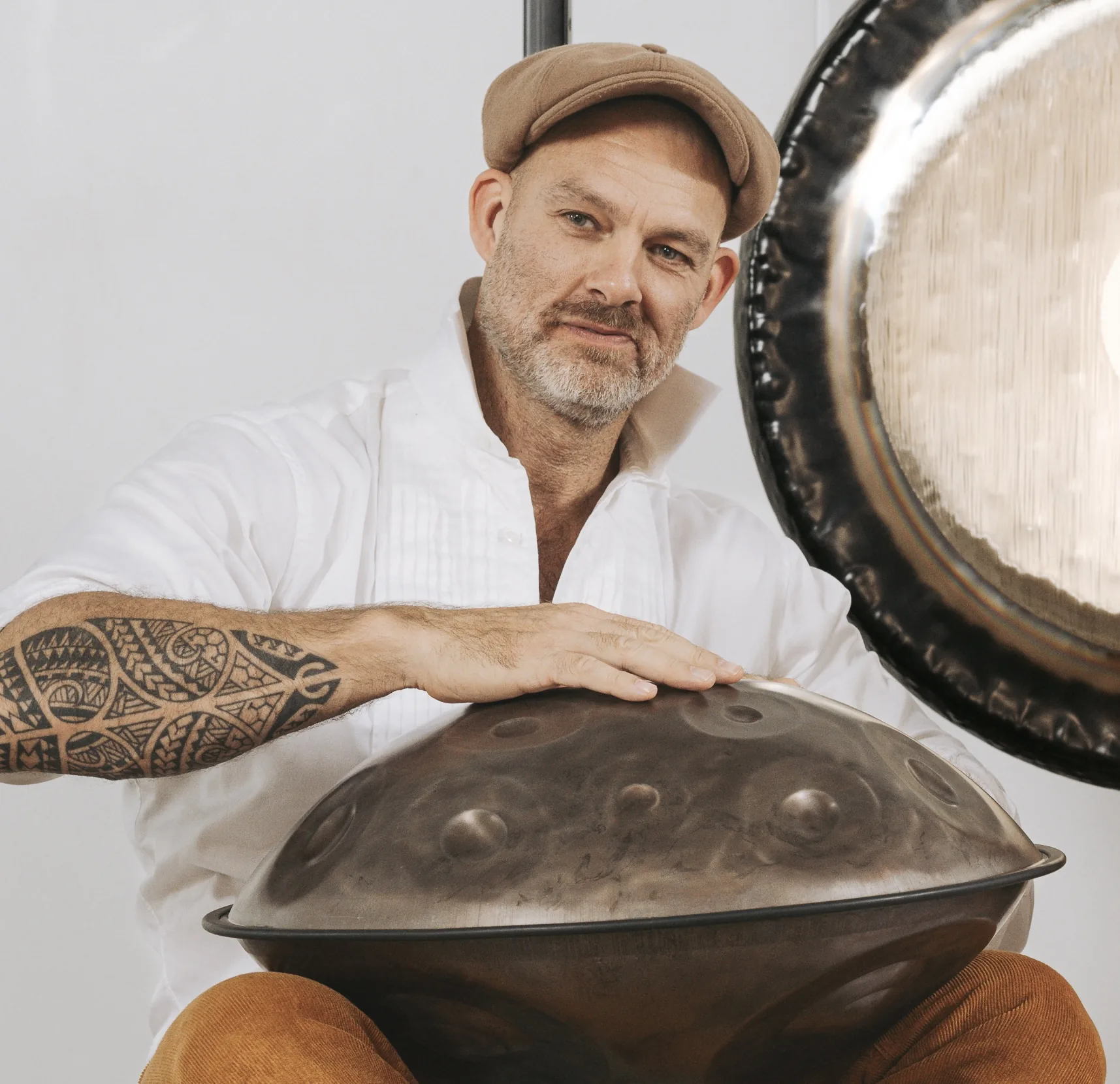
The standard 9-note model (including the ding) offers the best balance of ease of use and value. At around €1,000 for a quality handmade instrument, it offers enough melodic possibilities while remaining easy to learn. This format also makes it easier to compare makers.
Extra notes: how much does each one add?
Every note requires hammering, tuning, and testing. As a general guide, allow an additional €100–200 per added note. This reflects the labor and adjustments needed to stabilize the harmonics.
Bottom notes: when the lower shell makes production harder
Bottom notes, located under the shell, are technically demanding. They increase the price and sometimes the waiting time because more delicate tuning is needed to keep them stable after transport.
Practical advice: for your first handpan, choose 9 well-balanced notes over 12 mediocre ones. When trying an instrument, check that volume and resonance are consistent across all added notes, paying particular attention to bottom notes if it has them.
To refine your choice for your intended use (meditation, composing, or playing), read our detailed buying advice here.
Handpan scales: how they affect your choice and the price
The scale is the set of notes available. It shapes the mood, ease of playing, and ability to play “without a wrong note.”
Popular scales and availability
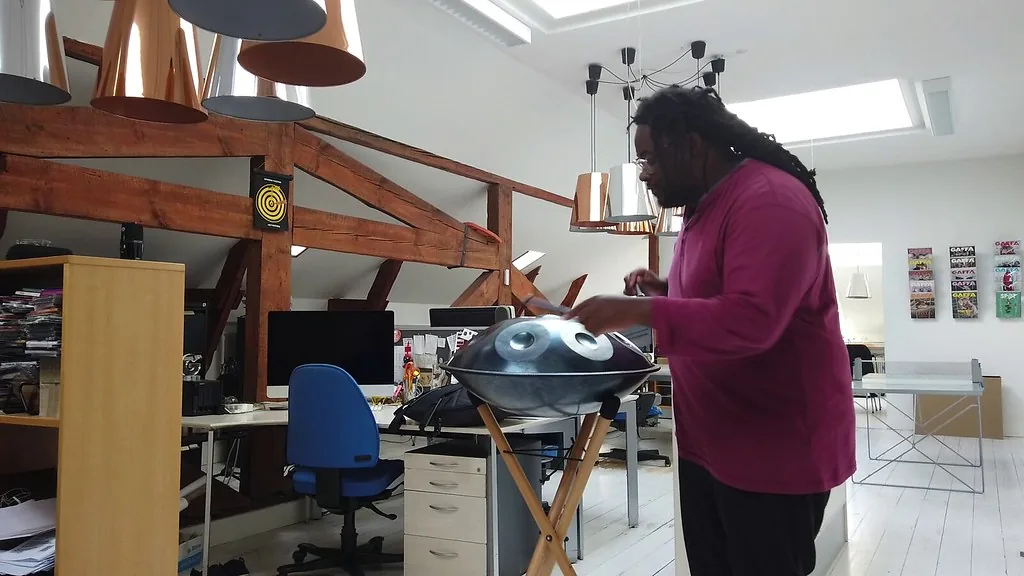
D Kurd and D minor models are common among makers. Their availability makes comparison, and often resale, easier.
The mood of each scale
Major scales have a bright character. Minor scales sound more introspective.
Eastern scales create a mystical atmosphere, ideal for meditation or unusual compositions.
Custom scales: why the cost rises
A custom version requires design, trials, and repeated adjustments. Both working time and the wait increase considerably.
- Tip: for your first purchase, choose a common scale.
- Question for the seller: “Is this scale in stock? How long would a variation take?”
| Criterion | Impact | What to check |
|---|---|---|
| Scale | Mood, ease of playing | Listen to several instruments |
| Availability | Price and waiting time | In stock or made to order |
| Customization | Higher cost | Number of planned adjustments |
Materials: nitrided steel, stainless steel, Ember Steel… how do prices differ?
The choice of steel affects the sound as well as the final price. Cost depends on the metal, but also on production time, labor, and musicians’ expectations.
Nitrided and stainless steel: sound, care, and price
Nitrided and stainless steel often sell at similar prices. Their differences lie in their sound and care requirements.
Nitrided steel is often described as warmer and richer in harmonics. Stainless steel tends to give a brighter attack, appreciated for fast playing.
As for maintenance, stainless steel needs fewer precautions against corrosion. Nitrided steel may need regular care depending on storage conditions.
Ember Steel: why these models can cost almost twice as much
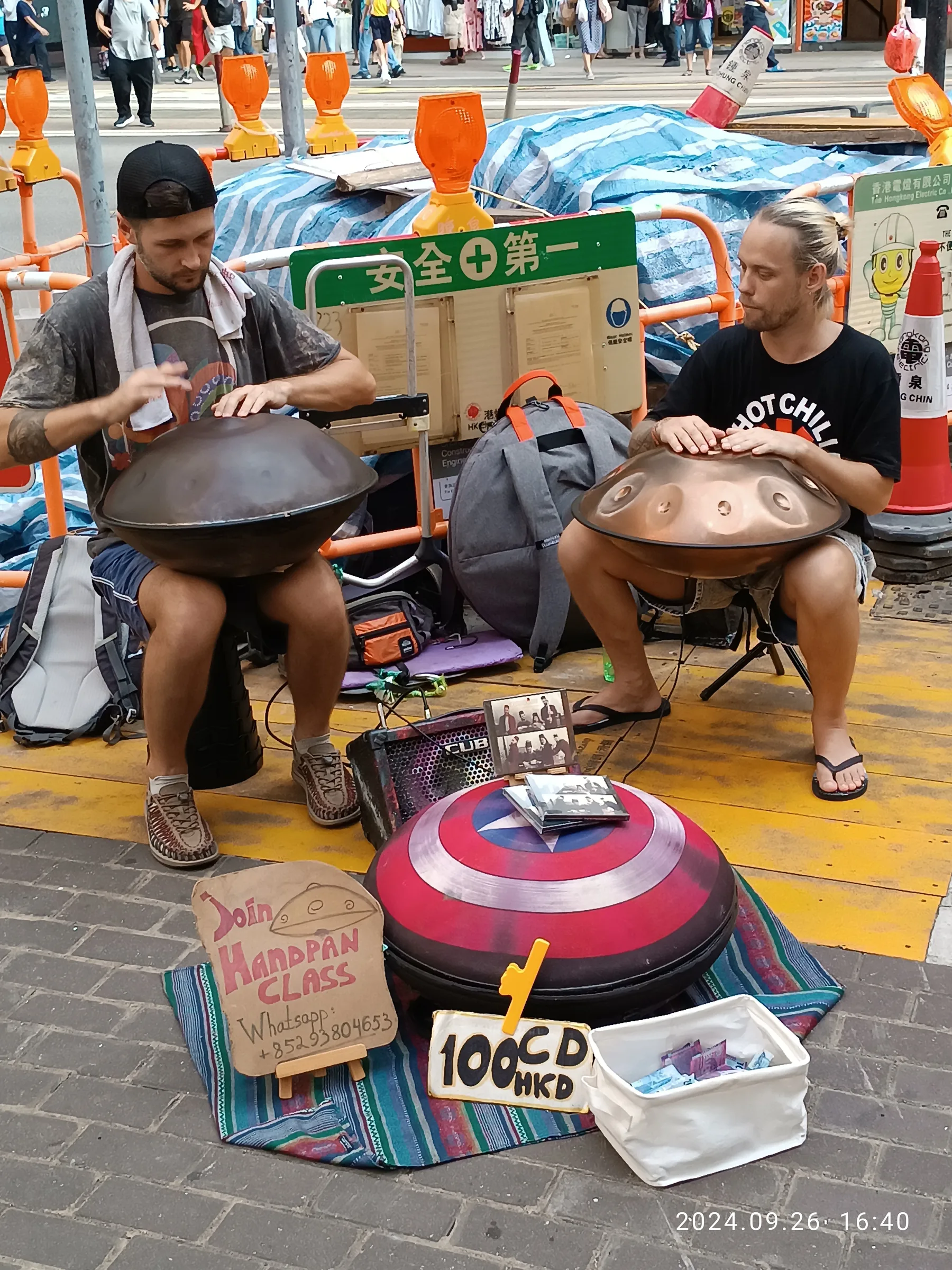
Ember Steel remains rare. The material costs more, needs more intense heating, and requires more energy and workshop time.
Ultimately, the price can almost double for a comparable piece. The scarcity of these models from some makers also increases waiting times and perceived value.
“If your budget is tight, prioritize tuning quality over the type of steel.”
| Material | Sound character | Care |
|---|---|---|
| Nitrided steel | Rounded sound, rich in harmonics | Prone to marks |
| Stainless steel | Bright sound, clear attack | Low risk of corrosion |
| Ember Steel | Very rich sound, rare material | Demanding production |
Practical advice: first check long recordings and tuning stability. The material contributes to quality; it does not replace it.
Tuning, frequency, and sound quality: what justifies the price of a good handpan?
Judge the sound by ear first, then confirm it with simple tests. Assess quality using concrete criteria: note balance, resonance, absence of crosstalk, and tuning stability after repeated strikes.
432 Hz or 440 Hz: choose for your musical plans
440 Hz remains the standard for playing with other musicians and ensembles. Choose 440 Hz if you plan to play in a group or record under standard conditions.
432 Hz is often chosen for solo or meditative projects, or for a sound perceived as warmer. It is an aesthetic preference, not a technical guarantee of better quality.
Resonance: the ideal duration for playing and for beginners
A resonance time of around 8 to 12 seconds is often ideal. Too short makes the sound dry; too long blurs musical phrases.
For beginners, a moderate duration makes it easier to learn rhythm without masking the next note.
Note balance and crosstalk
Balance means that no note dominates or disappears, even when played softly. Transitions between notes should sound consistent.
Crosstalk (or sympathetic vibration) is unwanted vibration in one note when another is struck. It should be minimal.
Test procedure: play each note alone, then simple intervals, and finally repeated patterns to detect crosstalk and changes in volume.
| Criterion | Benchmark | Why it matters |
|---|---|---|
| Tuning | Stable after 10 strikes | Reliable playing and durability |
| Resonance | 8 to 12 seconds | Rhythmic clarity and musicality |
| Crosstalk | Minimal | Avoids unwanted sounds |
Buying a handpan: where to find the best value
Where you buy affects both the sound you end up with and your peace of mind after delivery.
Compare three options: buying from a maker, online, or in a store. Each offers a different balance of security, the opportunity to try the instrument, price, waiting time, and support.
Buying from a maker
Advantages: direct advice, a possible trial, retuning, and after-sales service. Ask these questions: how long have they been making instruments? What method do they use? What are the delivery time and warranty? Can the instrument be retuned?
Buying online
Be cautious online. Check that the seller’s identity is clearly stated, along with their address and legal information. Read reviews, listen to audio samples of the specific instrument, and check the return policy. Be wary of promotions with prices below realistic levels.
Stores in France
Trying several instruments in person is valuable. In a store, you can immediately check tuning, balance, and resonance. Well-known retailers include Woodbrass, Percussions du Monde, La Baguetterie (Paris), and Djoliba (Toulouse).
“A reputable maker often offers more peace of mind than a bargain struck too quickly.”
To compare offers and reliable makers, consult this dedicated resource.
| Source | Advantage | What to check |
|---|---|---|
| Maker | Advice, after-sales service | Maker’s name, warranties |
| Online | Price, selection | Legal information, audio recordings, returns |
| Store | Immediate trial | On-site tuning, availability |
Used handpans: potential bargains, but extra caution is essential
The secondhand market offers opportunities but also common pitfalls. You may save a substantial amount, find an instrument that has already been played in, or get one quickly from a respected maker.
Common risks:
- Detuning that is hard to detect after an impact or poor storage.
- Impact marks that affect the sound.
- Counterfeits or decorative objects sold as playable instruments.
- Marketplace scams (fraudulent listings and payment traps).
Good practices before any purchase
Meet the seller to test every note. Check balance, crosstalk, and stability after several strikes.
Take someone with you: a companion makes the transaction safer and helps you assess the instrument’s condition. Ask for the invoice, its origin, and the serial number if available.
Protecting the transaction: choose a traceable bank transfer or instant payment. Arrange the handover in a public place. If you still have doubts, walk away.
For a beginner, buying used can be risky: sound balance and stability are hard to judge. If your budget is tight, consider buying new from a reputable seller with after-sales service, or compare well-documented safer secondhand offers.
| Advantage | Risk | What to check | Recommended action |
|---|---|---|---|
| Savings | Detuning | Test every note | Meet in person and use traceable payment |
| Quick access | Hidden impacts | Detailed visual inspection | Ask for the invoice and origin |
| Played-in model | Counterfeit | Serial number, maker’s name | Do not buy alone |
| Room to negotiate | Online scams | Seller reviews, long audio recordings | Favor sellers whose identities can be verified |
Conclusion
In short, remember three simple points: set a realistic budget, prioritize tuning quality and balance, then choose the number of notes, scale, and material according to your needs.
To set your expectations: below €500, the risk is high. The €1,100–2,000 range is most relevant for a serious first purchase. Above that, prices rise markedly for custom and collectors’ models.
Why these prices? Because production time, tuning adjustments, the scarcity of makers, and logistics affect the price far more than fashion does.
Quick checklist: listen to long demonstrations, check whether the instrument is tuned to 432 or 440 Hz, test resonance and crosstalk, then choose a seller who offers after-sales service and retuning.
Compare 2 or 3 D Kurd or D minor models and decide based on how they feel to you. The right purchase is the one that makes you want to play often without worrying about reliability.