
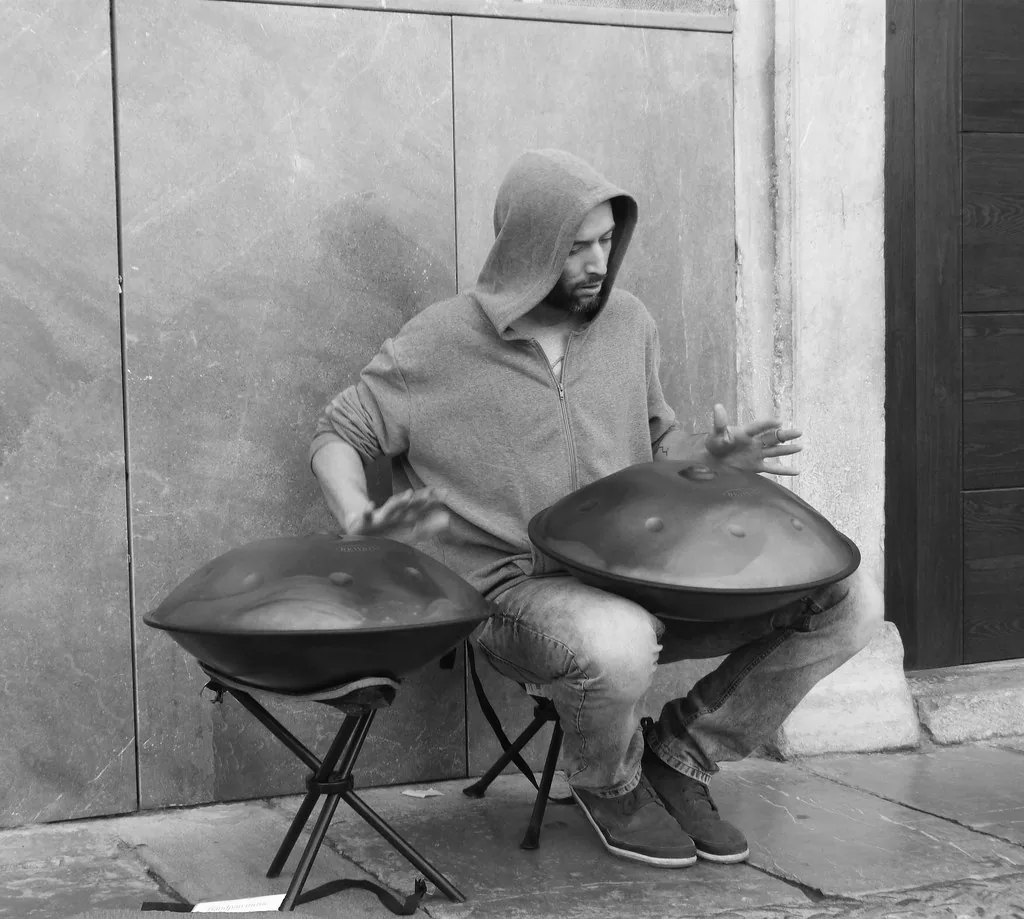

Setting the scene: this detailed, practical guide is for buyers in France who want to choose their first handpan with confidence. It explains the terminology, shows how to assess sound quality by listening, and helps you avoid common buying pitfalls.
A quick clarification: the term “handpan” is often confused with “hang drum” and other names. We explain the differences from the outset to make your research and shopping easier.
The guide follows a logical sequence: definition and community, construction, evaluation criteria, and buying decisions. You will find practical advice and criteria you can check for yourself.
What you will learn: how to recognize notes, choose a scale that suits your musical goals, and put listening and hands-on testing ahead of marketing claims.
An important reminder: two instruments that look alike can respond very differently when played. Try them, listen, and compare.
Why the handpan fascinates musicians and beginners in France
Its quick learning curve is appealing. Most models use a diatonic scale. This limits dissonance and makes improvisation easier.
An intuitive instrument made for improvisation
The notes are arranged so that playing feels rewarding from the first few minutes.
The result: even without reading music, you can create simple, satisfying phrases.
A sound world between percussion, melody, and relaxation
Musicians appreciate its rich tone and range of expression. You can play very softly, creating an almost cinematic sound, or take a percussive, rhythmic approach.
In France, the instrument is used for meditation, acoustic concerts, street performances, and wellness workshops.
“It feels as though you are composing from the very first minute. It is addictive.”
| Use | Characteristic | Suitability |
|---|---|---|
| Relaxation | Long sustain, warm tone | Excellent for solo playing and workshops |
| Stage / group | Clear attack, good projection | Choose a model with more stable tuning |
| Street / performances | Durability, volume | A practical, hard-wearing choice |
Key point: the right choice depends on how you will use it. A model that sounds appealing for relaxation may be poorly suited to the stage or group playing.
What is a handpan? Origins, instrument family, and how it works
First appearing in Switzerland around 2001, this small steel idiophone is a tuned acoustic instrument. It belongs to the idiophone family and produces sound through the vibration of its steel shell, rather than strings or a column of air.
Physical structure: two joined metal shells form a cavity. The upper face has a central note—often called the “ding”—surrounded by several notes arranged in a circle.
It works through tuned vibrating areas, each of which vibrates at its own frequency. The cavity amplifies and colors the harmonics. This is what distinguishes a playable instrument from decorative objects that imitate its appearance without being tuned.
Playing with hands or mallets
Playing with the hands gives a softer, more organic attack. Touch helps bring out subtle variations and natural sustain.
Mallets produce a sharper attack and more projection. Some models, especially thinner ones, can be damaged or lose their harmonic balance if mallets are used too much.
For example: outdoors, if you need more projection, steel that carries further and has medium sustain will often be preferable.
| Feature | Effect on sound | Suggested use |
|---|---|---|
| Central note (ding) | Anchors the scale and establishes a clear tonal center | Reference point for tuning |
| Surrounding notes | Melody and harmonics | Improvisation and patterns |
| Shell and cavity | Resonance and tone | Choose the material to suit outdoor or stage use |
The handpan community: makers, players, events, and sellers
From makers to festivals, each part of the community helps shape an instrument’s reputation and access to quality models.
The role of makers and tuners
The maker is central to quality. The work involves more than tuning the instrument: it also shapes its tone and long-term stability. A well-tuned model retains its tuning and character after months of playing.
Musicians, festivals, and workshops
Gatherings in France let you try several models, compare their tones, and reduce the risks of a purchase.
Workshops and festivals encourage exchanges between amateur and professional players. These events also let you assess sellers’ transparency and test how well instruments retain their sound.
Dubious practices and ways to protect yourself
Watch out for misleading practices: dropshipping, influencers who also sell instruments, and claims of craftsmanship that lack evidence often emphasize a story over traceability.
- Ask for tuning information and unedited videos.
- Check the return policy and after-sales support.
- Compare prices and technical evidence before buying.
To identify a reputable maker, look for traceability, independent reviews, and the option to have the instrument retuned. Consult specialist directories to find well-documented local makers, save time, and make a better choice.
Essential vocabulary to understand the instrument before buying
Understanding the basic terms helps you assess a model’s sound quality and durability. Here are the words you need to ask the right questions.
Ding and dimple
Ding refers to the central note; a dimple is the small indentation that shapes a note field. These features affect the attack, precision, and feel under your fingers. A well-formed ding should sound clear without being too forceful.
Notes and playing comfort
The handpan’s notes include the central note and the notes around it. Their placement affects how comfortable the instrument is to play and how easily you can perform melodic patterns.
Gu and bottom notes
The gu is the opening that regulates the cavity and supports the bass response. Bottom notes on the underside add depth, but they can make the instrument harder to balance on your lap and cause interference if poorly designed.
Shoulder tones, harmonics, and timbre
Shoulder tones are audible overtones around the central note. They contribute to the timbre and give a model its sonic “personality.”
Maker, tuner, and tuning
The maker or tuner does more than tune the instrument: they shape its long-term stability. Check whether the maker documents the tuning and how well it holds up with use.
To learn more, consult this resource.
How handpans are made and why so many look alike
Behind every sound is a lengthy process of shaping and manual tuning. Construction has three main stages: designing the shell, hammering and tuning it, and refining the tone.
From raw shape to playable instrument
The first stage establishes the instrument’s geometry: the shells’ profile and the cavity’s size. This shape affects frequency and resonance.
Hammering and tuning: a long process
Hammering is done by hand and often takes several hours. The time spent on the instrument stabilizes its harmonics and helps explain its price.
Preformed shells or complete fabrication
Preformed shells have made production more accessible. They speed up the process but also make instruments look more alike.
Making the entire shell, however, gives the maker more control over the material and the instrument’s sonic character.
“Two models that look identical can respond very differently to touch and changes in playing intensity.”
| Stage | Effect | What it means for the buyer |
|---|---|---|
| Shell design | Determines resonance and playing comfort | Choose according to use (stage, meditation, outdoors) |
| Hammering and tuning | Stability, tone, longevity | More work can mean higher quality and a higher price |
| Finishing | Color, protection, fine adjustment of tone | Affects the instrument’s sonic character |
For example: two visually identical handpans can have very different balance and dynamics if one has received fewer hours of tuning.
In the next section, we look closely at what to listen for when distinguishing a decent model from an excellent one.
What makes a good handpan: sound qualities to check
Judge quality by ear first: note accuracy, consistent tone, and response to changes in playing intensity. Start with a simple test: play each note softly once, then play it more firmly.

Three-part tuning and a listening checklist
Each note should have a clear fundamental, an audible octave, and often a fifth. If one component is missing, the note may sound “fuzzy” or unpleasant.
Quick listening checklist:
- Play a note softly: its fundamental should be clear.
- Play it more firmly: the octave should emerge without changing the tone adversely.
- Test its stability: the fifth adds richness; its absence can significantly affect the balance.
Timbre, character, and balance between notes
Timbre gives the sound its color. Good sound quality means that no note stands out because its tone is inconsistent.
Check the balance between notes: a harsh high note or an overpowering bass note disrupts the coherence of your playing.
Dynamics, coupling, and crosstalk
A good model responds to both soft and firm playing without distortion or a muffled sound. That response should be consistent across all notes.
Coupling creates beats that may enrich the texture or interfere with listening. Persistent beats that obscure the melody are a bad sign.
Crosstalk occurs when striking one note activates another. Test it by striking an isolated note: unwanted notes should not continue to sound.
Finish and comfort
Finally, examine the finish: smooth edges, a clean gu, and no shell noises or squeaks. The instrument should balance comfortably on your lap and feel good to play for extended periods.
“Careful listening often reveals what photographs cannot show.”
| Criterion | What to look for | Simple test |
|---|---|---|
| Tuning of each note | Fundamental + octave + fifth | Play firmly and softly, then listen to the harmonics |
| Timbre & balance | Consistency, with no note sounding out of place | Play through the scale and listen for differences in tone |
| Dynamics | Response from soft to firm playing, without distortion | Vary the intensity on each note |
| Coupling / beats | Controlled texture without constant interference | Play two nearby notes and listen for beats |
| Crosstalk | Minimal | Isolate a note and check whether it makes other notes ring |
Handpan sustain: finding the right balance and avoiding a wash of sound
How long a note rings directly affects the clarity of musical phrases. Sustain simply means the length of time a note continues to vibrate after it is struck.
Short, medium, or long sustain: effects on playing
Short sustain favors rhythm and precision. It lets you play tightly spaced phrases without notes overlapping.
Medium sustain (around 8 to 12 seconds) offers a useful balance of fullness and clarity that beginners can manage easily.
Long sustain creates an enveloping atmosphere, ideal for slow, layered passages and meditation, but it can blur the melody.
Why impressive sustain at first can become limiting
Long sustain can make a striking first impression. After a while, however, it can produce a wash of sound: resonances overlap and mask subsequent attacks.
“Generous sustain sounds lovely in a video, but makes fast improvisation harder.”
For rhythmic playing, choose short to medium sustain. For slow, layered passages, long sustain may be desirable.
A short testing routine
- Play one note, wait for it to stop ringing, then play another: listen for clarity.
- Alternate quickly between two notes: notice whether their resonances blend together.
- Play arpeggios and listen for attacks that become obscured.
Buying tip: consider how sustain relates to the material (stainless steel → often longer sustain; nitrided steel → resonance that fades more quickly) and to your intended use: indoors, on stage, or in the street.
Handpan: a complete guide to understanding the instrument and choosing confidently
Before buying, decide what you want to play and where you will play most often.
Use: meditation, rhythm, stage, or outdoors
Meditation: choose a warm tone and medium to long sustain.
Rhythm / stage: look for a clear attack and stable tuning.
Outdoors / street: prioritize durability, projection, and ease of maintenance.
Set your priorities: timbre, balance, sustain, budget, and appearance
For example: long sustain sounds appealing in a video but complicates fast improvisation.
Rank your needs: timbre > balance > sustain > budget > appearance.
What to check when listening and trying one before buying
- Videos: check the attack, sustain, background noise, and consistency between notes.
- In-person trial: test crosstalk, dynamics, comfort, and note stability.
- Resale: favor popular scales and reputable makers to help retain the instrument’s value.
| Stage | What to check | Simple action |
|---|---|---|
| Listening to videos | Attack, sustain, consistency | Watch several comparison videos |
| In-person trial | Crosstalk, dynamics, comfort | Isolate each note and vary your playing intensity |
| Before purchase | Traceability, return policy | Check reviews, warranties, and the maker’s reputation |
To explore your options and compare several makers, read which handpan to choose.
Choosing a handpan scale: the criterion that changes everything
A model’s scale determines the colors and limits of your musical vocabulary. A handpan is not chromatic: its scale determines what you can play naturally.
Why each model has a single scale
A single scale gives you a specific set of notes ready to play. You cannot access every key without changing instruments.
Colors: major, minor, and Eastern-influenced scales
Major scales: bright and lyrical. Minor scales: introspective. Eastern-influenced scales: distinctive and often modal.
Names and keys
Names combine English and French note naming conventions. The same name, such as “Kurd,” may refer to different versions depending on the maker because the notes and their arrangement vary.
| Scale type | Mood | Examples for a first handpan |
|---|---|---|
| Major | Bright, open | AmaRa, Equinox |
| Minor | Warm, melancholy | D minor, Integral |
| Eastern-influenced / modal | Distinctive, exotic | Kurd, Magic Voyage |
A simple way to choose a scale
Listen to several scales and note their names and, above all, their notes. Listen to the same scale played on instruments from different makers.
- Create a playlist.
- Take notes after each listening session.
- Return to them with fresh ears and check your instincts: the scale should suit the music you want to make.
To explore further and choose a scale from those offered by reliable makers, consult this directory. A good decision rests on listening, comparison, and your own response to the sound.
D minor, Kurd, AmaRa: which scale should you choose for a first handpan?
A good choice of scale makes improvisation easier and helps prevent creative frustration.

D minor often comes up because of its versatility. This scale balances melancholy and energy. It remains accessible to beginners and suits most uses.
Kurd and AmaRa belong to the same minor family but resolve differently. Kurd often sounds more open; AmaRa can feel more intimate, depending on the instrument’s tone.
Be careful with strongly flavored scales such as Hijaz, Ragadesh, AkeBono, or Shang Diao. Their distinctive sound can quickly limit your repertoire.
Always try the same scale from several makers. Even with identical notes, timbre, balance, and dynamics can vary greatly. Shortlist two or three models, then compare them using unedited videos and, if possible, an in-person trial.
| Scale | Mood | Advantage | Risk |
|---|---|---|---|
| D minor | Versatile | Easy to play | Few creative limits |
| Kurd | Melancholy | Encourages improvisation | Can sound distinctive |
| AmaRa | Intimate | Colorful and expressive | Less open in a major context |
| Hijaz / Ragadesh | Eastern-influenced | Atmospheric | May limit your repertoire |
432 Hz or 440 Hz: which tuning suits your musical goals?
The reference frequency shifts all the notes by the same interval and changes the overall color of the sound.
440 Hz is the modern reference. It makes group playing and tuning with pianos, guitars, or violins easier. Around 98% of musicians use this value; it is a practical choice if you want to play with other instruments.
432 Hz is often chosen for a sound perceived as softer and more calming. It can suit solo playing, wellness activities, and personal practice. On the other hand, it can complicate group improvisation or harmonizing with instruments tuned to the usual reference.
Practical advice
- Watch several comparison videos to hear the difference.
- Try playing with a guitar or piano: if the instruments sound in tune together, the choice makes sense.
- Before paying, ask the maker or seller to confirm the advertised frequency in writing.
“Choose according to how you will play: calming solo music or easier group playing.”
Number of notes: 9, 10, or more—is it better to start with fewer?
The number of notes substantially changes an instrument’s musical possibilities and technical complexity.
How to count them: the “X + 1” format is common: X surrounding notes plus the central note (ding). Always ask the seller to clarify the count before buying.

The temptation of more notes
More notes promise a wider range of colors and chords. That is appealing if you want a broad sonic palette.
The real risks as note counts rise
Adding notes increases the challenges: more delicate tuning, uneven tone, lower volume in the high notes, and interference between note fields.
For example: a 17-to-20-note instrument bought by a beginner may sound less clear than a carefully made 9-to-10-note model.
What balance of possibilities and quality makes sense for a first purchase?
A common recommendation favors balance: 8 to 9 surrounding notes + ding. This layout offers plenty of musical possibilities while limiting technical problems.
- Ask for a recording of each note.
- Request a crosstalk test.
- Check that the notes have consistent volume.
| Number | Advantage | Risk |
|---|---|---|
| 9 (+1) | Balance, easier tuning | Limited but coherent palette |
| 10 to 12 (+1) | More harmonic possibilities | Greater risk of uneven tone; longer tuning process |
| 17 to 20 (+1) | Wide range | Instability and quiet notes |
“Prioritize sound quality and stability over the number of available notes.”
Nitrided or stainless steel: differences in tone, dynamics, and care
The shell material changes how notes resonate and overlap. Understanding these differences helps you choose according to your playing style and where you will use the instrument.
Nitrided steel: wide dynamics and a cascading decay
Nitrided steel offers a responsive attack and a cascading decay. Notes separate naturally, leaving space between sounds.
This material supports clear articulation and rhythmic playing. It handles firm strikes without masking the harmonics.
Stainless steel: a more compressed sound and long sustain
Stainless steel produces a more enveloping sound, often described as compressed, with a linear decay and long sustain.
It suits slow, layered passages, low registers, and outdoor performances where lasting sound matters. Ember Steel is a trade name associated with certain 441 stainless steels.
Which material suits your playing style?
In summary:
| Material | Sound profile | Suggested use |
|---|---|---|
| Nitrided steel | Open, dynamic | Articulation, rhythm, percussive playing |
| Stainless steel | Enveloping, long sustain | Layered passages, gentle solo playing, outdoors |
Care: protect the instrument from corrosion, avoid harsh products, and wipe it down after playing. If you are unsure about the material, ask about trade names when buying so you can compare models more accurately.
Choosing the steel means choosing the sound’s character.
Where to buy a quality handpan: makers, online sellers, shops, and used instruments
Where you buy affects the instrument’s traceability as well as your ability to assess its sound quality.
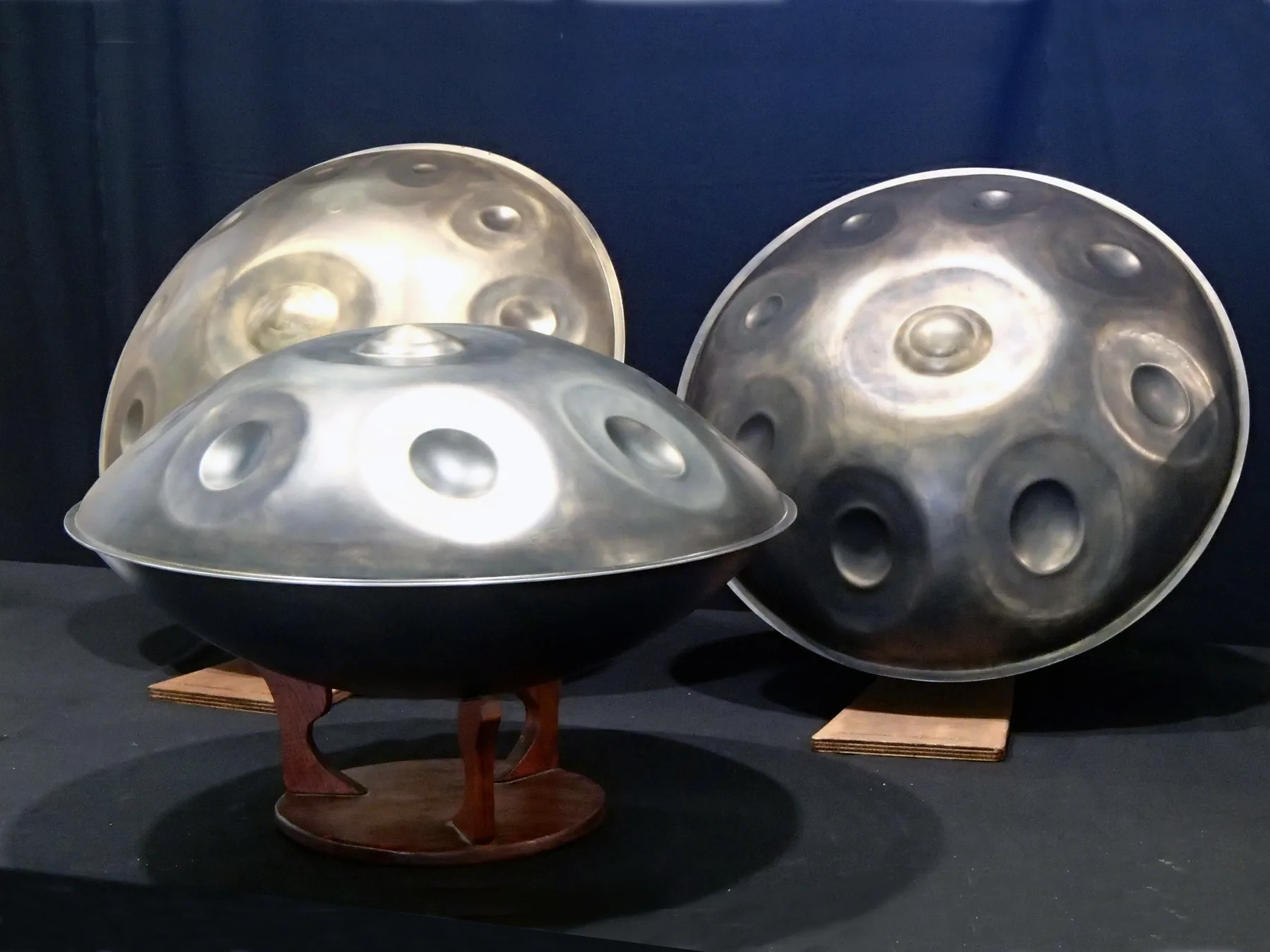
Buying directly from a maker brings advantages: a choice of scales, tuning information, after-sales support, and the possibility of retuning. The drawback: production delays and waiting lists at respected workshops.
Shops and online sellers: checks before paying
In a shop, test the balance and stability of the notes. Online, request videos of every note, a return policy, clear information about the instrument’s origin, and confirmation of its frequency (432 or 440 Hz).
Used instruments: essential checks
For a used listing, check the edges, note stability, unwanted noises, and the instrument’s history, including impacts and storage. Ask for a close-up video and evidence of maintenance.
How to recognize a decorative or poorly tuned object
Warning signs include a cold metallic sound, inconsistent notes, unwanted sympathetic sounds, and uneven volume across note fields. Such models are often difficult to play musically.
“Be wary of marketing promises: traceability and technical evidence matter more than a good story.”
| Source | Advantage | What to check |
|---|---|---|
| Maker | Traceability / quality | Lead time, invoice, tuning confirmed in writing |
| Shop | In-person trial | Condition, warranty, origin |
| Used | Attractive price | Note condition, instrument history |
Warning signs: unclear origins, an unverifiable story, excessive promises, and missing technical information. Take these seriously before buying.
Getting started after purchase: technique, lessons, resources, and progress
During the first few weeks, focus on the quality of your movements rather than speed. Posture, a relaxed strike, and alternating hands are fundamentals to learn from the start.
Learning independently with demonstration videos and simple exercises
Suggested routine: 10 to 15 minutes a day, starting with a warm-up followed by two or three slow patterns.
- Posture: keep your back straight and the instrument stable.
- Strike: keep your hand relaxed and aim for the center; listen to the resonance.
- Exercises: two- or three-note patterns, slow arpeggios, and changes in intensity from soft to firm.
Learn by watching demonstration videos, then repeat short phrases before improvising.
Taking lessons and joining workshops: when is it worthwhile?
Lessons help correct technique, manage sustain, and prevent bad habits.
Workshops let you try other sounds and improve more quickly at recognizing notes and controlling your touch.
“A month of structured learning often brings more progress than several months of unstructured practice.”
| Goal | Action | Expected result |
|---|---|---|
| 7 days | Daily 10-minute routine | Comfortable posture |
| 15 days | Master 3 patterns | Fluency and muscle memory |
| 30 days | Record a short improvisation | Control of two levels of intensity and more musical playing |
For advice on learning and improving, read this article, which describes the stages beginners often go through.
Care, transport, and the instrument’s future: rust, retuning, and longevity
Longevity starts with simple habits: wipe down the instrument after every session, store it somewhere dry, and avoid harsh sprays. A soft cloth is enough to remove sweat and fingerprints.
Corrosion resistance: nitrided versus stainless steel
Nitrided steel is naturally less resistant to moisture; it needs drying and an occasional light application of oil. Stainless steel tolerates outdoor use and fingerprints better, but dirt and abrasive products can still damage it.
Case, handling, and edge protection
Transport the instrument in a padded case. Avoid knocks to its edges, and do not place it on an unstable surface.
Retuning and the role of after-sales support
Temperature changes or impacts can affect tuning. Favor a maker or tuner you can reach locally. Include the potential cost of an adjustment in your overall budget.
- To protect the instrument: do not stack anything on it, avoid heat and moisture, and keep it safe from children and pets.
- Before buying: ask about after-sales support and whether the instrument can be retuned.
A good maker supports your instrument throughout its musical life with retuning, advice, and sometimes a trade-in option.
Conclusion
Ultimately, careful listening and clear priorities will make the difference.
First define how you will use the handpan, choose one or more suitable scales, and assess its sound quality: tuning, timbre, balance, and dynamics.
Avoid offers that lack transparency: try instruments when possible, compare two or three makers, and insist on traceability and after-sales support. Remember that sustain, material, note count, and reference frequency all involve trade-offs; there is no single best model for everyone.
Final checks: shortlist three scales, compare two or three makers, try an instrument in person if possible, and check resale prospects and after-sales support. For practical resources and advice, consult this beginner’s guide.
Once you have made the right choice, your progress will depend mainly on regular practice, careful listening, and the community around you.