
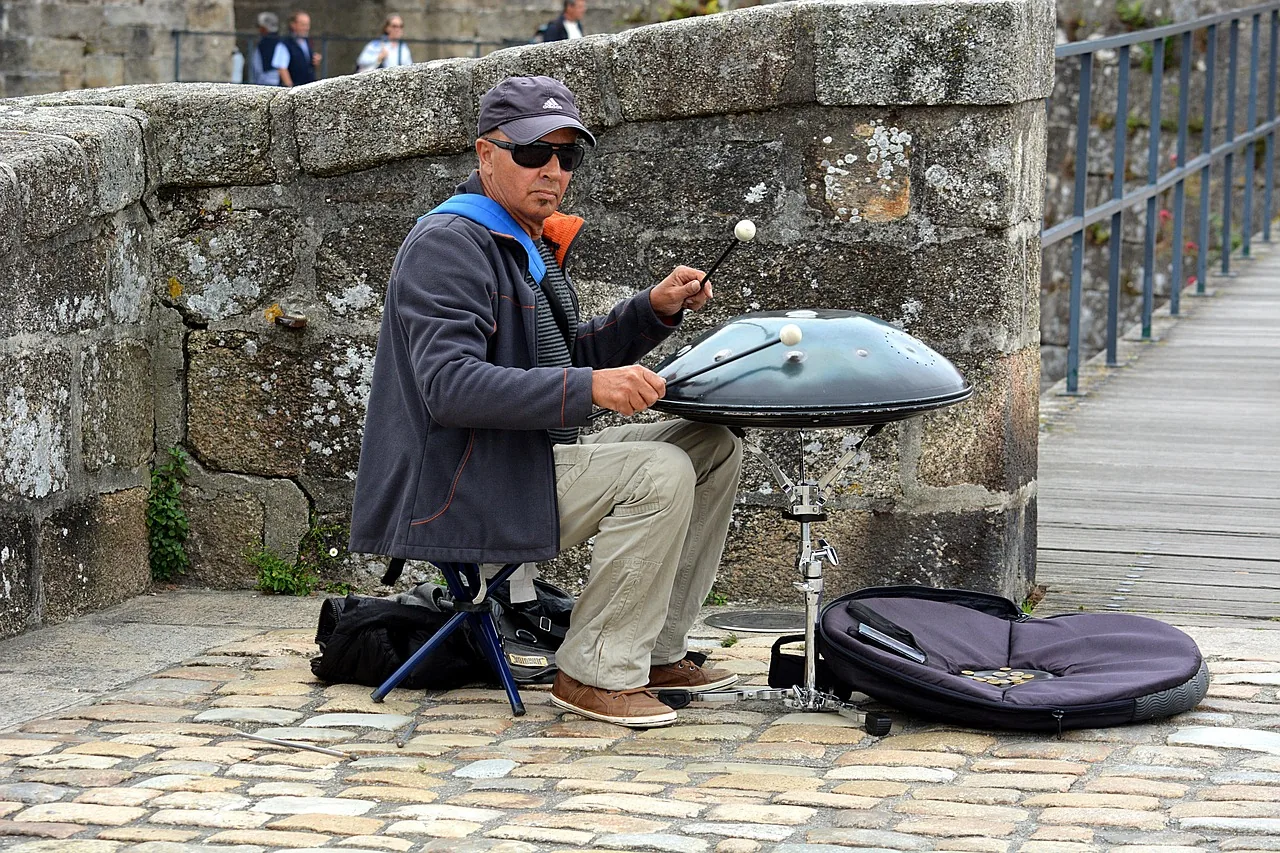

A handpan is an instrument made of steel, often nitrided or stainless. It remains vulnerable to scratches, moisture and impacts. That is why you need a case suited to your journeys.
This buying guide helps you make the right choice based on how often you travel: trips around town, rehearsals, concerts or longer journeys. We explain how straightforward factors — dimensions, padding, materials, water resistance and carrying comfort — improve protection.
We cover three types of case: soft, hard and hybrid, each suited to different uses. Expect to pay around €30 for an entry-level soft case and around €185 for a hard case. Protection and weight generally increase with price.
If you play often, prioritize protection and carrying comfort. For occasional short trips, low weight may matter more.
To compare models and practical examples, see a selection available in France from Djoliba – handpans and travel advice from Medias DZ – traveling with your instrument.
Why a case is essential for protecting a handpan
Travel creates more opportunities to mark your instrument’s surface. Without a suitable case, nitrided or stainless steel can quickly develop scratches and small dents. These marks are often permanent and affect its appearance.
Dust causes tiny abrasions. In a car or trunk, contact with clothing can add more fine scratches. Even a basic padded bag reduces this wear and helps preserve the instrument’s condition.
Condensation, rain and damp ground encourage oxidation. Suitable protection limits exposure to moisture and temperature changes, helping the metal remain stable.
“Impacts concentrated in the wrong places can throw notes out of tune and affect sound quality.”
On the move — on stairs, public transport or backstage — mishaps are common. Straps and back support reduce knocks and abrupt handling, helping preserve the instrument’s response.
- Takeaway: choose a level of protection that suits how often you use the instrument and how you travel.
- To compare options available in France, see this practical selection of cases and accessories.
Which type of handpan case suits your journeys?
Match your instrument’s protection to how often and how far you travel. This simple framework helps you make the right choice, whether you rarely leave home with it or travel frequently.
Soft: light and easy to carry
A soft case combines reinforced fabric, a thin lining and padding. It protects against scratches and moderate knocks while remaining easy to carry every day.
Hard: the protection of a shell
Hard shells hold the instrument more securely and resist compression. They reduce risks on long journeys or when the instrument is handled frequently.
Premium example: an ABS and EVA shell with impact-absorbing foam, a lid-style closure and waterproof protection, ideal if you travel often.
Hybrid: a practical compromise
A hybrid backpack offers straps, reinforced handles and effective padding. It provides protection close to that of a hard shell without the extra weight.
- Decision guide: short or city trips → soft; frequent trips or travel by plane or train → hard; varied uses → hybrid.
- Price guide: from €30 for a soft case; around €185 or more for a hard shell. Weighing the cost against the risk helps you decide how much to spend.
For a closer comparison of the instruments and their uses, read this handpan versus tongue drum comparison.
Handpan case: how to protect your instrument in transit
Protection that fits the instrument properly greatly reduces the risk of knocks and rubbing.
Fit and dimensions
Measure your handpan’s diameter with a tape measure and compare it with the interior dimensions specified by the manufacturer.
For example, a 55 cm instrument will often fit a case advertised as 62 cm, depending on the thickness of the foam and the interior shape.
Level of protection
Look for dense padding and thick, impact-absorbing foam that keeps the instrument from moving.
Internal supports, especially padding around the ding, prevent the instrument from shifting and taking a hit.
Materials and durability
Compare lightweight reinforced fabric with a lining, which protects against scratches, with ABS and EVA shells, which better resist compression.
Hard shells offer a higher standard of protection if you travel often.
Water resistance and closures
Check the outer coating, the strength of the zipper and whether there is a rain flap.
A shell with two closures helps keep out dust and moisture.
Carrying comfort and useful details
Try the padded shoulder straps, securing straps and back support: stable carrying reduces abrupt handling.
Look for finishes that protect vulnerable areas of the instrument and a space designed for the ding.
- Tip: if you are unsure, read customer reviews or a detailed product specification.
- Technical discussions and practical guides can help you confirm compatibility.
- For complementary accessories, also see this accessory advice.
Buying in France: compare quality, reviews and service
A sound purchase depends on material quality and clear sales terms.
Before ordering, compare the stated quality and the services offered. Check the materials — reinforced fabric or a hard shell — the impact-absorbing foam and the finishing details: zipper, seams and handles.
Also assess the seller’s professionalism. Specialists in instruments such as hang drums, tongue drums and steel percussion often carry out strict checks and provide responsive after-sales service.
Signs of quality
- Visible finishing details: a sturdy zipper, reinforced seams and a reinforced handle.
- Durable materials and dense foam for effective protection.
- Clear information about weight, diameter and compatibility with your instrument.
Reviews and trust
Treat reviews as a sign of trust: look for a high average rating backed by a substantial number of reviews. For example, a rating of 4.6/5 based on more than 400 reviews is a useful indicator of reliability.
“A high rating backed by several hundred reviews reduces uncertainty when you buy.”
Delivery and returns
Favor sellers that dispatch within 48 hours, accept returns within 14 days and honor the two-year statutory guarantee. These services make the decision easier and support your musical practice, whether in rehearsal or in concert.
| Criterion | Good sign | Practical example |
|---|---|---|
| Rating & number of reviews | At least 4.5/5 and more than 400 reviews | Instruments du Monde: 4.6/5 (more than 400 reviews) |
| Dispatch & delivery | Dispatch within 48 hours; delivery in the EU in 3 to 14 days | Free delivery in France, Belgium and Switzerland |
| Guarantee & after-sales service | Returns within 14 days; two-year guarantee | Sound Sculpture: two-year guarantee and support |
| Quality checks | Strict testing by instrument specialists | Handpan-Store: “rigorous” checks |
Before completing your purchase, read a few recent reviews, check the terms that apply in France and the EU, and consider how often you will use the case. The number of times you transport the instrument should influence your final choice.
To explore how to choose a related instrument, the tongue drum, read handpan or tongue drum: how to choose.
Conclusion
Practical summary: follow these steps to balance low weight and protection.
Quick checklist: identify the kind of travel you do to choose a soft, hard or hybrid case; measure the diameter; check the internal supports; inspect the materials and water resistance; and test carrying comfort.
The best case is not necessarily the most expensive: it meets your transport needs and accounts for the handpan’s vulnerability. As a guide, expect to pay around €30 for a soft option and €185 for a hard shell.
Favor sellers that offer returns within 14 days, a two-year statutory guarantee, dispatch within 48 hours and plenty of reviews, such as a 4.6/5 rating. For more help choosing a similar instrument, read this practical guide, along with useful maintenance advice here.
Next step: measure your instrument, note your usual journeys, then choose the case that best lets you travel with peace of mind.