
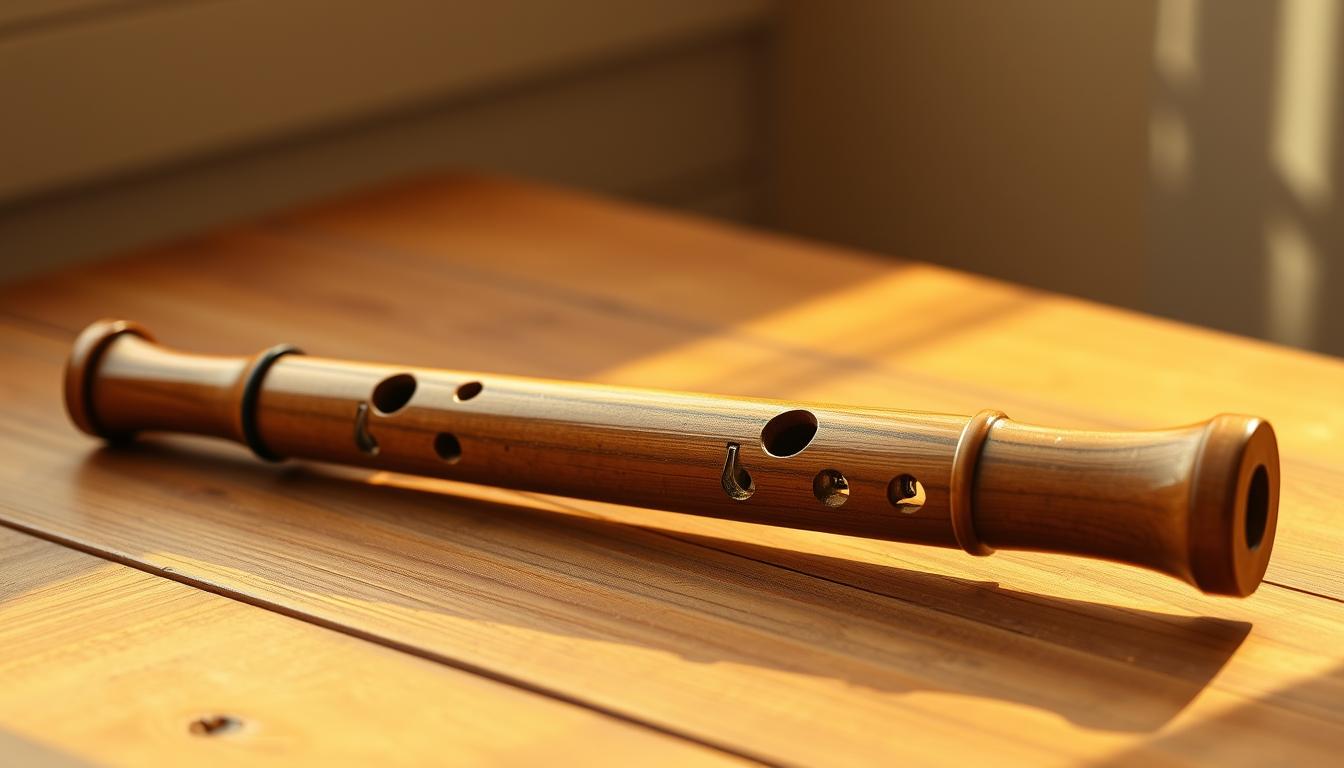

The recorder is a fascinating, versatile instrument with a rich history. Having existed for more than 50,000 years, it has endured through the centuries, from Baroque music to contemporary compositions. Its golden age in the eighteenth century, under composers such as Johann Sebastian Bach, established its importance in music history.
Mastering rhythm on the recorder is essential for accurate, expressive playing. This instrument, with its mouthpiece, body, and bell, offers great flexibility. By learning to control tempo and read music, you will improve your sight-reading and your ability to play pieces accurately.
This guide offers practical exercises and advice to help you progress, whether you are a beginner or an advanced player. Regular practice, even in short sessions, is essential for improving quickly. Exploring a variety of pieces, from Renaissance classics to modern works, will also prevent monotony and strengthen your motivation.
Mastering rhythm is an exciting challenge. With perseverance and a structured approach, you will discover the recorder’s richness and expand your musical repertoire.
Introduction
The recorder is a simple wind instrument with a rich history that has retained its charm through the centuries. Its design, with a mouthpiece, body, and bell, gives it considerable musical versatility.
Introducing the instrument and the challenges
With eight holes (seven in front and one in back), the recorder is approachable for beginners. Structured learning is essential for mastering rhythm and music notation.
| Part | Importance |
|---|---|
| Mouthpiece | Directs the air to produce sound |
| Body | Contains the finger holes |
| Bell |
Goals and benefits of rhythm practice
Regular practice improves sight-reading and intonation. It also lets you explore musical styles ranging from the Renaissance to contemporary music.
As well as discovering the instrument’s rich history, understanding music notation is essential for progress. Resources such as video tutorials and apps are available to make learning easier.
Understanding the basics of music notation and notes
Learning music notation is an essential step toward mastering the recorder. It enables you to read sheet music and play accurately. In this section, we will explore the basic concepts you need to progress.
Note names and positions on the staff
Musical notes are arranged on a staff with five lines and four spaces. The treble clef, used for recorder music, indicates that the second line represents G. Notes named C, D, E, F, G, A, and B are placed on lines or in spaces according to their pitch.
- C on the first line
- D on the second line
- E on the third line
- F on the fourth line
- G on the fifth line
- A in the first space
- B in the second space
Accidentals and intervals
Accidentals change the pitch of notes. A sharp (#) raises a note by a semitone, a flat (♭) lowers it by a semitone, and a natural cancels the previous accidental. Intervals measure the distance between two notes. A whole tone equals two semitones, while a semitone is the distance between two adjacent notes without an accidental.
- Example of a whole tone: C to D
- Example of a semitone: E to F
Mastering these basics is essential for playing in tune and exploring complex rhythms. Regular exercises and varied sheet music will strengthen your understanding and technique.
See our detailed guide to learn to play popular melodies.
How to Play the Recorder in Rhythm
Mastering rhythm on the recorder is essential for accurate, expressive playing. This instrument, with its mouthpiece, body, and bell, offers great flexibility. By learning to control tempo and read music, you will improve your sight-reading and your ability to play pieces accurately.
Note values and rests
Notes and rests have specific durations. A whole note lasts the longest, followed by a half note, a quarter note, an eighth note, and so on. Rests also have defined durations. For example, a whole-note rest lasts two measures in 4/4.
Note values and rests give rhythm its structure. A quarter note lasts one measure in 4/4, while an eighth note lasts half a measure. A dot after a note increases its duration by half.
The importance of tempo and measures
Tempo determines playing speed. A tempo of 120 beats per minute is common. Time signatures such as 4/4 indicate the number of beats in each measure. A measure of 4/4 has four beats, each worth one quarter note.
Use a metronome to maintain a steady tempo. Practice with beginner sheet music to strengthen your sense of rhythm. See our guide to learn to play simple melodies.
Practical exercises for mastering tempo
Working on rhythm is essential for accurate musical playing. Targeted exercises can improve your coordination and control of tempo.
Rhythm reading and coordination activities
- Partner reading exercises: Play a melody while someone else plays a countermelody. This strengthens coordination and your perception of rhythm.
- Tempo games: Alternate between fast and slow tempos to gain better control of your playing speed.
These enjoyable activities make practice more engaging and less stressful while strengthening your rhythmic skills.
Metronome exercises to help you progress
- Basic exercises: Start at a slow tempo (60 BPM) and gradually increase the speed.
- Subdivision exercises: Focus on subdividing the beats to improve your accuracy.
Use a metronome to maintain a steady rhythm. You can download apps such as Tempo Trainer to follow guided exercises.
Fingering techniques and range for fluent playing
Fingering techniques are essential for playing a melody fluently on the recorder. Understanding the different approaches helps you adapt your playing to your level and preferences.
Comparing Baroque and German fingering
Baroque and German fingering systems differ significantly, and each offers distinct advantages.
Advantages of Baroque fingering:
- Allows considerable expressiveness and a wide range.
- Ideal for early and Baroque repertoire.
Advantages of German fingering:
- Simpler and more intuitive, making it well suited to beginners.
- Helps make playing smoother and more natural.
| Feature | Baroque fingering | German fingering |
|---|---|---|
| Range | Wider | Standard |
| Complexity | High | Low |
| Use | Early repertoire | Varied repertoire |
Your choice of fingering affects range and fluency. The more complex Baroque system is ideal for intricate melodies, while German fingering simplifies playing and lets you focus on the enjoyment of making music.
Examples of melodies:
- Baroque: Telemann’s “Prelude.”
- German: Folk melodies.
By choosing fingering suited to your level, you can enjoy playing while continuing to improve. Regular practice is essential for mastering these techniques.
Using online tools and musical resources
Digital tools and online resources can help you improve your soprano recorder skills. Whether you are a beginner or an advanced player, they can enrich your learning and practice.
Online metronomes and tuners
A metronome is essential for mastering tempo. Apps such as Tempo Trainer let you practice with varied rhythms. Online tuners help you adjust your intonation accurately.
Video lessons and tutorials for recorder players
Platforms such as YouTube and SkillShare offer free or paid video tutorials. These resources cover subjects ranging from basic music notation to advanced soprano recorder techniques.
- Benefits of online lessons: Flexibility, direct interaction with experienced teachers, and a wide range of musical styles.
- Additional resources: Apps such as Yousician can strengthen your sense of rhythm and your musical ear.
Combining regular practice with these tools will help you progress faster and play with more confidence. Explore different resources to vary your learning methods and maintain your motivation.
The importance of breath and finger placement
Breath control and finger placement are essential for playing the recorder well. These techniques help you produce a consistent, high-quality sound suited to the music.
Controlling your breath for a steady sound
Good breath control is essential for producing a steady, expressive sound. “Breath is the life of sound,” as a great musician once said. Deep, steady breathing helps you sustain notes consistently. To improve this technique, do deep-breathing exercises each time you play. For example, inhale deeply through your nose, hold your breath for a few seconds, then exhale slowly through your mouth. These exercises will strengthen your breathing muscles.
Finger placement techniques to improve your playing
The placement of your fingers over the recorder’s holes directly affects sound quality. Position your fingers so that they cover the holes completely and prevent air leaks. Correct placement allows clearer articulation and a richer sound. Tip: Practice from sheet music while paying particular attention to the position of your fingers. With time and practice, you will develop a smoother, more natural technique.
Breath control and finger placement are foundations of recorder technique. Mastering them will give you greater confidence and musical expression. Practice regularly to strengthen these essential skills.
Tips and advice for beginners
Learning to play the recorder may seem daunting at first, but good advice and regular practice can help you progress quickly. This section offers practical tips to make learning easier.
Daily practice and perseverance
Regular practice is essential for mastering the recorder. Even 10 to 15 minutes a day can make a big difference. Use a metronome to maintain a steady tempo, and do simple exercises to strengthen your sense of rhythm and breath control. One effective tip is to record your practice sessions so you can spot and correct mistakes.
Recommended resources and support
Online resources are valuable for beginners. Sites such as Partoch.com offer free tablature for various musical styles. YouTube channels devoted to the recorder offer detailed tutorials covering the basics. For a structured approach, apps such as Tempo Trainer can help you improve your sense of rhythm.
| Resource | Benefits |
|---|---|
| Websites (Partoch.com) | Free tablature, variety of styles |
| YouTube | Video tutorials, practical demonstrations |
| Apps | Guided exercises, progress tracking |
Finally, set realistic goals and celebrate every step forward, however small. Perseverance and regular practice will help you master the recorder and discover the joy of music.
Conclusion
This versatile instrument with a rich history offers a unique musical experience. By applying the advice and techniques presented here, you can progress quickly and explore new musical possibilities.
Regular practice is essential for mastering the instrument. Practicing daily, even in short sessions, will strengthen your skills and confidence. Use digital tools such as rhythm apps and online tutorials to enrich your learning.
One encouraging example is a beginner who, through dedicated practice, learns to play a complex melody within a few weeks. This shows how perseverance and a gradual approach lead to mastery.
For a more complete experience, consider personalized lessons. For example, recorder lessons provide support suited to every level, encouraging rapid progress and rewarding practice.
Every step forward, however small, counts in your learning. Keep exploring, practicing, and discovering new resources to deepen your skills. Learning this instrument is an exciting journey that calls for commitment and passion.
FAQ
What are the basics of learning to play the recorder?
How do I choose a recorder suited to my level?
Why is rhythm important in music?
Can I learn to play without a teacher?
What practical exercises can improve my playing?
How do I read recorder sheet music?
What is fingering, and how do I use it?
Can I play with other instruments?
How do I care for my recorder?
Are there apps that can help me learn?
What role does breath play?
Can I play complex pieces from the start?
What are the benefits of regular practice?
Source links
- https://www.srp.org.uk/on-line-resources/
- https://learntoplayrecorder.com/
- https://www.metmuseum.org/essays/the-development-of-the-recorder
- https://www.orchestredecaen.fr/jouer-des-chansons-connues-a-la-flute-a-bec/
- https://www.wfg.woodwind.org/recorder/index.html
- https://www.britannica.com/art/musical-notation
- https://www.talirecorderlessons.com/tutorials
- https://www.orchestredecaen.fr/choisir-sa-premiere-flute-a-bec-conseils-utiles/
- https://musescore.com/articles/materials/recorder/recorder-notes
- https://www.musictheory.net/lessons
- https://www.dolmetsch.com/fingerings.htm
- https://tuttifluty.com/recorder/
- https://caslabs.case.edu/medren/medieval-instruments/recorder-baroque/
- https://www.baltimorerecorders.org/html/instruments/recorderhistorys.html
- https://www.yamaha.com/en/musical_instrument_guide/recorder/structure/
- https://www.orchestredecaen.fr/cours-de-flute-a-bec-en-ligne-top-ressources/
- https://lessonplanner.info/music/recorder/fingering-chart/
- https://www.orchestredecaen.fr/apprendre-les-notes-de-musique-sur-flute-a-bec/
- https://www.alexandrajoly.com/
- https://www.playrecorder.com/TipsAndFingerings
- https://walterbitner.com/2015/10/18/how-to-teach-recorder-fingerings/
- https://www.ohmi.org.uk/uploads/3/2/2/7/32272187/teaching_the_one_handed_recorder.pdf
- https://www.berklee.edu/berklee-now/news/meter-man
- https://americanrecorder.org/frequently_asked_questions.php
- https://colburnschool.edu/colburn-city-sings/learn-play-recorder/learn-play-recorder/