


The recorder is a simple yet powerful wind instrument capable of producing a wide range of rich, expressive sounds. Playing in tune, however, takes more than a command of basic fingerings. This is where alternative fingerings come in: they can improve tone quality and the accuracy of notes.
Alternative fingerings change the air column to produce notes that are better in tune and more balanced. For example, tuning an A can reveal the difference between a note that is too low and one that is perfectly in tune. This highlights the importance of steady abdominal support and precise breath control.
A quality instrument and good breath control are essential for playing in tune. Alternative fingerings can improve both intonation and musical expression. If you want to refine your playing, consult the fingering charts to explore these techniques in detail.
Understanding intonation and the importance of alternative fingerings
Good intonation is essential for rich, expressive recorder playing. Achieving it can be difficult, however, especially with complex notes or in the instrument’s extreme registers.
How intonation affects sound
Intonation affects the instrument’s sound. A note played too high or too low can disrupt a piece’s harmony. For example, tuning an A often reveals the difference between a note that is in tune and one that is out of tune. This highlights the importance of steady abdominal support and precise breath control.
Breathing techniques and abdominal support
Abdominal support and controlled breathing are essential for maintaining good intonation. Air pressure must be adjusted to suit the note being played to produce a balanced, clear sound. To improve these skills, you can practise deep breathing and breath control exercises.
If you would like to explore these techniques further, see the resources on how to improve your playing. These practical tips will help you master the recorder.
Alternative recorder fingerings: when and why should you use them?
Alternative fingerings help overcome some of the recorder’s technical limitations. They offer better intonation and greater flexibility, particularly in demanding musical passages.
When to use alternative fingerings
These fingerings are especially useful in traditional pieces or difficult passages, such as transitions between registers or passages where a note might otherwise sound incorrectly.
They can also help you work around some of the instrument’s limitations, particularly when playing very high or very low notes.
Technical and artistic benefits
Alternative fingerings improve expressiveness and help you make adjustments across the instrument’s range. They also allow greater precision when playing notes.
Depending on how they are made, recorders from different brands may require specific fingerings.
Renowned performers have used these techniques to enrich their playing, demonstrating their artistic value.
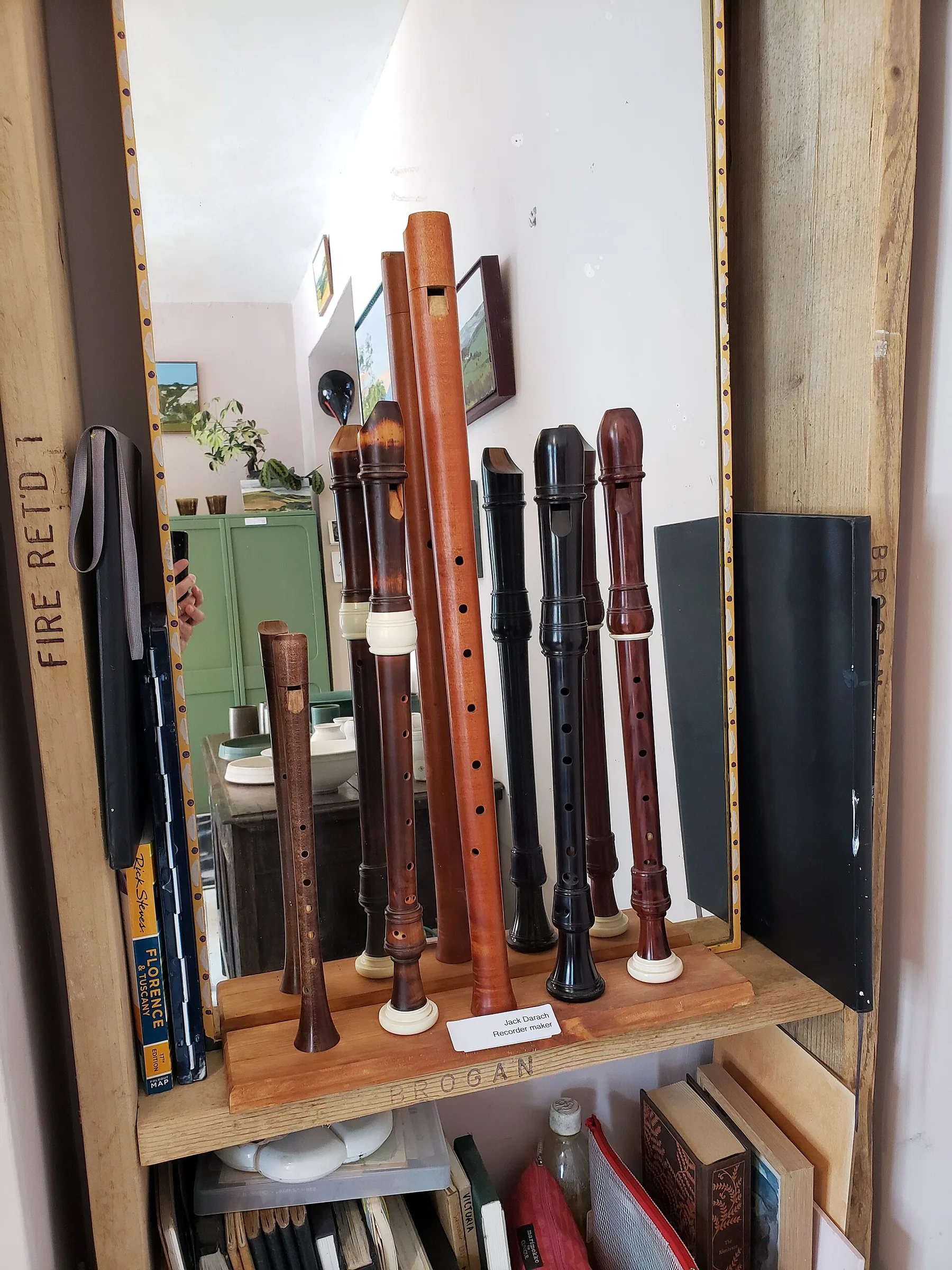
To explore these techniques further, see the acoustics page on our site.
Comparing historical fingering charts and techniques
Studying historical recorder fingering charts and techniques reveals a fascinating evolution shaped by continual innovation and adaptation. Early treatises, including those by Ganassi, Virdung and Blankenburgh, offer a glimpse of past practices, while theorists such as Jambe de Fer and Mersenne reconsidered the instrument.
Studying historical sources: Ganassi, Virdung and Blankenburgh
In his method Fontegara, published in 1535, Ganassi explores the foundations of fingering and intonation. Virdung and Blankenburgh offer complementary perspectives, highlighting differences in playing techniques and recorder construction.
Innovations by Jambe de Fer, Mersenne and Bismantova
Jambe de Fer introduced the third register, expanding the instrument’s range of sounds. In his treatise, Mersenne described innovations related to its range that profoundly influenced its development. The contributions of Bismantova and Hotteterre, with their detailed fingering charts, show how techniques continued to adapt to musicians’ needs.
Effects on range and the development of technique
These historical advances changed the recorder’s range and transformed playing techniques. The wooden construction commonly used at the time influenced its sound and how it was played, shaping the instrument we know today.
To explore these techniques in detail, consult our comparative chart of historical fingerings.
Conclusion
Mastering the recorder calls for a combination of good intonation, breathing techniques and suitable fingerings. Alternative fingerings help overcome technical difficulties while enriching musical expression. The instrument’s historical development, influenced by theorists such as Ganassi and Mersenne, has shaped contemporary playing practices.
Experiment with these techniques to improve your playing and explore new sounds. Understanding their historical and musical contexts will help you apply them effectively. To learn more, discover the resources on how to improve your playing.
FAQ
What is a recorder?
What are the highest notes a recorder can play?
What technique produces clear, accurate sounds?
What are the benefits of alternative fingerings?
How should you care for a recorder?
What role did the recorder play in Baroque music?
Source links
- https://physicslabs.colorado.edu/demos/oscillations-and-waves/instruments/air-column-instruments/
- https://americanrecorder.org/recorder_fingering_charts.php
- https://recorderhomepage.net/technique/fingering/general-considerations/
- https://music.unt.edu/woodwinds/clarinet/clarinet-handbook.html
- https://www.wfg.woodwind.org/clarinet/index.html
- https://clarinet.org/from-the-ica-committees-tone-and-technique-part-ii/
- https://commons.wikimedia.org/wiki/File%3ABaroque_Recorder_Fingering_Chart.svg
- https://antiqua.music.iastate.edu/instrument/recorder
- https://www.open-access.bcu.ac.uk/3859/1/2008_Mayes_506067_vol1.pdf
- https://recorderhomepage.net/technique/fingering/general-considerations/
- https://americanarchive.org/challenge?destination=%2Fcatalog%2Fcpb-aacip-ea19c0321cc
- https://en.wikipedia.org/wiki/Recorder_(musical_instrument)