
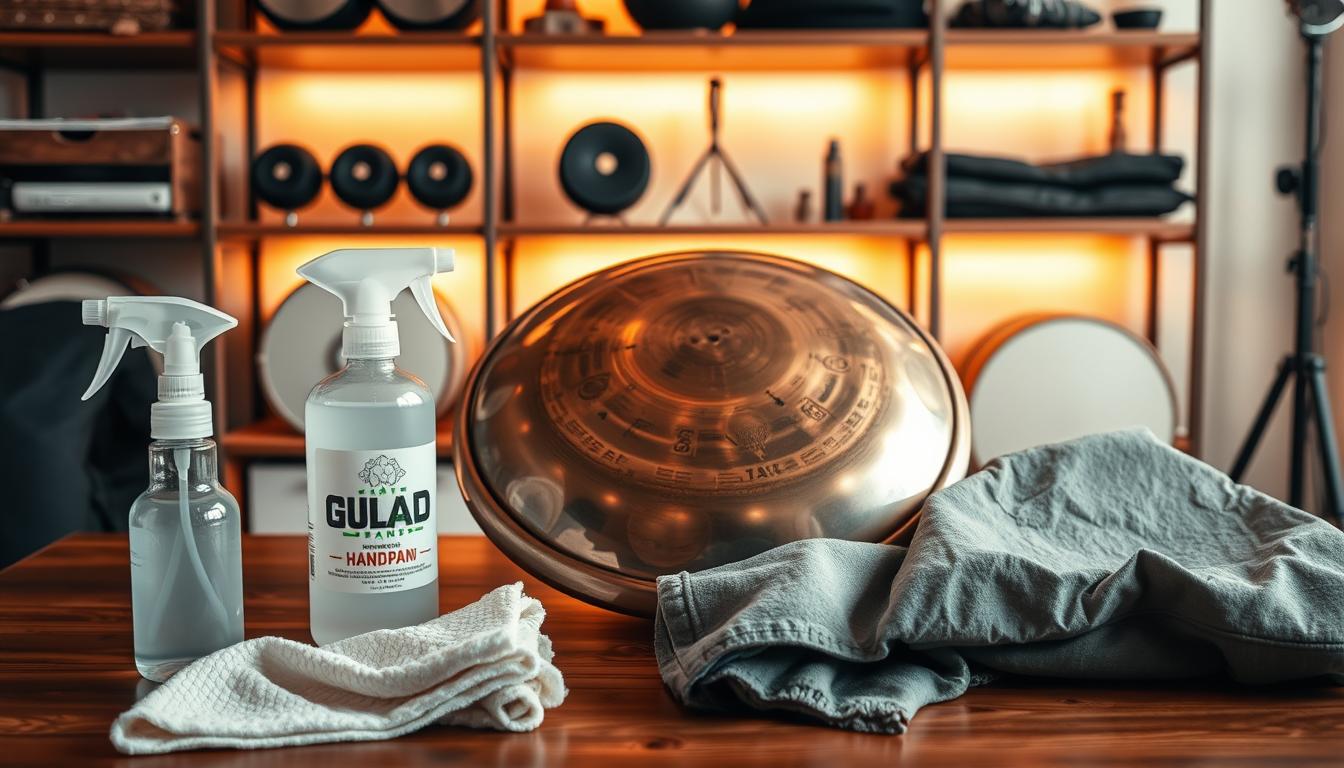

Goal: offer a simple routine built on three essentials to keep your handpan clean, dry, and protected. Focus on prevention: it extends the instrument’s life and limits corrosion.
Before anything else, always ask the maker for advice. Surface treatments vary, and some react badly to oils or solvents.
At a glance: clean the instrument after every session, apply suitable protection if it is compatible, and prevent rust through simple habits. A microfiber cloth, alcohol for deeper cleaning, and a recommended oil are enough in most cases.
A realistic expectation: these regular steps preserve the instrument’s appearance, reduce the risk of corrosion, and help avoid major repairs.
Conditions matter: humidity, sea air, and perspiration determine how much care is needed. The sections below explain the after-playing routine, cleaning with alcohol, choosing a protectant, maintenance frequency, dealing with rust, and safe transport.
Why caring for your handpan makes a difference over time
A few precautions make all the difference to a metal instrument in the long run.
Treated steel is not invulnerable. The metal, often treated by nitriding, resists corrosion better but remains sensitive to moisture, salt, and fine scratches. These factors accelerate corrosion and damage the surface.
Vulnerable areas and useful terms
Pay attention to the shells (top and bottom), rim, ding, and gü opening. A scratch can give oxidation a place to take hold.
Environment and finishes
Sea air, damp rooms, and condensation increase the risk. Some finishes make the surface more porous: an unsuitable oil may be absorbed and change the sound.
- Practical rule: if you are unsure about a mark or a product, ask the maker for advice.
- Good habit: choose a dry place for storage.
| Factor | Risk | Recommended action |
|---|---|---|
| Humidity | Corrosion | Store in a dry place and air it regularly |
| Salt | Rapid oxidation | Clean after exposure and ask for advice |
| Fine scratches | Places where corrosion can start | Avoid jewelry and use soft cloths |
Cleaning routine after every playing session
After playing, a quick wipe protects the instrument from sweat and dust. Do it every time: it is the most effective way to prevent rust.
Wipe the whole instrument with a soft cloth
Use a clean, dry microfiber cloth to wipe both sides. Pay particular attention to the hollows and raised note areas. Wipe the rim with the same soft cloth, using circular motions without pressing too hard.
Give the inside a little attention
For the inside, gently guide the cloth through the gü opening. Do not force it or insert hard tools: a folded cloth is enough to remove moisture and dust.
Prevent corrosion caused by perspiration
Sweat contains water and salt, which encourage rust when they dry on the surface. Wash and dry your hands before playing. Remove rings, bracelets, and watches.
- Two cloths are recommended: one for daily use and another, a soft cloth reserved for alcohol, for more thorough cleaning.
- Never put a damp handpan in a case: dry it first to prevent condensation and rust.
- Outdoors, wipe off dew or drizzle immediately before putting the instrument away.
Deep cleaning with alcohol without damaging the finish
When marks will not come off with a dry cloth, alcohol is the safest option. Prefer isopropyl alcohol or rubbing alcohol. For a gentler approach, diluted surgical spirit (50 to 75%) can also work.
Products at a glance
- Isopropyl alcohol: strong and fast acting, effective against greasy residue.
- Rubbing alcohol: less harsh and versatile.
- Diluted surgical spirit: gentler and well suited to a sensitive finish.
How to apply it
Pour the alcohol onto a soft cloth, never directly onto the surface. Wipe both sides, the rim, and the inside through the gü opening. Work on stubborn marks with care, using even motions.
| Situation | Recommended action | Note |
|---|---|---|
| Greasy film or salt residue | Isopropyl alcohol on a soft cloth | Reapply oil afterward if compatible |
| Embedded dust | Diluted surgical spirit | Less harsh on delicate finishes |
| Uncertain finish | Test a small area, then ask the maker | Do not use acetone |
Why avoid acetone: it can alter the patina, weaken the adhesive joining the shells, and damage the finish.
Bear in mind that alcohol often removes the protective oil. If the instrument’s treatment allows it, apply oil in a thin layer after drying, following the maker’s instructions. For more detail on recommended care, read a practical guide to oils and cases or an instrument-cleaning method in this article on instrument care.
Handpan care: daily cleaning, protection, and storage
A brief, repeated step does more to keep the instrument in good condition than a long, infrequent cleaning session. Three essentials are enough: wipe after playing, treat marks when needed, and apply compatible protection.
The three essentials to remember
- Wipe: spend 1 to 2 minutes with a clean cloth after every session.
- Clean: periodically use isopropyl alcohol on a cloth for stubborn residue.
- Protect: apply a thin layer of oil or wax if the maker permits it.
Build a realistic routine
Make it a habit: two minutes each day are better than an hour of cleaning once a month.
Practical examples: someone who plays daily in a damp apartment should always wipe the instrument and apply protection more often. An occasional player in a dry climate can leave longer intervals between treatments.
| Use | Suggested schedule | Tip |
|---|---|---|
| Daily, humid climate | Wipe daily; treat monthly | Use a dehumidifier if possible |
| Occasional, dry climate | Wipe after use; treat every three months | Check how the metal feels |
| Frequent travel | Wipe after every outing; clean after exposure | A hard case is recommended |
Important reminder: rust prevention treatments help, but they do not replace daily care. To choose suitable protection, consult the dedicated article and the maker’s advice in this practical guide.
Rust protection: choosing the right oil or wax for your handpan
The best defense against rust is a light barrier that you renew regularly. The aim is not to varnish the instrument, but to apply a thin layer that repels moisture and salt deposits.
Can it be oiled? Check before applying anything
Not all instruments tolerate oil or other greasy products. The maker knows the surface treatment; follow their recommendations.
Gas nitriding, explained
This heat treatment increases rust resistance, but it does not make steel impervious to corrosion. Depending on the process, the surface may remain porous and absorb oil, which could affect the sound.
Which oils can you use?
- Suitable for contact with hands: grapeseed oil and coconut oil.
- Specialist products: Phoenix Oil, Metal Sounds Oils, and Isthmus Oil.
Amount and playing feel
A few drops are enough: spread them, leave them for a few minutes, then wipe off the excess. Too much makes the surface slippery and harder to handle.
| Material | Level of care needed | Indicative frequency |
|---|---|---|
| Nitrided steel | Extra care (possible porosity) | More frequent treatment |
| Stainless steel | Less vulnerable, but not invulnerable | Less frequent maintenance |
Tip: choose wax if you want longer-lasting protection, but be aware that it may leave a thicker layer. To learn more about the instrument and its accessories, see this practical guide.
How often should you clean and apply protection?
Basic rule: wipe with a microfiber cloth every time after use. This quick step removes sweat and dirt before they can cause harm.
Suggested frequency by material
For nitrided steel, plan more frequent cleaning: about every two weeks, use alcohol, then apply a thin layer of oil if the maker permits it.
For stainless steel, a monthly cycle is usually enough, adjusted to how often you play.
Adjust for the season, perspiration, and sea air
In summer, there is more perspiration and salt; provide care more often. In a damp winter, watch for condensation when storing the instrument.
By the sea, be especially vigilant: salt in the air accelerates oxidation even without direct contact with water.
Clear signs that call for attention
- New spots or dull areas.
- A surface that feels less dry or has a film on it.
- More exposed areas such as the rim, inside, and underside: check these first.
Avoid excessive maintenance
Too much alcohol removes the protective layer. Too much oil changes the feel. Do only what is needed: wipe every time and space out deeper cleaning according to the table.
| Material | Alcohol cleaning and oiling | When to do it more often |
|---|---|---|
| Nitrided steel | About every 15 days | Heavy perspiration, sea air, or spots |
| Stainless steel | About once a month | Prolonged exposure to moisture or salt |
| Dry climate | Intervals of several months may be possible | No salt exposure and little use |
Removing rust from a handpan without panicking
Before taking action, distinguish an appearance issue from a real risk. A small rust spot generally does not affect the sound. The concern is corrosion that eats deeply into the metal.
Useful supplies: isopropyl or rubbing alcohol, soft cloths, a sponge (abrasive side and foam side), a polishing cloth such as a Miracle Cloth, and protective oil.
Step-by-step method
- Start by cleaning the area and its edges with alcohol on a soft cloth.
- If the spot remains, rub very gently with a damp sponge, using small circles without applying pressure.
- For stubborn marks, polish with the Miracle Cloth in circular motions, with care: this may remove the patina.
Afterward: clean again with alcohol, apply a thin layer of oil, and wipe off the excess. Make a note of the spot so you can keep an eye on it.
“Work gradually: start with the gentlest approach.”
Storage at home: keep your handpan dry and well ventilated
Condensation creates a small, damp environment that encourages rust long before you can see it.
Never put your handpan in a damp case. If the instrument has come into contact with water (rain, dew, or sweaty hands), dry it completely before storing it.
Simple rules for safe storage
Ideally, leave the instrument out in a temperate, well-ventilated place. Keep it away from radiators, fireplaces, and direct sunlight.
For longer storage, leave the case partly open so the surface can breathe. In salty environments, use a hard case or a cupboard with a moisture absorber.
Position and practical options
Do not set the instrument upside down: prolonged pressure on the ding can put it out of tune. Place it on a stable stand, a shelf lined with thick fabric, or a secure wall hook (HardCase Technologies, Artful Steel).
| Option | Benefit | When to use it |
|---|---|---|
| Out in the open | Better ventilation | Frequent use in a dry place |
| Partly open case | Balance of protection and airflow | Longer indoor storage |
| Hard case and moisture absorber | Protection from salt and impacts | Very salty environments or extended transport |
Note: a good storage location prevents many problems over time. If you are looking for a practical storage solution, also consider this white storage box for organizing the space without trapping moisture.
Outings, transport, and outdoor playing: protecting your instrument in real conditions
Travel and the elements call for practical steps to protect your instrument’s surface. Choosing the right case already reduces most risks during a journey.
A reliable case: hard shell or soft bag
Hard case: best for flights, crowds, or trips where impacts or stacking are possible. Examples include Evatek, Namana, and Panji bags, which hold the instrument securely and cushion blows.
Soft bag: suitable for short walks. Check the closures and inner padding before use.
Humidity, rain, and snow
After rain or snow, immediately dry the top, rim, and inside through the gü opening. Remove all traces of water to limit corrosion.
Sand, soil, and gravel
Avoid abrasive surfaces: lay down a mat, a thick garment, or another protective layer. A quick look at the ground can often prevent an unwanted scratch.
Sun and heat
Do not leave the instrument in the sun. Heat causes expansion and can put it out of tune. If the surface has become hot, move the instrument into the shade and take the time to let it cool before playing.
Beach and sea air
The beach brings together salt, moisture, and sand: limit exposure and avoid opening the case unnecessarily. When you return, wipe the instrument with an alcohol-dampened cloth, then dry it. This removes salt and residue.
| Situation | Suggested case | Quick precaution |
|---|---|---|
| Flight or crowds | Hard case (Evatek, Namana) | Secure the case and check that the handle is sturdy |
| Local walk | Quality soft bag (Panji bags) | Check the closures |
| Beach or coast | Hard case with an inner cover | Wipe often; clean with alcohol on your return |
Take care when carrying the instrument by hand: use the case if possible. Otherwise, hold the instrument by the inside of the gü, watch for hazards, and take the time to set it down safely.
Final tip: adapt how you use the instrument to your surroundings, and remember to protect your handpan before every outing.
Conclusion
Conclusion
A short, regular routine extends the life of your instrument. Wipe it with a microfiber cloth after every session, use alcohol only when needed, then reapply a thin layer of oil if the maker permits it.
Follow the principle of “a little, often”: it works better than an occasional major cleaning. Increase the frequency in damp or coastal areas. Avoid acetone; alcohol also removes oil, so remember to renew the protection.
If rust appears, do not panic: act early and use a more abrasive approach only if needed to preserve the patina. Protect the instrument from heat and impacts, and avoid storing it upside down. Keep a short list of essentials (cloth, alcohol, oil) in the case so you are always prepared.
For practical tips, read this care guide.