
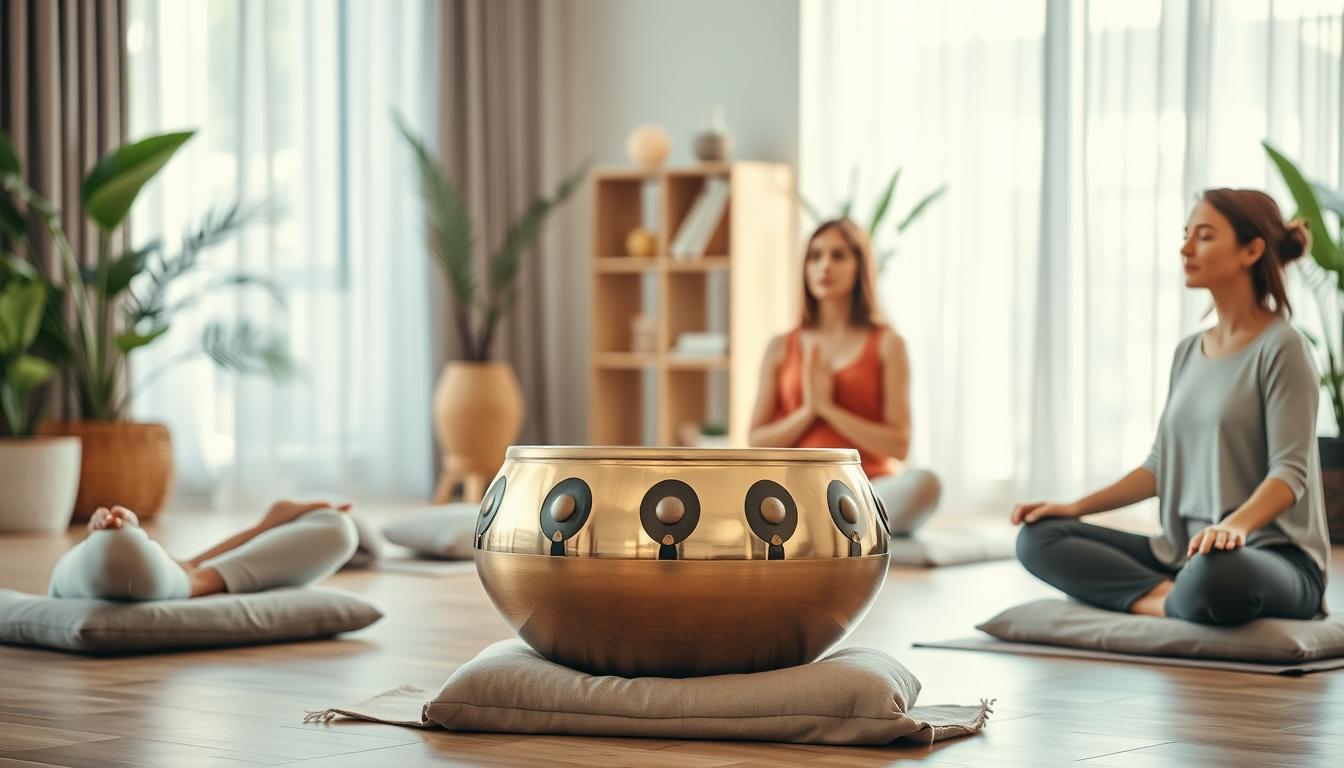

Context. The aim is not to fill the room with sound, but to create a steady, reassuring setting for practice. The handpan produces soothing sounds that encourage relaxation and mindfulness.
A common problem: an instrument with too much resonance can quickly become overwhelming. Volume, reverberation and layers of sound draw attention away from the practice instead of supporting it.
What this guide offers: you will learn to set an intention and adjust placement, volume and reverberation. The musical structure will support serenity without becoming a distraction.
Who is it for? Teachers, sound therapy practitioners, studios and individuals who want to bring this instrument into their yoga sessions at home.
Overview: effects on body and mind, preparing the space, balancing the sound, adapting to different styles and building a typical session. Guiding principle: less, but better — silence, sustained notes and a slow rhythm to preserve the atmosphere and sense of well-being.
Why the handpan enhances meditation and yoga without overdoing it
Calming sounds can steady attention without taking over. Slow, melodic tones create a metallic yet gentle background rich in harmonics. This background helps keep attention on the breath.
Sounds that support relaxation
When sounds remain simple and regular, the mind is less likely to latch onto thoughts. As a result, it becomes easier to return to the present moment and mindfulness.
Vibrations, the nervous system and stress reduction
Vibrations can be felt in the body: a subtle sensation, muscle relaxation and slower breathing. Gentle, rhythmic sounds can help calm the nervous system without promising a medical effect.
Mind-body connection and concentration
Music can act as an inner metronome. It accompanies concentration, breathing and movement without directing them.
“If the sounds lengthen the exhale, the balance is right; if attention turns to the music, turn it down.”
- Simple sounds = an easier return to the present moment.
- Felt vibrations = physical relaxation.
- Slow rhythm = a possible reduction in stress.
| Element | Effect | Practical cue |
|---|---|---|
| Sustained notes | Steady attention | Longer exhalation |
| Rich harmonics | Create a reassuring background | Few variations |
| Vibrations | Physical relaxation | Sensation in the chest |
To explore further, find an example of how to incorporate sound into a guided session in this resource. The next section explains how placement and reverberation maintain that balance.
Prepare the space for a balanced atmosphere that does not overwhelm
Before playing a piece, the way you arrange the space often determines whether sound supports or overwhelms the practice.
Placement to avoid overwhelming the room
Position the instrument or speakers away from the direct line of the listeners’ ears. Let the sound reach them from the side to reduce the feeling of being overwhelmed.
Reverberation and volume
A simple rule: the more hard surfaces a room has, such as tiled floors or bare walls, the greater the echo. Add rugs, curtains or bookshelves to soften reflections.
Aim for a volume at which people can speak in a natural voice. If the teacher has to speak louder, turn the sound down.
A simple “sacred space”
Choose warm lighting, clear paths through the room and an area for the instrument separate from the practice area. This encourages grounding and serenity.
Recording or live playing: quality and experience
Well-produced recordings offer consistency and good mixing quality. Live playing brings a palpable presence and lets you adapt to the group’s energy.
Avoid overly compressed tracks; choose natural recordings instead. To learn more about acoustics, read this acoustics study.
| Element | Action | Impact |
|---|---|---|
| Hard surface | Add textiles | Less reverberation |
| Placement | Let sound reach listeners from the side | Listening comfort |
| Volume | Keep natural speech audible | Preserved serenity |
| Source | Live playing or a recording | Presence or consistency |
Handpan for meditation and yoga: create an atmosphere without overwhelming the space
Start with three key words that describe the aim of the session: relaxation, grounding, gentle energy or letting go. These words guide your choice of tempo, sound density and register for the practice.
A simple way to set an intention
Choose two or three words that express your intention. Pair each with a very simple pattern: sustained notes for relaxation, a subtle pulse for grounding, light figures for energy. Keep the pattern repetitive, with few variations.
Synchronize sound and breath for deeper immersion
Play phrases that leave room for long exhalations. Striking notes at the end of an exhale helps keep breathing fluid.
“If the music interrupts the breath, adjust it: slow down, leave silences and reduce the variations.”
Musical restraint: silences, sustained notes and a slow rhythm
Make purposeful use of silence. Sustained notes steady attention, while gentle repetition supports the flow of energy without inviting active listening.
| Intention | Suggested pattern | Practical cue |
|---|---|---|
| Relaxation | Sustained notes, few strikes | Strike notes at the end of an exhale |
| Grounding | Slow pulse, noticeable bass | Mark transitions on the inhale |
| Gentle energy | Light, repeated patterns | Steady rhythm, without building intensity |
Sign of excess: if practitioners start actively listening to the music, immediately reduce the number of notes, the pace and the variations. For examples of different approaches and comparisons, see this guide.
Integrating the handpan into different styles of yoga
Each style of practice calls for a suitable musical tempo that supports it without dominating.
Yin yoga: sustained notes
For long-held poses, favor sustained notes and few harmonic changes.
Leaving long silences helps prevent impatience and maintains a gentle presence.
Vinyasa yoga: follow the movement
Adapt the rhythm to the transitions: short phrases for salutations, followed by guided breathing during sequences.
Keep it minimal and avoid speeding up in a way that pushes participants toward performance.
Yoga nidra: a spare thread of sound
Offer a very sparse soundscape, with notes struck only occasionally. The music becomes a thread that carries participants through immersion and final relaxation.
Silences give spoken guidance room to work.
Kundalini yoga: vibrations to support flow
Vibrations can support awareness of energy and a sense of inner flow.
Keep them in the background so they do not cover the mantras or the breath.
“One clear musical intention for each sequence is better than several conflicting atmospheres.”
Tips for working together: if the class is guided, leave space for instructions. If the class is self-directed, music can give the session more structure.
| Style | Tempo | Cue |
|---|---|---|
| Yin | Slow | Sustained notes, silences |
| Vinyasa | Matched to the sequences | Short phrases, without building intensity |
| Nidra | Very slow | Occasional strikes, a sparse thread of sound |
| Kundalini | Rhythmic, controlled | Sustained vibrations that do not overwhelm |
Checklist: tempo, sound density, room for silence, transitions and the group’s response (restlessness or relaxation).
Build a typical handpan music session from start to finish
Planning the progression of sound changes how the group experiences a session. Here is a ready-to-use structure designed to guide breathing, support movement and offer a gentle transition at the end of practice.
Opening: grounding, breathing and the first sounds
Begin seated. Invite practitioners to take three long breaths.
For two to three minutes, play widely spaced sounds: a few sustained notes, then silence. Gently resume the pattern. Watch for the mind to settle and the body to relax.
The main practice: support without distracting
Use repetitive patterns at a low volume.
Keep variations rare and predictable. Leave stretches of silence during instructions or balancing poses.
Savasana and an optional sound bath
For the final pose, favor sustained notes, pauses and minimal volume.
Vibrations may feel like a subtle massage that helps participants absorb the work they have done. Extend this phase by five to ten minutes for a sound bath, without other instruments.
“Music serves stability: the practice remains the priority.”
Ready to use: open with two to three minutes of widely spaced sounds, adjust the main practice to the level of effort, then move into a slow savasana. To learn more about room acoustics, read this acoustics study.
Common mistakes that overwhelm the space and how to avoid them
Sometimes excessive volume alone is enough to break a sense of presence and cause restlessness and fatigue among practitioners.
Playing too loudly: signs and adjustments
Immediate signs: rapid breathing, a tense neck, difficulty hearing the guide’s voice and a loss of concentration.
Quick adjustments: reduce the volume by 20 to 30%, space out the notes and soften harsh bass.
Layering sounds: when “more” harms well-being
A typical mistake is playing reverberation, an ambient layer, bowls and the instrument all at once. The result is a confusing mix of sounds that can be tiring.
- Choose one main sound source.
- Add other tones only for a brief passage.
Ignoring the body’s response: tension and reduced quality
Vibrations are felt by the body and can affect the nervous system. If tension appears, simplify the sound immediately.
“When the practice creates tension, the music should recede rather than impose itself.”
| Problem | Effect | Action |
|---|---|---|
| Excessive volume | Stress, fatigue | Reduce by 20 to 30% |
| Multiple layers | Confusing sound | Use one main source |
| Strong reverberation | Reduced speech clarity | Add textiles |
Checklist to avoid overwhelming the room: volume, reverberation, sound density, silence, the group’s response and speech clarity.
To develop your skills in accompanying a practice with sound, see also how to get started with improvisation.
Conclusion
In conclusion, a balanced soundscape depends more on intention than on the number of notes. Careful preparation of the space, thoughtful placement and restrained playing produce the best results.
When this instrument is used with sensitivity, it supports deeper relaxation, presence and clear spoken guidance. Test one variable at a time (volume, placement or tempo) and observe how bodies respond.
Favor quality — skilled live playing or a clean recording — over piling on effects. For ideas about exercises and poses associated with the heart, read this heart chakra guide: poses and supports.
Finally, choose your next session and apply the “opening — main practice — savasana” structure. The world of the handpan is vast, but a few simple principles are enough to create a balanced, steady and serene result. To understand music’s emotional impact, see this resource too: reflections on music and emotions.