
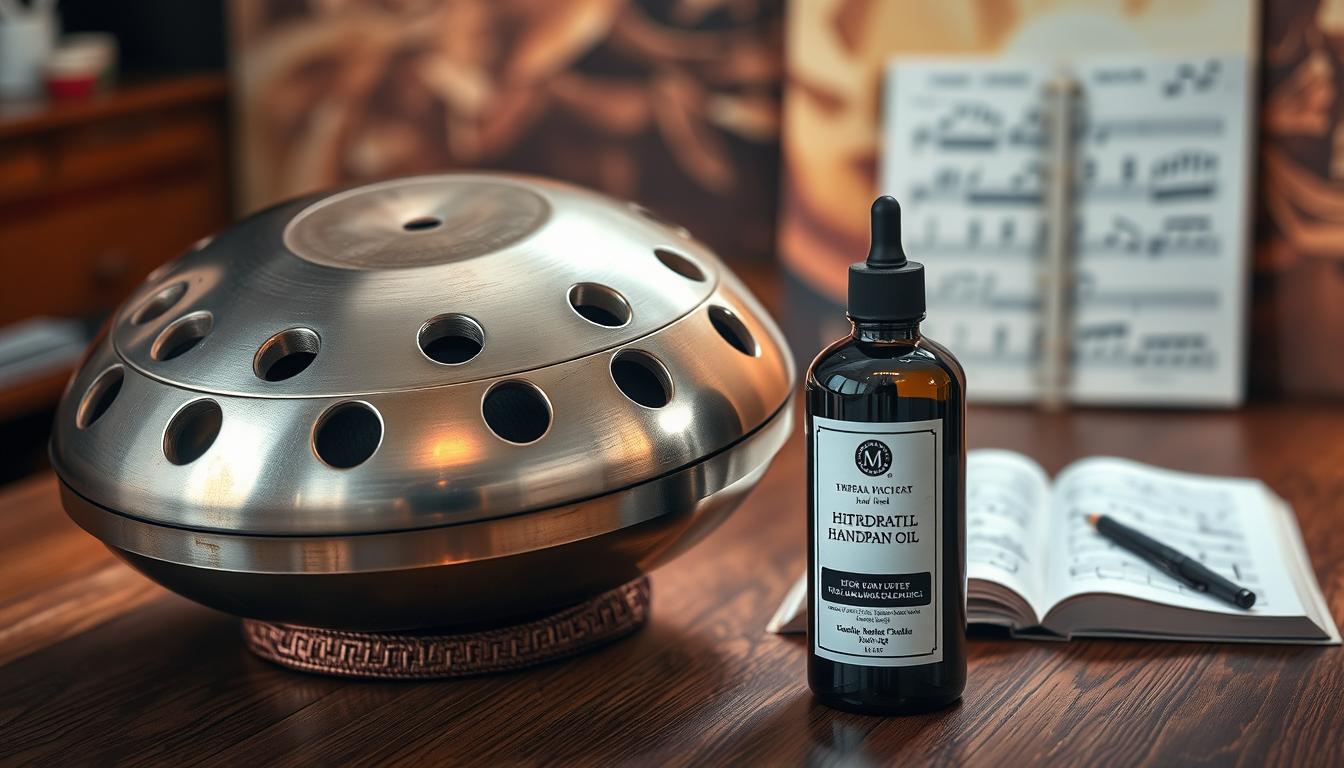

Goal: clearly explain when to apply oil to a handpan, how to preserve its resonance, and how to choose a suitable product for your instrument.
Care has three parts: cleaning, protection, and rust prevention. Depending on the surface treatment (nitrided steel, stainless steel, or other finishes), oil may be helpful or inadvisable. Always consult the maker before applying anything.
This introduction takes a practical approach: identify the signs, establish a cleaning routine, choose a product, apply it correctly, then deal with stains and corrosion. We will also cover how often to care for your instrument based on the climate and how much your hands sweat.
What we will cover: practical advice on natural and specialist oils, storage practices, and safe recommendations. For technical information and makers’ advice, see this reference page on care.
Care advice and recommended products
Why oil a handpan, and what difference does it really make?
Proper care can significantly extend the life of metal instruments. The main goal is simple: create a barrier between the steel and moisture. This also helps keep fingerprints and fine dirt from sticking.
Cleaning, protection, and rust prevention: the three essentials
Three actions matter: clean away salt and residue, protect the metal to slow oxidation, and act quickly if rust appears. Together, these steps help extend your instrument’s life.
Rust and sound: cosmetic issue or real danger?
Small spots are often only a visual concern and do not affect the sound. However, spreading corrosion can damage the surface and require repair.
“Surface rust does not always affect resonance, but it can become a serious problem if it spreads.”
Nitrided steel: watch out for porosity
Nitriding improves resistance to rust, but it can leave the surface porous, depending on the treatment. If the metal absorbs too much protective product like a sponge, its resonance may become muffled.
Stainless steel: strong, but not invulnerable
Stainless steel often needs less care. Even so, no alloy is entirely unaffected by its environment; corrosion remains possible when the air is humid or salty.
| Problem | Impact | Action |
|---|---|---|
| Surface spots | Cosmetic change | Clean and apply light protection |
| Spreading corrosion | Loss of metal, altered sound | Act quickly, remove the corrosion, and protect the surface |
| Excessive absorption | Muffled resonance | Use less product and wipe off the excess |
Practical rule: identify the finish before applying a product and adjust your routine accordingly. For technical advice and safe methods, see this dedicated resource: handpan care guide.
Understanding what causes everyday oxidation
Small habits can encourage oxidation on steel. The process is simple: moisture + salt (from sweat or sea air) + time = corrosion. This explains why spots can appear so quickly.
Sweat, salt, and clammy hands
Your hands leave salt and oils on the instrument every time you play. Some people’s sweat is more corrosive. After exercise, the residue can speed up the appearance of rust.
Humidity, rain, and sea air
Playing in drizzle, by the sea, or in a damp home increases the risk. Water in the air and salt can accelerate oxidation in a short time.
Case, storage, and condensation
Putting the instrument away while it is still damp can trap moisture. Condensation can form in a closed case, making rust appear sooner.
- High-risk situations: playing after exercise or in the rain.
- Monitoring: inspect the surface more often in salty climates.
Practical principle: the more humid the climate, the more often you need to clean and protect the instrument. Good prevention starts with cleaning before applying any protection.
Cleaning your handpan before oiling it: the essential routine
Before applying any protective product, clean the surface thoroughly to avoid problems.
Wipe it down after every use
After each session, use a clean, dry soft cloth. A microfiber cloth removes moisture, salt, and dust. This simple step prevents residue from becoming embedded.
When and how to clean it thoroughly
If marks remain or you play frequently, clean the instrument more thoroughly. Use isopropyl alcohol or diluted rubbing alcohol (50 to 75%). Put the alcohol on a cloth, never directly on the surface.
Rub gently, then let it evaporate completely. Alcohol acts as a mild cleaning agent and removes the old oily coating.
Areas to check and products to avoid
Clean both sides, the rim, and the inside, where moisture can linger. Avoid acetone and harsh solvents, which can damage the finish or adhesives.
- Gentle option: warm water and mild soap; rinse and dry immediately.
- Safety rule: finish by wiping the instrument dry and check for any remaining liquid before putting it away.
Handpan oil: when to apply it and which one to choose
A few simple signs can tell you when to renew the protection. Acting at the right time prevents rust from spreading and helps preserve resonance for years.
Signs that it is time to act
- Small brown spots or rust specks after a damp period.
- A surface that feels “dry” even after wiping.
- Persistent marks that a dry cloth will not remove.
How often, depending on your environment
Near the ocean: protect your handpan against rust at least once a month, and sometimes more often.
Humid climate: inspect it regularly and apply protection more often.
Very dry climate: allow several months between treatments.
Removing the old layer safely
If you want to start with a clean surface, use isopropyl alcohol on a cloth. Let it evaporate before applying protective oil.
Which product should you choose?
Choose a light oil and, if possible, an organic formulation that is safe for your hands. Useful natural options include grapeseed oil and coconut oil; apply a thin layer and test it first. Specialist products such as Phoenix Oil, Metal Sounds Oils, and Isthmus Oil are formulated to protect the metal without muffling its sound.
Caution: highly porous nitrided steel may absorb too much product, affecting resonance. Consult the maker before applying anything, and explore recommended care oils.
How to apply protective oil without overloading the instrument
A thin protective layer repels moisture without weighing down the sound.
How much to use: a few drops are enough. Aim for a thin coating, without a greasy film that attracts dust and dirt.
Recommended technique: put a few drops on a soft, lint-free cloth, never directly on the surface. Spread the product with steady circular motions to cover each area evenly.
Leave it for a few minutes. Then wipe off the excess with a clean cloth. This step preserves resonance: too much oil can muffle the tone, especially on nitrided steel.
Practical note: use alcohol on a cloth to prepare the surface or remove an old deposit. Using the right amount of alcohol on the cloth helps remove residue before you apply a fresh coating.
- Dry to the touch
- No greasy marks
- No strong smell
- An even surface with no sticky areas
For further advice and firsthand accounts, see this useful article: 10 reasons to embrace the instrument.
Protecting your handpan against rust beyond oiling
Protecting the instrument takes more than applying a product: it calls for simple, consistent habits. These steps reduce the effects of moisture and extend the life of your handpan.
Basic rules
Essential habits: keep the surface clean and dry, and always wipe it after playing, even if you cannot see any sweat. This limits salt deposits and rust formation.
Storage
Store the instrument in a dry room, away from bathrooms and sources of steam. In coastal areas, inspect it more often because of the salt in the air.
Avoid leaving it in its case for long periods: the case is for transport. If the instrument is not completely dry, choose a ventilated storage spot.
Transport and temperature
Use a padded bag or case to absorb knocks and vibrations. Avoid dropping the instrument: impacts can affect its structure and tuning.
Avoid leaving it in a car exposed to the sun for long periods or subjecting it to sudden temperature changes, which encourage condensation.
| Risk | Consequence | Recommended action |
|---|---|---|
| Trapped moisture | Rust despite protection | Wipe before storage and ventilate the area |
| Too long in its case | Condensation and spots | Store it outside the case or make sure it is dry |
| Impacts and extreme temperatures | Loss of tuning and deformation | Use a padded case and avoid hot cars |
These simple practices help protect your handpan against rust and extend its useful life so you can enjoy it for years. For a complete procedure, see this care guide.
What to do about spots or rusty areas
Small spots on the metal need prompt attention to keep them from spreading. Light rust is often mainly cosmetic, but it can worsen. Here is a simple, safe way to deal with it.
Clean with alcohol first
Step 1: dampen a cloth with isopropyl alcohol and wipe the surface, rim, and inside methodically.
This removes dirt, residue, and the old protective coating. You can then assess the affected areas more accurately.
Scrub gently if needed
If spots remain, use the abrasive side of a slightly damp scouring sponge.
Rub with very little pressure, and stop immediately if the finish changes too quickly.
Stubborn spots: Miracle Cloth
For stubborn specks, rubbing in circles with a Miracle Cloth may work.
Be careful: it can remove an oxidized layer that gives the surface its color, leaving it looking more silver.
Clean again, then protect
After any rubbing, wipe the area again with a cloth dampened with alcohol to remove dust and metal particles.
Finally, apply a few drops of a suitable protective oil in a very thin layer, then wipe off the excess.
- Check the area again a few days later, especially in a humid climate.
- Small rusty areas can often be managed if treated promptly.
For more techniques and firsthand advice, see this practical care guide: recommended care and cleaning.
Common mistakes that damage the surface and shorten its life
Repeated poor habits can quickly damage your instrument’s surface and sound.
Playing with dirty or greasy hands
Hands leave salt, grease, and residue that can quickly form spots. These deposits encourage corrosion when left on the surface.
Forgetting to wipe it down after playing
Failing to dry the instrument after a session creates a snowball effect: moisture + salt = faster rusting. A simple dry cloth often prevents the need for more extensive work.
Applying too much protective product
More oil does not provide better protection. A thick layer traps dust, makes the surface greasy, and can muffle resonance, especially with some surface treatments. If the instrument feels greasy, wipe it down and start again with a thin layer.
Mechanical and temperature risks
Extreme temperatures, such as a car in the sun, and impacts can cause marks, deformation, and loss of tuning. Protect the instrument during transport and avoid prolonged heat exposure.
Simple rule: clean hands, wiping after every session, periodic cleaning, and regular care protect the instrument better than occasional aggressive treatment.
Conclusion
In short, a brief, regular routine effectively protects the surface and the sound.
Remember this simple method: keep your hands clean, wipe the instrument after playing, clean the handpan with alcohol, then apply a thin layer of oil if the maker recommends it.
Cleaning is the foundation: a clean surface makes it easier to protect the instrument and extend its life.
Adjust the frequency to the climate, whether the air is salty or very humid, or the atmosphere is very dry. Be cautious with products on nitrided steel; stainless steel generally tolerates treatment better but can still corrode.
Avoid acetone, thick oils, and storage in damp places. Treat small spots promptly.
With consistent handpan care, the instrument can remain stable and enjoyable to play for many years. Keep a care kit (microfiber cloth, alcohol, and a small amount of light oil) close by to make these steps easy to follow.