
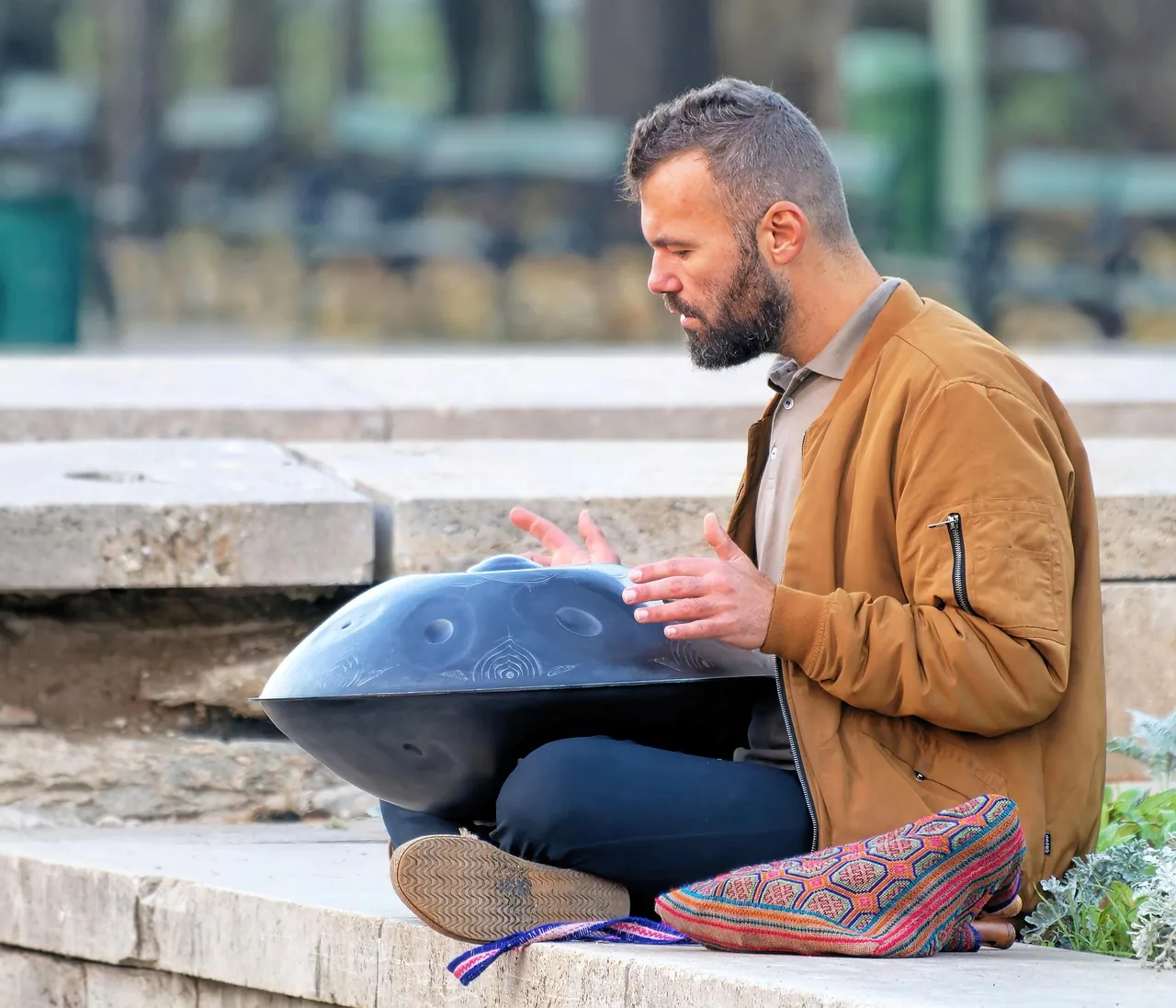

Many people buy a handpan and then play the same things without improving. The risk is getting lost among isolated tutorials instead of following a clear progression.
This guide helps you compare a platform, course or resource bundle according to your level, instrument and budget. It also explains pricing models: lifetime purchase, subscription and a 14-day money-back guarantee.
We offer simple criteria: goals (relaxation, first melodies, improvisation), level (beginner to advanced), formats (videos, e-book, notation), support (community, live workshops, coaching) and guarantees.
Value is measured by time saved and a clear path forward, not just by price. The handpan is intuitive but demanding; it takes a method, rhythm and musicality.
By the end, you will know what to check before buying and what questions to ask to avoid an impulse purchase. For a detailed comparison, see this resource: learning guide and prices.
Define your goal and level before choosing online handpan lessons
Knowing why you are learning helps you progress faster.
First, clarify your goal: relaxing, accompanying meditation, playing pieces, improvising or composing. Your answer will guide the content you choose and your pace of learning.
Beginner: getting started and learning the basics
If you are a beginner, look for modules on handling the instrument, touch and your first simple rhythms. A realistic goal is to play pleasant melodies without studying music theory in depth.
Intermediate and advanced: expand your playing
More experienced players should seek material that develops variations, patterns and improvisation. Favor courses that encourage creativity over repetitive loops.
Set a realistic practice schedule
Aim for consistency: 10 to 15 minutes a day is often more effective than long, occasional sessions. Around 20 hours is a common estimate for reaching a reasonable level, but this varies with experience and consistency.
| Level | Goals | Suggested practice time |
|---|---|---|
| Beginners | Handling the instrument, basics, first rhythms and melodies | 10 to 15 min/day |
| Intermediate | Patterns, variations, improvisation | 15 to 30 min/day |
| Advanced | Composition, performance, advanced techniques | 30 min or more per day |
Quick self-assessment: if you struggle to keep a steady beat, alternate hands or produce a clear tone, start with a course on the fundamentals. Otherwise, choose creative modules that state their intended outcome, such as “play your first melodies” or “improvise and compose.”
Online handpan lessons: how to choose a good teaching format
How movements and sequences are presented guides your learning more than lengthy theory does.
The teaching format matters as much as the content. A course that looks good on paper will still be ineffective if the movements are not shown clearly. Check that you can replay lessons and return to a specific point: this helps you improve faster.
Immersive overhead video lessons
Overhead videos prevent left-right reversal. The teacher’s hand matches yours. This reduces mistakes and makes movements easier to copy.
Step-by-step progression
A pattern should be shown slowly, then built upon. This progression in steps prevents information overload and makes learning easier.
Being able to slow the video down and review each step helps you make strikes and transitions automatic.
Accessible notation and printable materials
Favor visual notation: symbols, colors or numbers help you remember sequences without reading music. The notes remain easy to find.
A printable e-book or booklet lets you practice offline. It is ideal for repeating exercises without a screen.
| Format | Main benefit | Best for |
|---|---|---|
| Overhead videos | Accurately copying movements | Beginners and visual learners |
| Accessible notation | Quick memorization without reading music | Memorization and review |
| E-book or booklet | Offline practice and exercise sheets | Short sessions and repetition |
In short, the best method combines videos and a booklet. Choose according to your preferences: listening to the music, watching the movements or printing the exercises. A good method lets you revisit a lesson as often as you need.
Check the teacher’s quality and the clarity of the explanations
The teacher’s clarity and experience affect how quickly you progress. Before buying, watch excerpts to assess the quality of the teaching and the precision of the demonstrations.
Concise teaching and review
Favor short, focused lessons that you can review several times. Good modules offer tips when students are likely to make mistakes: posture, finger angle and relaxation.
Technical approach
Suitable technique demonstrates gentle movements: brushing the note, letting the wrist rebound and controlling vibrations. This produces clear tones without force.
Pay attention to the use of both hands: a complete course trains the less-skilled hand from the start.
Credibility and feedback
Check the teacher’s experience, the coherence of the progression and student testimonials about the clarity of the explanations and their progress. Compare structured instruction, such as that of David Charrier or David Kuckhermann’s Handpan Dojo, with isolated resources: the difference can be decisive for a player.
- Simple checklist: teaching, demonstration, structure and anticipation of mistakes.
- Try a free lesson to judge its actual clarity beyond the marketing claims.
Check compatibility with your instrument and playing conditions
How well your instrument matches the course’s reference points directly affects your progress.
Why it can hold you back: some programs depend on a particular note layout. If your visual reference points differ, you lose time and motivation.
A simple thing to check: if your instrument has a central note surrounded by other notes, many general approaches will work regardless of its scale. Look for teaching based on the logic of note positions instead of fixed tablature.
Handpan or tongue drum
Some materials also cover the tongue drum. Read the compatibility information carefully to learn whether the exercises apply to a handpan or a tongue drum.
Access on multiple devices
Think about where you will practice: at home, outdoors or while traveling. Favor access from a computer, tablet and phone so you can practice anywhere.
| Factor | What to check | Why it matters |
|---|---|---|
| Layout | Central note with notes around it | Transferable method |
| Compatibility | “Handpan or tongue drum” guidance | Avoids irrelevant exercises |
| Access | Computer, tablet, phone | Encourages regular practice |
Tip: check whether the program explains how to transfer a pattern from one layout to another. An attractive price loses its value if the exercises do not work with your notes.
The ultimate goal is smooth learning without obstacles caused by usability, note layout or equipment. To learn more about this instrument’s characteristics, see this guide: understand the instrument and its distinctive sound.
Assess the technical content: basics, exercises, rhythm and striking techniques
A good program turns isolated movements into habits. It should demonstrate how to hold and touch the instrument, then offer progressive exercises that develop musicality.
Essential points to look for:
- Comfortable posture and positioning.
- Producing a clear tone and identifying striking areas.
- Hand independence and automatic movements.
- A progression of rhythm and melody exercises.
Holding the instrument and posture
Sit with the instrument resting on your thighs and tilted slightly toward your torso. Position the low notes toward your body so you can reach the notes naturally.
Striking and touch
Brush the surface rather than hitting it hard. Let your wrist rebound and avoid prolonged contact, which dampens the resonance. This also protects the instrument over time.
Essential exercises and development
Start by playing every note, then play ascending and descending scales. Repeat these exercises until the movements become automatic.
To develop rhythm and melody, focus on simple chords and progressive patterns: establish one rhythm before adding variations.
Advanced techniques to look for
A complete method covers the finger roll, slap, tak, palm mute and knock. These effects should be explained precisely so you can protect the instrument and produce a clean sound.
For a complete course covering these technical points, also see these lessons.
Compare support options: community, live workshops and coaching
An active framework — community, workshops and coaching — changes your learning path.
Support often makes the difference between buying content and continuing to practice over time. A motivated group, live sessions and personalized guidance help you correct mistakes sooner and encourage practice.
Private community: motivation, feedback and discussion
A private community lets you post videos, ask questions and receive targeted feedback.
Challenges and discussions with other players encourage regular practice and provide concrete ideas for improving.
Live workshops and replays: learn in context
Workshops offer real-time corrections and replays you can watch several times.
Watching another student receive a correction often helps you avoid the same mistakes.
Personalized coaching for faster progress
A coach offers advice on posture, hand movements and rhythm. They create a practice plan suited to the player’s available time.
| Option | Benefit | Best if |
|---|---|---|
| Private community | Motivation and feedback | You lose motivation quickly |
| Workshops and replays | Corrections in context | You want to learn live |
| Coaching | Personalized plan | You have a specific, short-term goal |
Open forums, such as Reddit’s r/Handpan and Facebook groups, are useful for discussion, but they do not always replace a structured course. If you lose motivation easily, choose a combination of community, workshops and coaching to support your learning and musical experience.
Assess the price and guarantees before committing
Do not let price make the decision for you. First assess the balance of content, structure and support instead of comparing prices alone. Consider how often you practice and how much time you actually have.
Lifetime purchase or unlimited pass
Lifetime purchase: suitable if you want to follow a specific course and return to it often. It is often cost-effective for people who follow a single course and prefer to invest in one purchase.
Unlimited pass: useful if you want to explore several styles and benefit from annual masterclasses, the community, live workshops and coaching. This model offers value when you regularly use several resources.
| Model | Strengths | Best for |
|---|---|---|
| Lifetime purchase | Permanent access, unlimited replays | People following one course |
| Unlimited pass | Variety, updates, community, live workshops | People exploring several courses |
| 14-day guarantee | Risk-free trial, full refund | People wanting to test the platform’s usability |
A simple calculation and final tip
Estimate how many weeks you will practice over three to six months and how many courses you will use. Divide the price by the number of weeks to find the weekly cost. This quickly reveals the most sensible choice for your level and goal, whether that is relaxation or rapid progress in playing.
To compare secondhand options before buying an instrument, see used handpans.
Conclusion
The surest way to progress is to align your goal, your instrument’s compatibility and the teaching format before considering the price.
Check the teacher’s clarity, step-by-step progression, materials (overhead video, notation, booklet) and support (community, workshops, coaching).
The fundamentals are posture, a light touch, steady rhythm and regular repetition to produce clean tones and fluid playing.
Action plan: try a lesson, practice for two weeks with a simple goal, then use the guarantee if the course does not deliver what it promises.
Learning to play the handpan happens step by step. With the right framework — lessons, exercises and feedback — your musical progress becomes faster and more lasting.