
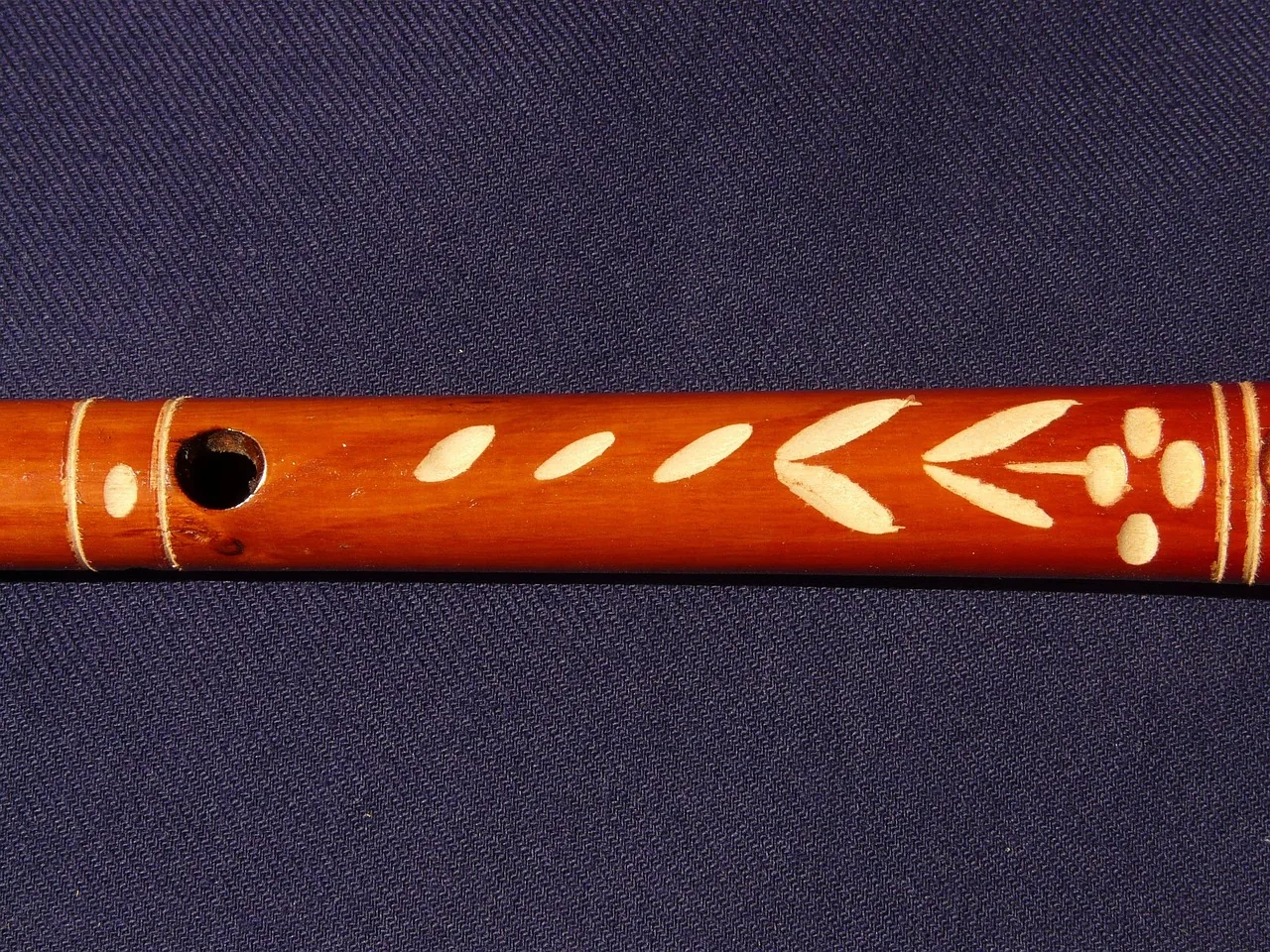

The recorder, a simple wind instrument with a long history, has captivated musicians and music lovers for centuries. Since ancient times, it has evolved and profoundly influenced classical and contemporary music. Its varied and refined repertoire reflects its importance in music history.
Renowned composers such as Johann Sebastian Bach and Georg Philipp Telemann wrote works that showcase the recorder, highlighting its central role in Baroque music. Available in different ranges, recorders offer a unique palette of sounds. From the high-pitched soprano recorder to the deep-sounding bass recorder, each variety brings a distinct musical dimension.
Today, brands such as Yamaha and Moeck offer high-quality recorders to musicians around the world. The instrument’s history also includes innovators such as Jean-François Beaudin, who pushed the boundaries of its design and inspired a new generation of musicians.
The recorder’s beginnings and historical development
The history of the recorder stretches back thousands of years and is marked by continuous development that has shaped its role in music. Simple in design, the instrument has endured through the ages and influenced many periods and cultures.
Ancient and medieval origins
The earliest traces of the recorder come from ancient Egypt and Greece, where it was used in religious rituals and entertainment. In the Middle Ages, the instrument enjoyed a revival and became a key part of European polyphonic music.
From the Baroque period to the modern era
During the Baroque period, the recorder underwent major technical innovations, including construction in three pieces. Historical treatises, such as those by Jacques Hotteterre, describe these developments. The use of wood and the instrument’s structure also evolved, offering greater flexibility.
- The Baroque period saw the emergence of recorders in different sizes, from soprano to bass.
- Innovations in materials and construction expanded the instrument’s range and improved its playability.
These changes influenced the music of the period and laid the foundations for the modern recorder, a versatile instrument used in many musical genres today.
Famous recorder players throughout history
The recorder has left its mark on music history through exceptional performers. Each brought a personal touch, making the instrument a universal means of expression.
Michel de la Barre: a pioneer of the French flute
Michel de la Barre, a major figure, laid the foundations for the transverse flute. His role in musical training and his influence on the instrument are undeniable.
Jean-Pierre Rampal: the performer who brought the instrument to a wider audience
Jean-Pierre Rampal popularized the flute around the world. His collaborations with major orchestras brought the instrument to the international stage.
Hubert Laws: where classical music meets jazz
Hubert Laws combined classical music and jazz. His mastery of the recorder opened up new artistic possibilities.
Ludivine Issambourg: an electro-jazz innovator
Ludivine Issambourg pushes boundaries with electro-jazz. Her innovative style inspires a new generation of musicians.
| Flutist | Contribution | Style | Impact |
|---|---|---|---|
| Michel de la Barre | Pioneer of the French flute | Classical | Foundations of the transverse flute |
| Jean-Pierre Rampal | Bringing the flute to a wider audience | Classical and contemporary | International reach |
| Hubert Laws | Fusion of classical music and jazz | Jazz | Musical innovation |
| Ludivine Issambourg | Electro-jazz | Electro-jazz | Modernization |
These musicians shaped their eras and passed on their knowledge. As dedicated teachers, they trained generations of flutists. Discover their inspiring careers.
The recorder in music education and performance
The recorder plays a central role in music education and is an ideal instrument for introducing young students to musical fundamentals. Its accessibility and versatility make it a popular choice in many schools.
Teaching with the recorder
Recorder teaching draws on proven methods that combine practice and theory. Teachers use progressive exercises to develop students’ skills. This structured approach supports effective progress at every level.
The legacy of traditional techniques
Since the Middle Ages, playing techniques have been passed from teacher to student. Today, these methods are part of conservatory curricula, maintaining a connection with the past. Students thus learn to master the instrument while respecting its heritage.
Playing in an ensemble is also essential. Group performance strengthens coordination and musical cohesion. Concerts and collective performances provide an enriching experience and encourage learning through direct interaction between musicians.
Conservatories, such as those in Paris-Saclay, offer programs devoted to early music. These courses combine in-depth study with regular practice, allowing students to refine their techniques.
Renowned teachers continue to pass on these traditional skills. Their expertise guides students through structured learning, with each stage carefully prepared to help them progress.
In addition, initiatives such as the Musique et Mémoire festival highlight the recorder’s importance in contemporary music-making. These events show how the instrument adapts to the demands of the modern world.
Conclusion
The recorder, an emblematic instrument, has a rich history that has profoundly influenced the musical landscape. From its ancient origins through the Baroque period and into modern times, its technical and artistic development has shaped generations. Figures such as Michel de la Barre, Jean-Pierre Rampal, Hubert Laws and Ludivine Issambourg have enriched its repertoire and redefined its sonic possibilities.
Education plays a key role in preserving this instrument. Structured lessons and specialized schools provide an ideal setting for mastering traditional techniques. The recorder’s variety of forms and sizes is matched by a rich repertoire of melodies suited to every level and style.
For those discovering the instrument, the beginning of a musical journey with the recorder can open the door to decades of creativity. Explore the educational programs that carry this heritage forward, and discover the contemporary forms that continue to draw inspiration from it. The recorder’s future is in your hands.
FAQ
Where did the recorder originate?
What is the difference between a recorder and a transverse flute?
What materials are used to make a recorder?
How did the recorder become part of classical music?
What are the challenges of learning the recorder?
Are there recorders for children?
Is the recorder used in genres other than classical music?
How do you care for a recorder?
What are the benefits of playing the recorder?
Source links
- https://www.metmuseum.org/essays/the-development-of-the-recorder
- https://recorderhomepage.net/contemporary-makers/
- https://assets.cambridge.org/97805213/58163/excerpt/9780521358163_excerpt.pdf
- https://americanrecorder.org/about_the_recorder.php
- https://www.blokfluit.org/historical/search/advanced/detail/htitle/1112/
- https://openresearch.surrey.ac.uk/esploro/outputs/doctoral/The-Recorder-1800-1905/99514757302346
- https://www.festivalenfrance.com/en/festival/festival-musique-et-memoire
- https://researchportal.vub.be/en/publications/the-place-of-the-recorder-in-the-performance-of-italian-music-c16/
- https://openaccess.city.ac.uk/id/eprint/30517/