
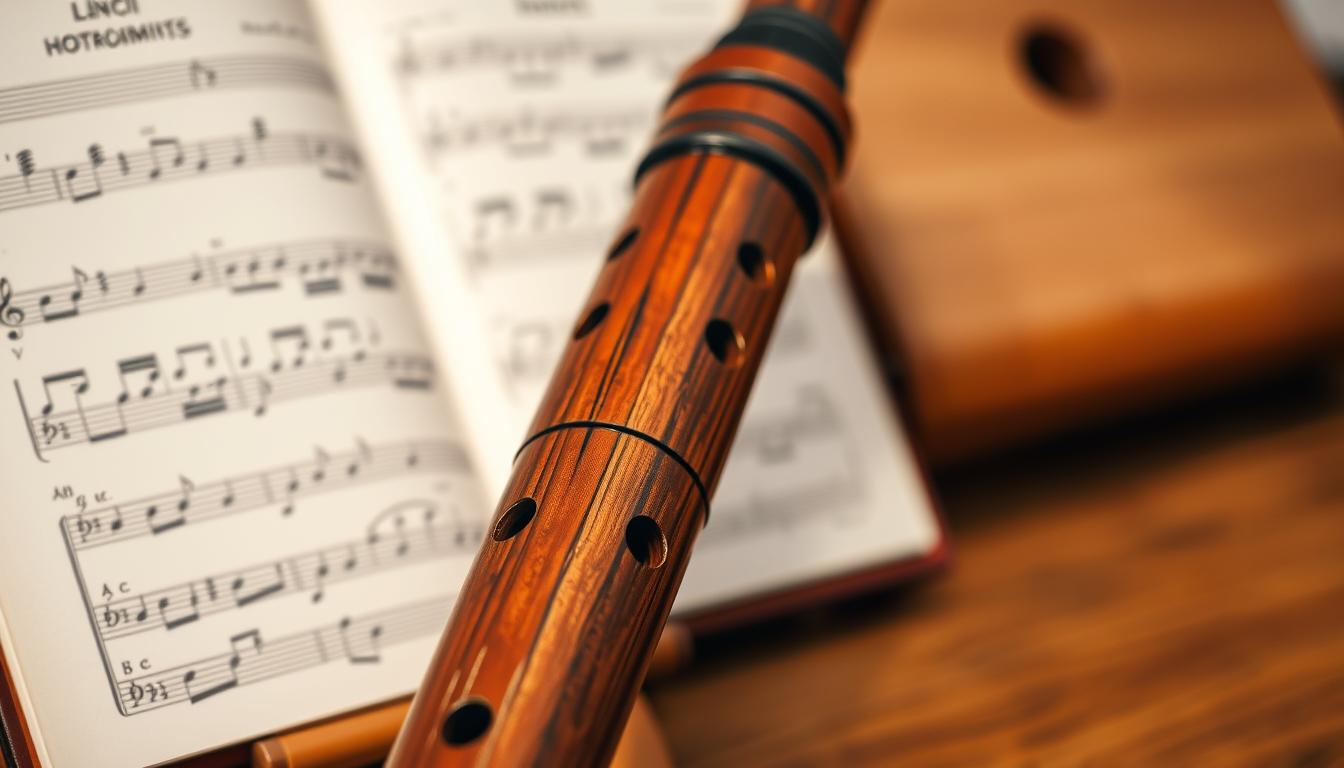

The recorder, an instrument with an enchanting sound, has endured through the centuries and become a mainstay of classical music. From the medieval period to today, its rich and varied repertoire continues to captivate music lovers around the world.
Legendary composers such as Mozart, Handel and Vivaldi have enriched this musical heritage. Their legacy lives on in celebrated scores, including Vivaldi’s concertos, which showcase the recorder to remarkable effect.
This article surveys the major musical periods, from the Baroque era to the present day. Stretta Music offers a wide selection of sheet music, allowing enthusiasts to explore these timeless masterpieces.
This list-based guide introduces the essential works and resources for deepening your knowledge of the recorder.
Introduction to the world of the recorder
The recorder, a woodwind instrument with an enchanting sound, has endured through the centuries and become a mainstay of classical music. From the medieval period to today, its rich and varied repertoire continues to captivate music lovers around the world.
Introducing the instrument and its timeless appeal
Recorders come in several sizes (soprano, alto, tenor, bass and others), offering a distinctive range of sounds. Their historical development, which included the use of materials such as elder wood and bone, reflects changing musical needs. The first written mention of the instrument dates from 1481–1483, in a treatise by Johannes Tinctoris describing an instrument with seven holes at the front and one at the back.
Aims and structure of this article
This article guides you through the major musical periods, from the Baroque era to the present day. We highlight essential works and resources to deepen your knowledge of the recorder. Stretta Music offers a wide selection of sheet music, allowing enthusiasts to explore these timeless masterpieces.
| Period | Characteristics | Notable composers and sources |
|---|---|---|
| Medieval | Recorders with nine holes, including a thumbhole | Cantigas manuscripts and Machaut |
| Renaissance | Recorders played in ensembles, with a powerful sound | Notable collections |
| Baroque | Recorders played solo, with a gentler sound | Vivaldi, Handel |
Used since the 12th century, the recorder developed as part of a family of instruments often played in consorts in England. In the 17th century, music began to be performed for pleasure as the first concert halls appeared. A renewed interest in early music in the 20th century led to the recorder’s rediscovery.
Beginners can take up the recorder, although playing becomes more demanding over time and requires practice and good technique. Many artists in the second half of the 20th century wrote for the instrument. Among them was Led Zeppelin’s John Paul Jones, who used soprano, alto and tenor recorders in “Stairway to Heaven.”
The origins of the recorder and its earliest scores
The recorder has roots in the medieval period, when it appeared as a simple instrument consisting mainly of a wooden tube with holes.
Early written traces of the instrument appear in medieval manuscripts such as the Cantigas de Santa Maria, which contain descriptions of recorders used in liturgical music.
Early scores were often transcribed in collections, including works by Claudin de Sermisy published by Attaingnant. These historical documents show musical notation in continual development.
| Period | Characteristics | Historical documents |
|---|---|---|
| Medieval | Recorders with seven holes at the front and one at the back | Cantigas de Santa Maria |
| 16th century | Song collections | Attaingnant editions |
| Baroque | Recorders played solo | Vivaldi’s compositions |
The first publications of recorder music marked the beginning of a musical development that continued for centuries.
The medieval period: the earliest musical traces
Medieval music, shaped by liturgy and oral transmission, saw the recorder emerge as a distinctive instrument. This period laid the foundations for a rich repertoire influenced by cultural exchange and religious practice.
Manuscripts and works associated with the Cantigas and Machaut
Medieval manuscripts such as the Cantigas de Santa Maria offer a glimpse of the recorder’s early uses. Dating from the 13th century, these texts contain detailed descriptions of the instrument and its role in liturgical music.
Guillaume de Machaut, a 14th-century composer and poet, also helped enrich this repertoire. Although his works are mainly vocal, they reflect the influence of the recorder in instrumental accompaniment.
The instrument’s earliest performances
The medieval recorder originally had eight holes, including a thumbhole, and a cylindrical shape. This basic design evolved over the centuries as the instrument adapted to the musical needs of each era.
The early repertoire was passed on chiefly by word of mouth and through manuscripts. Jongleurs and troubadours played a key role in spreading these melodies, which were often accompanied by words.
Early recorder performances were influenced by liturgical music and Gregorian chant. The instrument was often used in religious settings to accompany ceremonies and sacred songs.
Although little medieval music was recorded, it reflects a cultural and spiritual richness that has endured through the centuries.
To learn more about medieval music and its influence on the recorder, see the relevant page on Wikipedia.
The Renaissance: the rise of the recorder consort
The Renaissance, spanning roughly 1400 to 1600, marked a major turning point in the recorder’s history. This period saw the rise of the consort, an instrumental ensemble that transformed music.
Notable collections and innovations of the period
The collection Der Fluyten Lust-Hof, published by Jacob van Eyck, is one of the best known from this period. It highlights the variety of sonatas and arrangements for recorder ensemble.
Improvements in recorder making during the Renaissance allowed greater expressiveness. Makers refined their materials and finishes, producing a richer sound.
Innovations in notation and performance
The Renaissance also brought innovations in musical notation. Scores for the recorder grew more complex, with polyphonic arrangements that showcased the instrument’s capabilities.
Composers and publishers such as Jacob van Eyck popularized the recorder consort. Their work enriched the repertoire and established new standards of performance.
The Baroque golden age: the recorder as a solo instrument
The Baroque era, from the 17th to the early 18th century, marked the recorder’s peak as a solo instrument. It produced celebrated composers such as Vivaldi, Handel and Telemann, who enriched its repertoire.
Major works by Vivaldi and other composers
Vivaldi, a master of the concerto, wrote magnificent works for the recorder. Concertos such as Il Gardellino display the instrument’s virtuosity. Handel composed sonatas and concertos that combine elegance with complexity.
- Vivaldi’s concertos make full use of the recorder’s capabilities.
- Handel incorporates basso continuo, adding musical depth.
- Telemann also enriched the repertoire with his many compositions.
Technical development and instrumental innovations
The Baroque era brought significant technical advances. The Hotteterre family in particular refined recorder making, introducing innovations such as an ebony mouthpiece and an added thumbhole.
Basso continuo became an essential accompaniment, often provided by the violin or harpsichord. These innovations allowed greater expressiveness and expanded the instrument’s musical possibilities.
The alto recorder became especially popular during this period. To explore scores from the era, see the sheet music available from Stretta Music.
Great classical works written for the recorder
The recorder has inspired celebrated composers, each bringing a distinctive approach to this timeless instrument. From Vivaldi and Mozart to Jacob van Eyck, its repertoire is rich and varied.
A selection of essential scores
Among the major works are Vivaldi’s concertos, including Il Gardellino, which showcase the recorder’s virtuosity. Mozart also left scores such as K. 618 that testify to his genius.
Jacob van Eyck’s collection Der Fluyten Lust-Hof offers a variety of sonatas and ensemble arrangements that reflect the spirit of its time.
Resources available from Stretta Music
Stretta Music offers a wide selection of scores, allowing music lovers to explore these masterpieces. Scores are available in PDF and audio formats, providing immediate access to the works.
Stretta Music’s careful selection draws on historical criteria and aims to remain faithful to each musical period. These scores are valuable to contemporary performers, from beginners to experts.
The Hotteterre family’s influence on the instrument’s development
The Hotteterre family left its mark on recorder history through major innovations. Jacques-Martin Hotteterre in particular transformed the instrument through his writings and creations.
Innovations and new techniques
The Hotteterres introduced significant changes to recorder design. An ebony mouthpiece and the addition of a thumbhole improved comfort and playing technique. These changes allowed greater expressiveness and broadened the instrument’s musical possibilities.
| Innovation | Effect on design | Technical benefits |
|---|---|---|
| Ebony mouthpiece | Improved mouthpiece | Better control of the sound |
| Added thumbhole | Improved ergonomics | Easier playing of high notes |
| Refined bore | Improved intonation | Richer, more balanced sound |
Jacques-Martin Hotteterre’s treatises, such as , offer valuable insights into performance techniques. These writings show how the Hotteterre family’s innovations influenced players and encouraged a more expressive, nuanced approach.
“Thanks to the Hotteterres’ innovations, the recorder became an instrument capable of conveying the subtlest emotions.”
These advances transformed recorder making and reshaped playing techniques. To learn more about the development of French Baroque music, see the Wikipedia page.
German and Italian composers: a musical dialogue
The musical dialogue between German and Italian composers profoundly shaped the recorder’s development. This artistic exchange produced works that still resonate today.
The role of Mozart, Handel and other major figures
Mozart and Handel, leading figures in classical music, helped enrich the recorder repertoire. Their compositions combine elegance and complexity while highlighting the instrument’s expressive capabilities. The soprano recorder has a particular place in some scores, where its clear, powerful sound stands out.
Their musical approaches balance technical innovation with respect for tradition. Handel, for example, incorporates basso continuo to add depth, while Mozart explores complex harmonic structures. Such innovations expanded the recorder’s possibilities and influenced modern instrumental practice.
Their musical legacy continues to inspire performers and connects the Baroque and Classical eras. These composers reshaped music for violin and recorder, leaving a lasting repertoire.
The modern rediscovery of the classical repertoire
In the 20th century, a revival of interest in older works gave new life to the recorder’s classical repertoire. Led by musicians and ensembles specializing in early music, this movement reconnected the instrument with its historical roots.
Modern performers have adapted historical playing techniques while incorporating contemporary practices. This combination has preserved the works’ character and made them accessible to wider audiences. Early music festivals, especially those celebrating Baroque and Renaissance music, played a key role.
The lasting appeal of the early repertoire lies in its musical richness and its capacity to evolve. The recorder, with its distinctive sound, is central to this process. Technical innovations, including the use of modern materials alongside traditional methods, have also contributed to its resurgence.
This rediscovery has revitalized the classical repertoire and opened new paths for contemporary performers. Recorder music continues to captivate listeners, bringing tradition and modernity together.
The recorder’s 20th-century revival
The recorder experienced an unprecedented revival in the 20th century, marking a turning point in its history. This renewed interest was part of a wider rediscovery of early music, particularly medieval and Baroque music.
The early music revival
The 20th century saw the rise of an early music revival. Specialist musicians and ensembles renewed interest in the recorder and brought it back into use.
- Arnold Dolmetsch, a pioneer in the field, made traditional instruments and founded festivals, including the Haslemere Festival in 1925, that became important events.
- Peter Harlan’s innovations, especially the mass production of simplified recorders, made the instrument more accessible and easier to learn.
- Recordings and modern editions brought forgotten works back to light and gave the repertoire new life.
Conservatories and festivals played a key role in this revival. They preserved traditional techniques while encouraging innovation and attracting wider audiences.
The movement revitalized recorder playing and opened new paths for contemporary performers, linking tradition and modernity.
Instrumental accompaniment and arrangements in the repertoire
Instrumental accompaniment is central to the recorder repertoire, adding depth and richness to performances. From the Baroque era to today, arrangements and accompaniment techniques have evolved to offer a varied range of sounds.
Basso continuo and piano accompaniment
Basso continuo, typical of Baroque music, was essential in supporting recorder melodies. Often played on harpsichord or lute, this kind of accompaniment shaped works by composers such as Vivaldi and Handel. Piano accompaniment is now a modern alternative, offering a more intimate and expressive sound.
Classical scores such as Telemann’s sonatas show how piano accompaniment can enrich a performance. This development has opened new artistic possibilities while remaining true to the spirit of the compositions.
Adaptations and transcriptions of Baroque works
Transcriptions of Baroque works for recorder and piano have offered new ways to hear familiar masterpieces. Bach’s concertos, for example, were originally written for other instruments but have been successfully adapted for recorder.
“Adapting Baroque works for recorder and piano reveals another dimension of these celebrated compositions.”
These arrangements preserve the character of the original scores while making them accessible to contemporary audiences. Modern accompaniment techniques have brought a fresh approach to these timeless works.
The development of accompaniments and arrangements has helped the recorder retain a place in classical music. These innovations continue to inspire performers and connect past with present.
Stretta Music: a resource for sheet music
Stretta Music is a major online sheet music provider, offering easy access to an extensive classical music catalogue.
Online access to classical scores
Stretta Music offers an intuitive interface through which users can quickly download PDF scores and access audio files. This ease of access helps music lovers and professionals alike.
Stretta Music’s catalogue covers a broad range of works from the 14th to the 18th century. This variety lets enthusiasts explore notable collections and provides a rich historical perspective.
Alongside its scores, Stretta Music offers convenient online purchasing options. Printed editions can be shipped, providing a choice of digital or physical formats to suit different needs.
Stretta Music supports the rediscovery of classical repertoire by offering scores that draw on historical sources. Performers can reconnect with music’s roots while benefiting from modern technology.
To develop your playing further, you can find additional guidance on how to play Au clair de la lune on the recorder.
Comparing alto and soprano recorders
Alto and soprano recorders differ notably in their tuning and repertoire. These differences affect which instrument suits a particular musical setting.
Differences in tuning and repertoire
- Tuning: The alto recorder is in F, while the soprano is in C. This difference affects their ranges and sounds.
- Repertoire: The soprano recorder’s repertoire focuses on Baroque works that highlight its clear, high sound. The alto is often used in more polyphonic settings, where it adds harmonic richness.
Each instrument also requires its own fingerings. A player moving from soprano to alto, for example, must adjust to the alto’s F fingerings, which may take around two to three weeks.
The choice between the instruments therefore depends on the repertoire you want to play. The soprano suits pieces calling for a higher, clearer sound, while the alto works well in ensembles or compositions requiring a lower range.
To learn more about the differences between these instruments, see the discussion on this forum.
Transcriptions and adaptations for musical variety
Transcriptions and adaptations have played a crucial role in enriching the recorder repertoire. These arrangements offer new ways to revisit familiar pieces, adding musical and artistic variety.
Examples of well-known transcriptions
Some of the best-known transcriptions are arrangements of Baroque concertos for recorder. Vivaldi concertos originally composed for other instruments, for example, have been successfully adapted for recorder. Such transcriptions highlight the instrument’s virtuosity and expressiveness.
| Work | Original composer | Arranger | Instruments |
|---|---|---|---|
| Concerto in G minor | Vivaldi | Various arrangers | Recorder, string orchestra |
| Sonata in E-flat major | Handel | Contemporary arrangers | Recorder, harpsichord |
| “La Bamba” | Traditional | Modern arrangers | Recorder, percussion |
These transcriptions preserve the character of the original scores while making them accessible to contemporary audiences. Modern accompaniment techniques have brought a fresh approach to these timeless works.
Technical and artistic challenges include adapting fingerings and maintaining a balanced sound. Nevertheless, these adaptations bring greater musical variety and give the recorder a place in settings from chamber music to polyphonic ensembles.
Transcriptions and adaptations continue to inspire contemporary performers and connect tradition with modernity. They open new paths for exploring and enjoying the classical repertoire.
Practical advice for performing these great works
Performing classical recorder works well calls for technique, expression and historical understanding. These practical tips can help you develop your playing.
Performance techniques and tips
- Breathe deeply before you begin so you can control your breath.
- Pay attention to nuance: use contrasting dynamics and varied articulation.
- Practise ornaments precisely; they add a touch of Baroque authenticity.
Learning resources for beginners and experts
To improve your playing, explore these resources:
- Online tutorials on basic techniques.
- Comprehensive teaching methods to develop your skills.
- Reference recordings for studying performances.
Spending time with these resources can greatly improve your command of the instrument.
Contemporary perspectives on the classical repertoire
Contemporary music has opened new paths for the recorder’s classical repertoire, introducing innovations while respecting its historical roots. This dialogue between tradition and modernity offers an evolving perspective.
Contemporary music’s influence on the recorder
Modern composers revisit older works and offer new interpretations. The result honours the past while exploring new sounds.
- Productive collaborations: contemporary composers work with specialists in historical performance, expanding the instrument’s possibilities.
- Innovative projects: some projects incorporate modern elements such as electronics, renewing the musical experience.
These creations enrich the repertoire and attract more diverse audiences, showing the recorder’s vitality in music today.
The commitment of contemporary composers and performers ensures that the recorder continues to evolve, adapting to modern tastes while respecting its heritage.
Conclusion
Over the centuries, the recorder has passed through several important periods, from the Middle Ages to the present day. Each era brought its own style and developments, enriching the instrument’s repertoire. The Renaissance saw the rise of consorts, while the Baroque era placed solo recorder virtuosity in the spotlight. German and Italian composers also contributed to its development, leaving enduring scores.
Technical innovations and the modern revival have helped the recorder regain its place in contemporary music. Stretta Music offers a wide selection of scores that invite music lovers to explore this rich and varied repertoire. Whether in chamber music or a solo piece with accompaniment, the instrument continues to captivate listeners with its distinctive sound and capacity to evolve.
The recorder remains an emblematic instrument whose musical heritage connects past and future. Its continuing development inspires performers and brings tradition and modernity together.
FAQ
What are the most notable classical works for recorder?
How has the recorder evolved over the centuries?
What are the main differences between soprano and alto recorders?
How do you choose between a recorder and a transverse flute?
What resources can help you learn classical recorder works?
How does instrumental accompaniment affect recorder performances?
What are the contemporary trends in the classical recorder repertoire?
What advice would you give for performing great classical recorder works?
Source links
- https://en.wikipedia.org/wiki/Recorder_(musical_instrument)
- https://en.wikipedia.org/wiki/Recorder_(musical_instrument)
- https://en.wikipedia.org/wiki/Recorder_(musical_instrument)
- https://en.wikipedia.org/wiki/Recorder_(musical_instrument)
- https://en.wikipedia.org/wiki/Recorder_(musical_instrument)
- https://en.wikipedia.org/wiki/Recorder_(musical_instrument)
- https://en.wikipedia.org/wiki/Recorder_(musical_instrument)
- https://en.wikipedia.org/wiki/Recorder_(musical_instrument)
- https://en.wikipedia.org/wiki/Renaissance_music
- https://en.wikipedia.org/wiki/Recorder_(musical_instrument)
- https://en.wikipedia.org/wiki/Recorder_(musical_instrument)
- https://en.wikipedia.org/wiki/Recorder_(musical_instrument)
- https://en.wikipedia.org/wiki/Recorder_(musical_instrument)
- https://www.oprl.be/sites/default/files/2022-11/THE%20GENTLEMAN%27S%20FLUTE.pdf
- https://en.wikipedia.org/wiki/Recorder_(musical_instrument)
- https://en.wikipedia.org/wiki/Recorder_(musical_instrument)
- https://en.wikipedia.org/wiki/Recorder_(musical_instrument)
- https://en.wikipedia.org/wiki/Recorder_(musical_instrument)
- https://en.wikipedia.org/wiki/Recorder_(musical_instrument)
- https://en.wikipedia.org/wiki/Recorder_(musical_instrument)
- https://en.wikipedia.org/wiki/Recorder_(musical_instrument)
- https://en.wikipedia.org/wiki/Recorder_(musical_instrument)
- https://en.wikipedia.org/wiki/Recorder_(musical_instrument)
- https://en.wikipedia.org/wiki/Recorder_(musical_instrument)
- https://en.wikipedia.org/wiki/Recorder_(musical_instrument)
- https://en.wikipedia.org/wiki/Recorder_(musical_instrument)
- https://en.wikipedia.org/wiki/Recorder_(musical_instrument)
- https://en.wikipedia.org/wiki/Recorder_(musical_instrument)
- https://en.wikipedia.org/wiki/Recorder_(musical_instrument)
- https://en.wikipedia.org/wiki/Recorder_(musical_instrument)
- https://en.wikipedia.org/wiki/Recorder_(musical_instrument)
- https://en.wikipedia.org/wiki/Recorder_(musical_instrument)
- https://en.wikipedia.org/wiki/Recorder_(musical_instrument)
- https://en.wikipedia.org/wiki/Recorder_(musical_instrument)
- https://en.wikipedia.org/wiki/Recorder_(musical_instrument)
- https://en.wikipedia.org/wiki/Recorder_(musical_instrument)
- https://www.internationalmusicacademy.com/Brochure%20Dinant%202025.pdf
- https://en.wikipedia.org/wiki/Recorder_(musical_instrument)
- https://fr.wikipedia.org/wiki/Liste_d%27%C5%93uvres_de_musique_classique_utilis%C3%A9es_dans_la_culture_populaire