
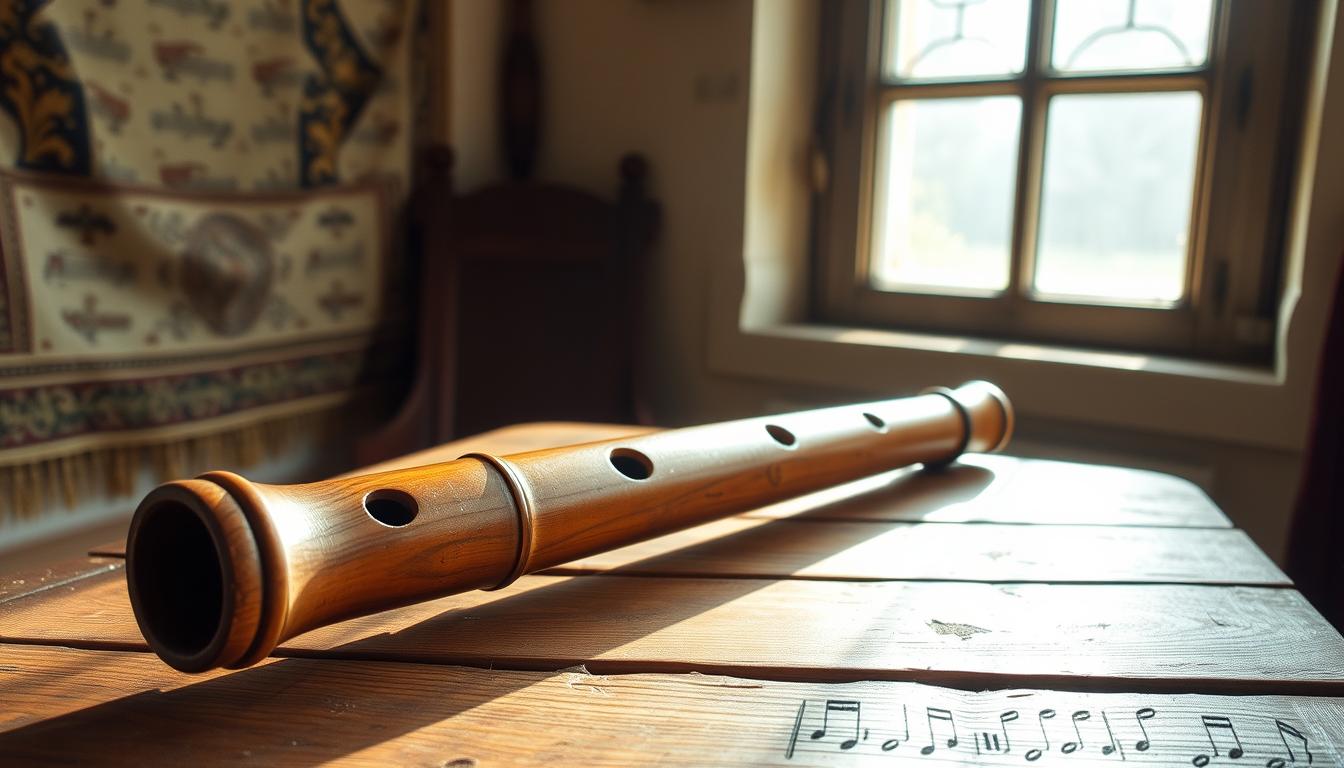

The recorder, a distinctive wind instrument, has retained its unique charm over the centuries. From antiquity to the present day, its melodic voice has left its mark on music history through changing cultures and artistic traditions.
Used in ancient Egypt and Greece, the recorder enjoyed renewed popularity in the Middle Ages. Made from natural materials such as wood and reed, it delighted royal courts and served as a teaching tool for introducing children to music.
Over the centuries, the recorder’s shape and sound evolved. Its gentle tone and ability to produce captivating melodies made it ideal for troubadours and other musicians of the time. Its influence on medieval music is undeniable. It also remained in use in later periods, including the Renaissance, when it became an essential instrument in music education.
With its traditional forms and distinctive sound, this instrument has left a lasting mark on history. Early historical accounts and the examples in this article highlight its importance and evolution.
The following sections explore the recorder’s different eras and transformations, as well as its influence on contemporary music. A musical journey through time reveals its many facets.
Early origins and development
Since antiquity, the recorder has appealed to listeners through its simplicity and charm. Made from natural materials such as wood and reed, this instrument has endured for centuries and left its mark on music history.
Early uses and materials
In antiquity, the recorder was used in Egypt and Greece. People made it from reed or wood in a simple form that produced a gentle sound. These available, durable materials helped the instrument spread quickly.
Its revival in the Middle Ages
In the Middle Ages, the recorder enjoyed renewed popularity in Europe. Tinctoris, a music theorist, described the instrument using the names fistula and tibia. It became popular at royal courts and served as a teaching tool for introducing children to music. Its gentle tone and ability to produce captivating melodies made it ideal for troubadours and other musicians of the time.
The following table summarizes the materials used and the recorder’s development:
| Material | Period | Characteristic |
|---|---|---|
| Wood | Antiquity | Durable and easy to carve |
| Reed | Antiquity | Produces a gentle sound |
| Bone | Middle Ages | Used for mouthpieces |
The recorder also influenced musical composition, particularly through the works of troubadours. To learn more about its history and use, consult this source. If you would like to learn to play it, visit this page.
The Recorder and Medieval Music: A Historical Exploration
The recorder has endured for centuries and left its mark on music history in a variety of settings. Its origins reach back to antiquity, when related instruments were used in different forms.
Etymological and symbolic origins
The term “flute” comes from the Latin “fistula,” meaning a wind tube. This name reflects the instrument’s simple structure: its holes determine the notes played. The recorder symbolized both gentleness and simplicity, qualities that made it popular at royal courts and in religious ceremonies.
Its role in sacred and secular music
In sacred music, the recorder accompanied liturgical singing and helped create a solemn atmosphere. In secular settings, it enlivened dances and courtly songs. Medieval musicians used it to create melodies within the musical traditions of their time.
To learn more about this instrument’s history and use, consult this source. To discover how it is played today, visit this page.
Changes during the Renaissance and Baroque periods
Beginning in the sixteenth century, the recorder underwent major changes. Developments during the Renaissance and Baroque periods reshaped its role in music.
Technical innovations and instrument design
The Renaissance brought innovations in recorder making. Makers began dividing the instrument into three parts: the head, body, and foot. This change improved the bore and expanded its range. Figures such as Hotteterre shaped this era by introducing new design techniques. More precise woodworking improved sound quality.
New artistic and concert uses
During the Baroque period, the recorder became a mainstay of concerts. Musicians used these innovations to create complex melodies. Ensemble concerts showcased its versatility. Complementary instruments enriched performances and the musical experience.
| Material | Period | Characteristic |
|---|---|---|
| Wood | Renaissance | Greater precision |
| Wood | Baroque | Three-part construction |
| Bone | Baroque | Improved mouthpieces |
The recorder’s range expanded, making it easier to use in different repertoires. To learn more about its legacy, visit this page.
Wind instruments in medieval music
Wind instruments played a central role in medieval music, adding a wealth of sounds and expressive possibilities. Among them, the recorder stands out for its characteristic shape and versatility.
Comparing the recorder, vielle, and lute
The recorder, vielle, and lute were all made of wood, a common material at the time. Their designs, however, differed markedly. With its characteristic mouthpiece, the recorder produced gentle, captivating melodies, making it ideal for ensembles. The vielle often accompanied singing, while the lute, with its strings, offered a more complex sound.
- The recorder was valued for how easily it could be tuned, while the lute required a more advanced technique.
- The vielle, with its wheel, produced a continuous sound ideal for dances and secular tunes.
Influence on the medieval repertoire
Each of these instruments shaped the musical repertoire of its time. The recorder was often played at royal courts, while the vielle enlivened popular celebrations. The lute was prized for its complex melodies and had a place in musical ensembles.
Medieval musicians chose their instruments to suit the setting, whether a solemn concert or a religious ceremony. This variety enriched the repertoire and created a diverse range of sounds that endured for centuries.
Educational value and modern rediscovery
The recorder has long played a key role in music education. Used in introductory lessons to teach the basics of music, it makes learning notes and rhythms easier. Its simplicity makes it ideal for beginners.
Introduction to music and traditional teaching
In education, the recorder helps students develop technique and coordination. Its system of holes, essential for producing notes, is an important teaching feature. Musicians pass on this practice and sustain a rich musical tradition.
The modern rediscovery of music from earlier periods has renewed interest in the instrument. Educational ensembles sometimes include other instruments, such as the lute and vielle, enriching the musical experience. The harp, meanwhile, occupies a central place in contemporary music education.
| Instrument | Characteristic | Educational use |
|---|---|---|
| Wood | Traditional material | Ease of tuning |
| Reed | Gentle sound | Introduction to melodies |
| Bone | Improved mouthpieces | Advanced technique |
This rediscovery helps us understand music history and reconnect with a valuable cultural heritage. Musicians and teachers continue to pass on the tradition, ensuring its place in modern music education.
Conclusion
The recorder’s journey through the centuries reflects a rich and complex musical evolution. From antiquity to the present day, its melodic voice has left its mark on music history through changing cultures and artistic traditions. Its role in medieval sacred and secular music was central, as was its influence on later repertoires.
Changes to the recorder between the Middle Ages and the Baroque period reshaped its use in concerts. Its gentle tone and ability to produce captivating melodies made it ideal for troubadours and other musicians of the time. Its influence on medieval music is undeniable. It also remained in use in later periods, including the Renaissance, when it became an essential instrument in music education.
The modern rediscovery of medieval music highlights the instrument’s importance in today’s repertoire. Contemporary concerts often include the recorder, underscoring its influence on modern musical practice. Its legacy, alongside that of instruments such as the lute and harp, enriches performances and the musical experience.
To explore this subject further, consult this study on the role of music in ancient public participation. With its traditional forms and distinctive sound, the recorder remains a living symbol of our musical heritage.
FAQ
What are the origins of the recorder?
How did the recorder develop during the Renaissance?
What place did the recorder have in religious music?
How does the recorder compare with older instruments such as the lute and vielle?
Why is the recorder still used in music education today?
What is the recorder’s typical repertoire?
How has the recorder influenced modern music?
Source links
- https://www.classical-music.com/features/instruments/medieval-instruments
- https://www.coreknowledge.org/wp-content/uploads/2016/11/OF-MONKS-AND-MINSTRELS-MUSIC-OF-THE-MEDIEVAL-AGE.pdf
- https://www.musique-medievale.fr/en/modern-medieval-music-contemporary-groups-reinventing-the-past/
- https://yalebooks.yale.edu/book/9780300270648/the-recorder/
- https://recorderhomepage.net/history/the-medieval-period/
- https://www.cambridge.org/core/books/abs/cambridge-companion-to-the-organ/french-classical-organ-school/DB9ADBD7B78B2407F5F62D9D9D45FD19
- https://truecrimemedieval.com/78-special-episode-april-fools-debunking-of-the-myth-of-the-medieval-shame-flute/
- https://www.viking.no/who-were-the-vikings/everyday-life/music/musical-instruments/
- https://academic.oup.com/reference/62400/reference-article-abstract/555400311?login=false
- https://caslabs.case.edu/medren/medieval-instruments/recorder-baroque/
- https://folkways.si.edu/martha-bixler-and-eric-leber/the-recorder-guide/music-instruction/album/smithsonian
- https://guides.loc.gov/flute/finding-music-scores
- https://www.musique-medievale.fr/en/fascinating-instruments-discovering-the-unique-sounds-of-medieval-music/
- https://www.jstor.org/stable/j.ctv335kw78
- https://americanrecorder.org/docs/AmerRec_1999Nov.pdf